
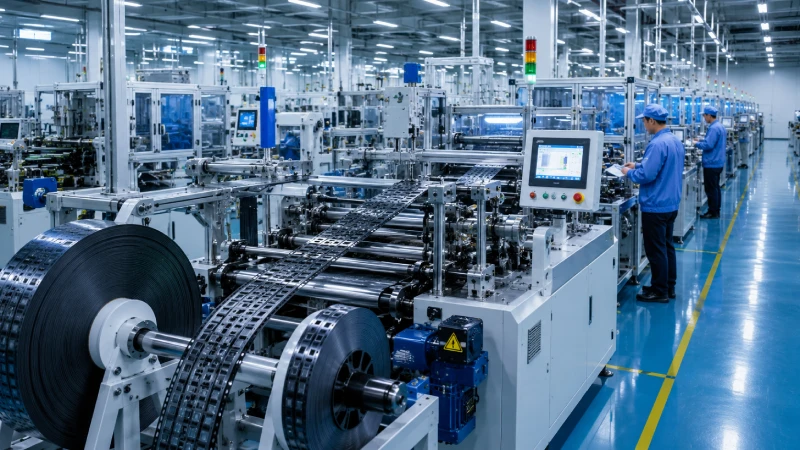
Modern electronics manufacturing relies on highly efficient packaging systems to protect components and support automated assembly. One of the most important packaging solutions in the SMT industry is carrier tape. From tiny resistors and capacitors to advanced integrated circuits, carrier tapes ensure components remain organized, protected, and compatible with high-speed pick-and-place equipment.
For procurement managers, packaging engineers, and electronics manufacturers, understanding the carrier tape manufacturing process can help improve product quality, reduce assembly defects, and optimize packaging costs. This guide explains how carrier tapes are manufactured, the materials involved, quality control requirements, and how to choose the right supplier for your application.
What Is Carrier Tape and Why Manufacturing Quality Matters
Carrier tape is a specialized packaging material used to transport and feed electronic components during automated SMT assembly. It contains precisely formed pockets that securely hold components in place while allowing pick-and-place machines to accurately retrieve them during production.
A high-quality Carrier Tape plays a critical role in protecting components from physical damage, contamination, and electrostatic discharge while ensuring reliable feeding performance throughout the manufacturing process.
For electronic component manufacturers, even minor dimensional inconsistencies can result in feeder jams, component misalignment, or production downtime. This is why manufacturing precision is one of the most important aspects of carrier tape production.
When carrier tapes are manufactured with tight tolerances, they provide:
- Stable component positioning
- Smooth feeding performance
- Reduced assembly defects
- Improved production efficiency
- Lower packaging waste
Raw Materials Used in Carrier Tape Manufacturing
The performance of a carrier tape begins with material selection. Different materials are chosen based on component size, weight, sensitivity, and application requirements.
Polystyrene (PS)
PS is the most commonly used carrier tape material in the electronics industry. It offers excellent thermoforming characteristics, dimensional stability, and cost efficiency.
Advantages include:
- Easy processing
- Low production cost
- Consistent pocket formation
- Suitable for passive components and standard IC packaging
Polyethylene Terephthalate (PET)
PET provides higher strength and better environmental resistance than PS.
Key benefits include:
- Improved durability
- Better moisture resistance
- Enhanced recyclability
- Suitable for demanding shipping conditions
Polycarbonate (PC)
PC is often used when superior dimensional accuracy and strength are required.
Applications include:
- Precision semiconductors
- High-value components
- Automotive electronics
Conductive and Anti-Static Materials
Many semiconductor components are sensitive to electrostatic discharge (ESD). To prevent damage, manufacturers use conductive or anti-static formulations.
These materials help:
- Dissipate static electricity
- Protect sensitive components
- Meet ESD packaging standards
Specialized Materials
Some applications require high-temperature resistance, exceptional strength, or unique mechanical properties. In these cases, customized material formulations may be selected to meet specific industry requirements.
Carrier Tape Design Before Manufacturing
Before manufacturing begins, engineers must design a carrier tape that matches the dimensions and characteristics of the component being packaged.
Component Analysis
The design process starts with a detailed evaluation of the component, including:
- Length
- Width
- Height
- Weight
- Lead configuration
- Surface sensitivity
Even small variations can significantly impact packaging performance.
Pocket Design Engineering
The pocket must securely hold the component while allowing easy extraction by automated equipment.
Design considerations include:
- Pocket depth
- Pocket width
- Corner radius
- Clearance tolerance
- Component orientation
Proper pocket design minimizes movement during transportation and improves pick-and-place reliability.
Industry Standards Compliance
Most carrier tapes are designed according to EIA-481 standards, which define critical dimensions such as:
- Tape width
- Pocket pitch
- Sprocket hole location
- Reel specifications
Compliance ensures compatibility with SMT assembly equipment worldwide.
Step-by-Step Carrier Tape Manufacturing Process
Carrier tape manufacturing involves a series of highly controlled production stages designed to achieve dimensional accuracy and consistent quality.
Step 1: Material Preparation
The process begins with plastic sheet production. Raw materials are extruded into thin sheets with carefully controlled thickness.
Manufacturers monitor:
- Material composition
- Thickness consistency
- Surface quality
- Conductivity requirements
Material uniformity is essential for producing consistent pockets during forming.
Step 2: Thermoforming
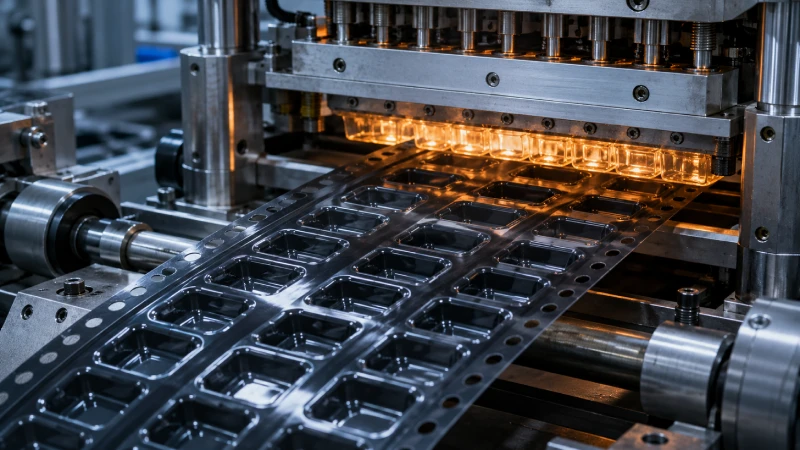
Thermoforming is the core manufacturing process used to create carrier tape pockets.
The plastic sheet is heated until it becomes flexible and then formed into pockets using specialized tooling. Depending on the application, manufacturers may use vacuum forming or pressure forming technology.
Many precision applications utilize Embossed Carrier Tape, which features accurately formed pockets designed to protect electronic components and maintain stable positioning during transportation and assembly.
The quality of the forming process directly influences:
- Pocket dimensions
- Pocket consistency
- Component retention
- Feeding performance
Step 3: Sprocket Hole Punching
After the pockets are formed, sprocket holes are punched into the tape.
These holes allow SMT feeders to advance the tape accurately through assembly equipment.
Critical factors include:
- Hole pitch accuracy
- Hole diameter consistency
- Alignment precision
Even small deviations can affect machine feeding performance.
Step 4: Dimensional Inspection
Modern manufacturers use automated inspection systems to verify product quality throughout production.
Inspection methods may include:
- Vision systems
- Laser measurement
- Digital gauges
- Automated defect detection
Measurements typically focus on:
- Pocket dimensions
- Tape width
- Hole spacing
- Material thickness
Step 5: Reeling and Packaging
Once inspection is complete, the carrier tape is wound onto reels and prepared for shipment.
Proper winding tension is important to prevent:
- Tape deformation
- Pocket damage
- Feeding issues
Finished reels are then packaged to protect them from contamination and physical damage during transportation.
Manufacturing Technologies Used Today
Carrier tape production has evolved significantly as electronic components become smaller and more complex.
Vacuum Forming
Vacuum forming remains one of the most widely used manufacturing methods.
Benefits include:
- High production speed
- Cost-effective tooling
- Consistent quality
This process is suitable for many standard packaging applications.
Pressure Forming
Pressure forming provides improved detail reproduction and tighter dimensional control.
Advantages include:
- Sharper pocket definition
- Better dimensional accuracy
- Improved consistency
This technology is often selected for high-precision components.
Precision Tooling Systems
Advanced tooling plays a major role in manufacturing quality.
Modern tooling enables:
- Rapid prototyping
- Accurate pocket geometry
- Longer production life
Well-designed tooling also reduces defect rates and improves manufacturing efficiency.
Automated Production Lines
Automation has transformed carrier tape manufacturing by reducing variability and increasing output.
Automated systems provide:
- Consistent quality
- Higher productivity
- Real-time monitoring
- Reduced labor requirements
Quality Control in Carrier Tape Manufacturing
Quality control is essential because packaging defects can lead to costly assembly problems.
Incoming Material Inspection
Manufacturers inspect raw materials before production begins.
Checks typically include:
- Thickness verification
- Surface quality
- Conductivity testing
- Material consistency
In-Process Monitoring
During production, operators continuously monitor critical dimensions and process parameters.
This helps identify potential issues before large quantities of material are produced.
Final Product Inspection
Finished carrier tapes undergo comprehensive testing before shipment.
Common inspection items include:
- Pocket dimensions
- Hole pitch
- Tape width
- Visual defects
- Pocket integrity
ESD Performance Testing
For anti-static and conductive carrier tapes, ESD performance is verified through specialized testing procedures.
Manufacturers evaluate:
- Surface resistance
- Charge dissipation
- Electrical conductivity
These tests ensure compliance with semiconductor packaging requirements.
Common Manufacturing Challenges and Solutions
Despite advances in technology, carrier tape production still presents several technical challenges.
Pocket Dimension Variations
Variations can result from:
- Material inconsistency
- Tool wear
- Process instability
Manufacturers address these issues through preventive maintenance and automated monitoring systems.
Feeding Problems
Poor feeding performance can occur when:
- Hole pitch deviates from specification
- Pocket geometry is inconsistent
- Reel winding tension is incorrect
Strict process control helps eliminate these issues.
Component Movement
If a pocket is oversized, components may shift during transportation.
The solution is precise pocket engineering that balances retention and accessibility.
Static Electricity Risks
Static discharge can damage sensitive semiconductors.
Using conductive materials and implementing ESD testing procedures significantly reduces this risk.
Custom Carrier Tape Manufacturing
Standard carrier tapes are not suitable for every application.
Many industries require customized packaging solutions for unique component designs.
Examples include:
- Irregular-shaped components
- Sensors
- Medical electronics
- Automotive modules
- Specialized connectors
The custom manufacturing process generally involves:
- Component evaluation
- Pocket design
- Prototype production
- Functional testing
- Mass production
Custom carrier tapes often provide better protection, improved feeding reliability, and lower packaging-related defect rates.
How to Choose the Right Carrier Tape Manufacturer
Selecting the right supplier can have a significant impact on production quality and supply chain reliability.
Engineering Support
Choose manufacturers that provide:
- Design assistance
- CAD development
- Prototype services
- Application engineering
Manufacturing Capability
Evaluate:
- Production equipment
- Automation level
- Forming technology
- Inspection systems
Advanced facilities typically deliver better consistency and higher production capacity.
Quality Certifications
Reliable manufacturers often maintain certifications such as:
- ISO 9001
- RoHS compliance
- REACH compliance
These certifications demonstrate commitment to quality and regulatory compliance.
Industry Experience
Suppliers with experience in semiconductor, automotive, and electronics packaging are generally better equipped to handle demanding applications.
Future Trends in Carrier Tape Manufacturing
The carrier tape industry continues to evolve alongside advancements in electronics manufacturing.
Higher Precision Requirements
As electronic components become smaller, manufacturers must achieve tighter tolerances and greater dimensional accuracy.
Sustainable Materials
Environmental concerns are driving demand for:
- Recyclable materials
- Reduced plastic waste
- Sustainable production methods
Smart Manufacturing
Industry 4.0 technologies are increasingly being adopted in carrier tape production.
Emerging innovations include:
- AI-powered inspection systems
- Real-time process monitoring
- Automated defect detection
- Predictive maintenance
These technologies help improve quality while reducing manufacturing costs.
Conclusion
Carrier tape manufacturing is a highly specialized process that combines material science, precision engineering, advanced tooling, and strict quality control. From raw material selection to thermoforming, inspection, and final packaging, every stage influences the performance of the finished product.
As SMT assembly processes continue to become faster and more precise, the demand for high-quality carrier tapes will only increase. By understanding how carrier tapes are designed and manufactured, buyers can make more informed sourcing decisions and select packaging solutions that maximize component protection, feeding reliability, and overall production efficiency.