
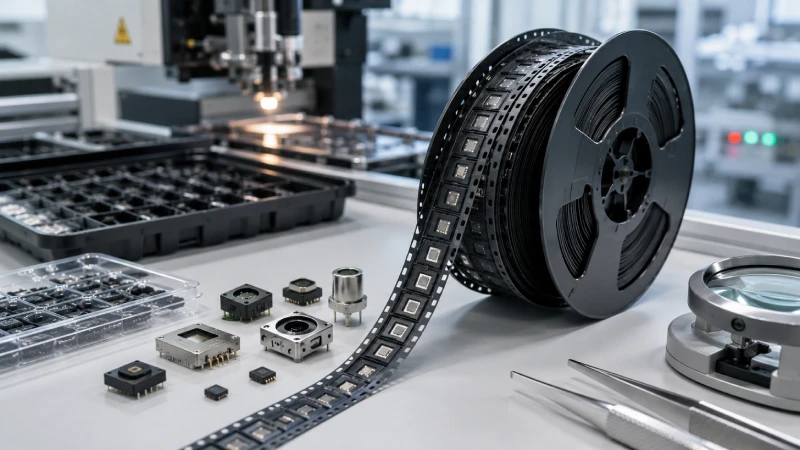
Sensors and MEMS components are often small, sensitive, and highly dependent on correct positioning during packaging and SMT assembly. For buyers, the main concern is not only whether the component can be packed into tape and reel, but whether it can stay protected, correctly oriented, clean, and ready for smooth pick-and-place operation after shipping and handling.
A loose pocket, incorrect orientation, surface contact, or unstable cover tape peeling can create real production issues. Components may tilt inside the pocket, shift during reel winding, or fail to be picked correctly by automated equipment. For sensitive sensor and MEMS devices, even minor packaging problems can affect inspection efficiency, assembly stability, and downstream production reliability.
That is why choosing the right carrier tape is an important packaging decision for sensor manufacturers, MEMS component suppliers, electronics OEM buyers, and SMT packaging teams. Jiushuo supports custom carrier tape evaluation based on component drawings, samples, datasheets, and specific packaging requirements, helping buyers find a practical solution before mass production.
Why Sensor and MEMS Packaging Needs More Care Than Standard Components
Sensor and MEMS components are different from many basic electronic parts because their packaging risks are often related to sensitivity, geometry, and orientation. Some sensors have exposed functional areas, openings, ports, lenses, or delicate surfaces. Others may have small bodies but strict directional requirements for SMT placement.
For these components, the tape pocket must do more than simply hold the part. It should limit unnecessary movement, support the component at safe contact points, protect sensitive areas, and allow the pick-and-place system to recognize and pick the part consistently.
Common examples include pressure sensors, motion sensors, optical sensors, microphone components, accelerometers, gyroscopes, humidity sensors, and other MEMS-based devices. These parts may look simple from the outside, but their packaging requirements can be more demanding than standard passive components.
For buyers, the goal is practical: reduce packaging-related defects, avoid feeding interruptions, and make sure the component arrives at the SMT line in the correct position.
Common Packaging Problems Buyers Should Avoid
When sensors or MEMS components are packed in unsuitable tape, the problems may not appear immediately. A sample reel may look acceptable at first glance, but issues can occur during transport, storage, inspection, or actual SMT feeding.
One common problem is component movement inside the pocket. If the pocket is too large, the part may rotate, shift, or tilt during reel winding and shipment. This can affect vision recognition and placement accuracy.
Another issue is contact with sensitive surfaces. Some sensor components include ports, lenses, membranes, or active sensing areas. If the pocket supports the part in the wrong location, it may create unnecessary contact risk.
Contamination is also important. Dust, particles, or handling residue can be a concern for certain sensor types. While carrier tape cannot replace clean manufacturing controls, a suitable packaging design can reduce unnecessary exposure and handling.
Cover tape performance also matters. If the peel force is too strong or inconsistent, small and lightweight parts may jump, shift, or become unstable during feeding. This is why carrier tape and cover tape should be considered together, not separately.
Packaging Risks and Recommended Carrier Tape Considerations
| Packaging Risk | Why It Matters for Sensors and MEMS Components | Recommended Carrier Tape Consideration |
|---|---|---|
| Component shifting inside pocket | May cause tilted pickup, incorrect orientation, or vision recognition failure | Pocket shape should match the component body with controlled clearance |
| Contact with sensitive surface | May affect lenses, ports, openings, membranes, or functional areas | Pocket depth and support points should avoid sensitive contact zones |
| Wrong orientation | Can cause SMT placement errors or inspection rejection | Pocket design should support consistent component direction |
| Static-related handling risk | Some sensor and MEMS parts may be ESD-sensitive | Use anti-static carrier tape when required |
| Dust or particle exposure | Sensitive surfaces may require cleaner handling and reduced exposure | Select suitable material and packaging method based on handling requirements |
| Unstable cover tape peeling | May disturb small, lightweight, or shallow-pocket components | Match the carrier tape with suitable cover tape and test peel behavior |
| Poor pocket depth | May cause loose fit or unnecessary pressure on the component | Adjust pocket depth based on component height and pickup needs |
How Embossed Carrier Tape Helps Sensor and MEMS Components
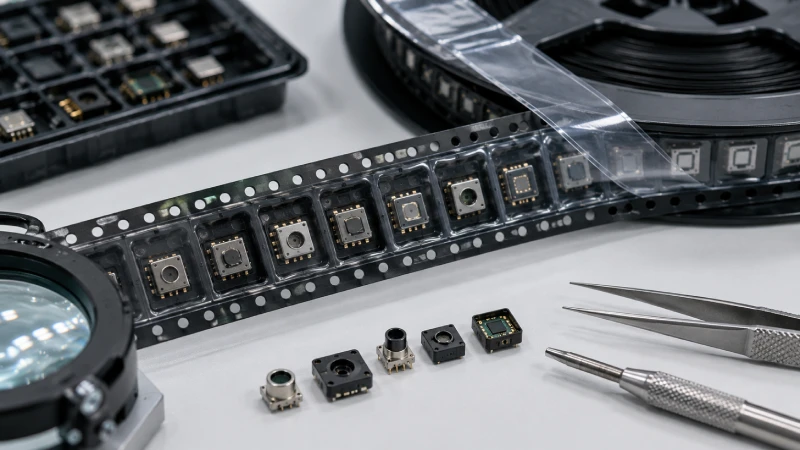
For many sensor and MEMS applications, embossed carrier tape is often preferred because the pocket can be formed to better match the component shape. Instead of forcing the part into a generic pocket, the tape can be designed around the actual dimensions, height, orientation, and handling risks of the component.
A well-designed embossed pocket can help control how the part sits in the tape. This is especially useful for components with asymmetric shapes, ports, leads, or specific top-side orientation. The pocket can also help reduce excessive movement during reel winding and shipping.
For sensitive sensor packaging, pocket depth is an important detail. If the pocket is too shallow, the component may not sit securely. If it is too deep or poorly supported, pickup may become less stable. The correct balance depends on the component body, height, weight, and SMT pickup method.
Embossed carrier tape for sensors can also support inspection requirements. When the component position is more consistent, visual inspection and automated feeding become easier to manage.
Standard vs Custom Carrier Tape for Sensor Packaging
Not every sensor automatically requires custom carrier tape. In some cases, standard carrier tape can work well, especially if the component has a simple rectangular body, common size, stable height, and no special surface or orientation concerns.
Standard tape may be suitable when the component does not move inside the pocket, the sensing area is not exposed to risky contact, and SMT feeding tests show reliable results. For lower-risk parts, this can be a cost-effective choice.
However, custom carrier tape is often a better option when the component has irregular geometry, a fragile surface, special orientation requirements, or a history of feeding problems. It is also recommended when the component is lightweight and easily affected by cover tape peeling, or when the buyer is preparing for high-volume production and wants to reduce packaging uncertainty before scaling.
Jiushuo can help buyers review whether standard tape is sufficient or whether custom embossed carrier tape is more suitable. This evaluation is especially useful when the component is new, when existing packaging has problems, or when the buyer needs a more reliable tape and reel solution for export or OEM supply.
Key Factors to Review Before Designing MEMS Carrier Tape
A good MEMS carrier tape solution should begin with the component itself. Buyers should not only provide the outer dimensions, but also clarify which surfaces are sensitive, which direction the part should face, and how the component will be picked during SMT assembly.
The first factor is pocket fit. The component should not be squeezed, but it should not have too much freedom to move. Controlled clearance helps maintain position while still allowing smooth pickup.
The second factor is support location. For sensors with openings, ports, lenses, or membranes, the pocket should support the component in areas that do not create unnecessary risk.
The third factor is material requirement. Some buyers need anti-static or conductive packaging depending on the component’s ESD sensitivity and customer requirements. For ESD-sensitive parts, anti-static carrier tape for MEMS components may be recommended.
The fourth factor is cover tape matching. Even if the carrier tape pocket is well designed, poor cover tape matching can still create problems during peeling and feeding. The sealing and peel behavior should be tested with the actual component and packaging conditions.
Practical Quotation and Sampling Checklist for Buyers
To evaluate carrier tape for sensors and MEMS components more efficiently, buyers can prepare the following information before requesting a quotation or sample:
- Component drawing with dimensions and tolerances
- 3D file if available
- Physical samples for pocket testing
- Datasheet with handling, ESD, and packaging notes
- Component height and weight
- Required tape width and pitch if already known
- Required orientation inside the pocket
- Location of sensitive surfaces, ports, openings, or lenses
- SMT pickup surface and placement direction
- Existing packaging problem, if replacing current tape
- Required reel quantity or forecast volume
- Cover tape requirement or peel force preference
- Any OEM, distributor, or end-customer packaging standard
This checklist helps avoid repeated communication and allows Jiushuo to better evaluate pocket design, material choice, tooling needs, sampling feasibility, and quotation details.
Inspection and Feeding Tests Before Mass Production
For sensor and MEMS packaging, testing is important before moving into mass production. A design that looks correct on paper still needs to be checked with real components and actual packaging conditions.
The first test is pocket fit. Samples should be placed into the pocket to confirm whether the component sits correctly without excessive movement or pressure.
The second test is orientation stability. After winding, handling, or light vibration, the components should remain in the correct direction. This is especially important for sensors that must be picked from a specific side.
The third test is cover tape peeling. The cover tape should open smoothly without pulling the components out of position. Small and lightweight MEMS components can be sensitive to sudden peeling force.
The fourth test is feeding and pickup. Buyers should confirm whether the component can be recognized, picked, and placed reliably during SMT operation.
These checks help reduce the risk of packaging-related delays after volume production starts.
When Anti-Static Carrier Tape Should Be Considered
Some sensor and MEMS components are sensitive to electrostatic discharge. In these cases, packaging material selection becomes part of the risk control process. Buyers may need anti-static or conductive packaging depending on the device type, customer requirement, and supply chain conditions.
Anti-static carrier tape is commonly considered when the component includes IC structures, when the OEM requires ESD-safe packaging, or when the product will pass through multiple handling, storage, and transportation stages.
For buyers, the key point is to clarify ESD requirements early. This allows the carrier tape supplier to recommend suitable material options instead of redesigning the packaging later.
Working with Jiushuo for Sensor and MEMS Carrier Tape Projects
Jiushuo provides carrier tape solutions for electronic components, including sensitive sensor and MEMS packaging applications. The company can help review drawings, samples, datasheets, and packaging requirements to determine whether standard carrier tape or custom embossed carrier tape is more suitable.
For buyers developing new sensor products, replacing problematic packaging, or preparing for mass production, early carrier tape evaluation can help prevent unnecessary delays. Jiushuo can support pocket design review, material selection, sampling, cover tape matching, and packaging feasibility discussion.
The goal is not to make packaging more complex. The goal is to make the component easier to handle, inspect, ship, and feed into SMT production with fewer risks.
Request a Custom Carrier Tape Evaluation
If you are sourcing carrier tape for sensors or MEMS components, you can send Jiushuo your component drawing, sample, datasheet, or current packaging issue for review. Jiushuo can help evaluate pocket fit, tape material, orientation control, cover tape matching, and sampling requirements based on your actual component.
A suitable tape and reel packaging solution can help protect sensitive parts, reduce handling risk, and improve SMT feeding consistency before mass production.
FAQ
What type of carrier tape is suitable for sensors?
Sensors usually need carrier tape with accurate pocket fit, controlled clearance, and reliable orientation. Simple sensor shapes may use standard carrier tape, while sensitive or irregular components often require custom embossed carrier tape.
Why do MEMS components often need custom carrier tape?
MEMS components can be small, lightweight, fragile, and orientation-sensitive. Custom carrier tape helps reduce movement inside the pocket and protects sensitive areas during shipping, inspection, and SMT feeding.
Can carrier tape help reduce contamination risk for sensors?
Carrier tape cannot replace clean manufacturing controls, but suitable pocket design, material selection, and proper cover tape matching can reduce unnecessary contact and handling exposure.
When should anti-static carrier tape be used for sensor packaging?
Anti-static carrier tape should be considered when the component is ESD-sensitive, when the OEM requires ESD-safe packaging, or when static-related handling risk may affect the component during storage and transportation.
What information is needed for a custom MEMS carrier tape quotation?
Useful information includes component drawings, physical samples, datasheets, orientation requirements, sensitive surface locations, tape width, pitch, packaging quantity, and any existing feeding or packaging problems.
Can Jiushuo match carrier tape with cover tape?
Yes. Jiushuo can help evaluate carrier tape and cover tape matching so that sealing, peeling, and SMT feeding performance are suitable for the packaged sensor or MEMS component.