
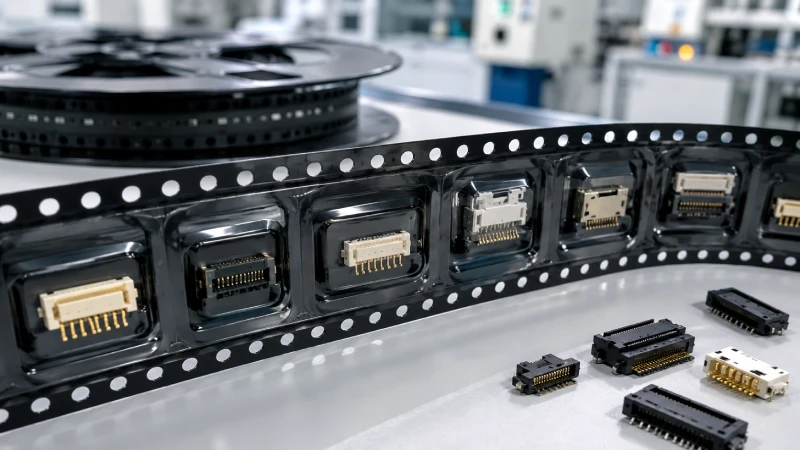
Connector packaging can quickly become a problem when the component does not sit securely inside the carrier tape pocket. Unlike many flat SMD parts, connectors often have raised housings, exposed pins, metal terminals, irregular shapes, and strict orientation requirements. If the packaging is not designed around these features, connectors may tilt, rotate, shift during transport, or arrive at the SMT line in the wrong position.
For connector manufacturers, component distributors, and OEM buyers, the goal is not only to place the connector into tape-and-reel format. The real goal is to protect the connector before assembly and make sure it can feed smoothly on automatic equipment. This is why many connector projects require embossed carrier tape for connectors instead of a standard pocket design.
Jiushuo supports connector packaging projects with custom pocket design, sample review, cover tape matching, and tape-and-reel packaging support. For buyers handling terminals, sockets, headers, board-to-board connectors, or wire-to-board connectors, choosing the right connector carrier tape can reduce unnecessary damage and improve packaging consistency before mass production.
Why Connectors Are More Sensitive to Packaging Fit
Connectors are often small, but their packaging risks are not simple. Many connector bodies are not evenly shaped. Some have one side higher than the other. Some include exposed pins, fragile contacts, locking structures, or side terminals. These details make the connector more sensitive to pocket fit than standard rectangular components.
If the pocket is too loose, the connector may shake or rotate inside the tape. If the pocket is too tight, the pins or terminals may receive pressure. If the pocket is too shallow, the cover tape may touch the connector housing. If the orientation is not clear, the connector may feed into the SMT line incorrectly.
For buyers, these problems can lead to rejected parts, feeding interruptions, manual rework, or complaints from assembly teams. A suitable carrier tape for connectors should hold the component body securely while avoiding pressure on fragile areas. The packaging should support the connector where it is strong and protect the areas that are easy to bend or deform.
This is the main reason connector packaging is often discussed as a custom project rather than a simple standard tape purchase.
Common Connector Packaging Problems and Carrier Tape Solutions
The table below summarizes common problems buyers may face when selecting connector carrier tape.
| Connector Packaging Problem | What It Can Cause | Carrier Tape Solution |
|---|---|---|
| Loose fit inside the pocket | Connectors shake, rotate, or arrive misaligned | A custom pocket shape holds the connector body more securely |
| Tilted connectors | Pick-and-place equipment may not pick the connector correctly | Pocket depth and support points are adjusted to keep the connector level |
| Bent pins or terminals | Electrical connection problems or rejected parts | Pocket clearance protects pins from side pressure |
| Incorrect orientation | Wrong feeding direction or placement errors | Pocket layout keeps the connector in a consistent direction |
| Tall connector housing | Cover tape may touch or press the component | Pocket depth and cover tape clearance are reviewed together |
| Poor cover tape matching | Weak sealing, hard peeling, or feeding interruptions | Carrier tape and cover tape are matched for sealing and peel performance |
| Heavy or bulky connector shape | Tape may deform or wind poorly on the reel | Tape width, material, and reel selection are reviewed together |
For connector projects with irregular shapes or fragile pins, a custom carrier tape for terminals and connectors is usually a safer option than trying to force the component into a standard pocket.
When Connectors Need Custom Embossed Carrier Tape
Not every connector requires a fully customized carrier tape, but many do. The need usually depends on the connector’s body shape, height, pin position, and feeding direction.
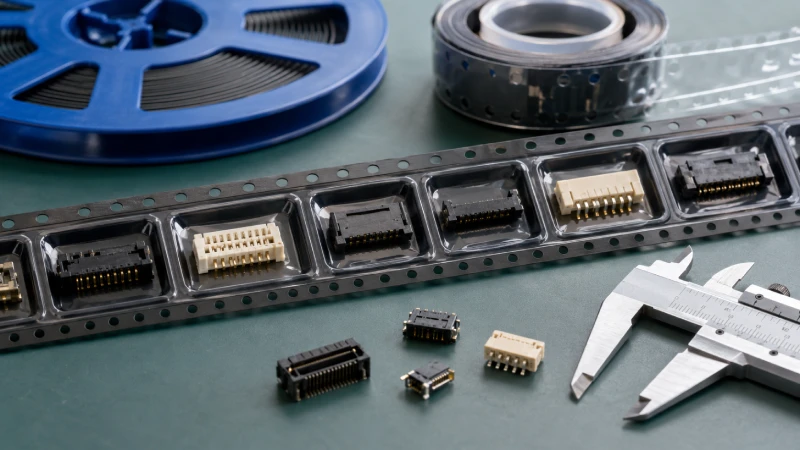
Custom embossed carrier tape is often recommended for board-to-board connectors, wire-to-board connectors, headers, sockets, terminals, terminal blocks, and precision connectors. These components may have small contact areas that should not touch the pocket wall. They may also have asymmetrical structures that must face one direction during SMT feeding.
A standard pocket may look suitable at first, but problems can appear during sealing, winding, transport, or machine feeding. For example, a connector may sit correctly during manual inspection but tilt after the reel is wound. Another connector may appear secure, but the cover tape may press slightly against the top housing. These small issues can become serious when thousands of parts are packed and used on an automatic line.
Custom embossed carrier tape allows the pocket to be designed around the connector body. The stronger housing area can be supported, while pins, contacts, and terminals receive enough clearance. This approach helps reduce movement without creating pressure on sensitive areas.
For buyers, the practical value is clear: better connector position, lower risk of bent pins, smoother feeding, and fewer packaging-related complaints.
Protecting Pins, Terminals, and Contact Areas
One of the most important goals in connector packaging is to avoid damage to pins and terminals. These areas may be small, thin, and easy to bend. Once a pin is deformed, the connector may fail during assembly or create electrical connection issues after installation.
A suitable connector carrier tape should not rely on pins or terminals to support the component. Instead, the pocket should support the connector body where the structure is stronger. This reduces the chance that fragile metal areas will carry pressure during sealing, transportation, or feeding.
Clearance is also important. The connector should not move freely inside the pocket, but the pins should not be squeezed by the pocket wall. This balance is especially important for connectors with side contacts, bottom terminals, or exposed metal structures.
For sourcing teams, this means the quotation process should include more than length, width, and height. It is useful to provide drawings, samples, photos, and notes showing which areas must not be pressed. This helps the supplier understand the component before designing the pocket.
Jiushuo can review connector samples and help identify where the pocket should support the component and where clearance should be reserved.
Orientation Control for Connector Tape-and-Reel Packaging
Connector orientation is another key issue. Many connectors look similar from different angles, but they can only be mounted in one correct direction. If the feeding direction is wrong, the assembly line may face placement errors, machine stoppages, or manual sorting work.
For this reason, connector tape-and-reel packaging should confirm orientation before mass production. The buyer and supplier should clearly agree on the pin direction, feeding direction, pick-up position, and how the connector should sit inside the pocket.
This is especially important for connectors with asymmetric housings, locking tabs, side terminals, or one-way mating structures. Even if the connector fits into the pocket, it may still be unsuitable if the orientation is not controlled properly.
A well-designed embossed carrier tape can help maintain the same connector direction throughout packaging, transport, and SMT feeding. Before full production, sample confirmation should be used to check whether the connector remains in the correct position after sealing and winding.
For OEM buyers and distributors, this step can help avoid costly packaging changes after the product has already entered volume production.
Cover Tape Matching for Tall or Irregular Connector Shapes
Cover tape is sometimes treated as a simple accessory, but for connector packaging it can directly affect quality. Connectors with taller housings or uneven tops may be sensitive to cover tape pressure. If the pocket is not deep enough or the cover tape is not matched correctly, the cover tape may press on the connector during sealing.
Poor matching can also create weak sealing, unstable peel strength, or feeding interruptions. If the cover tape peels too easily, components may shift or fall out. If it peels too strongly, the SMT line may experience feeding issues.
This is why the carrier tape and cover tape matching should be reviewed together, especially for tall connectors or parts with raised structures. The goal is to keep the connector protected while ensuring smooth peeling during automatic feeding.
For connector packaging, buyers should not only ask whether the pocket fits the part. They should also ask whether the cover tape can seal properly without touching or compressing sensitive areas.
Jiushuo can support both carrier tape and cover tape selection, helping buyers check whether the packaging combination is suitable for connector tape-and-reel use.
Plastic Reel Selection for Connector Packaging
Connectors may be heavier, taller, or bulkier than many small passive components. This means reel selection also matters. A suitable reel helps keep the wound carrier tape stable during storage, shipping, and production preparation.
If the reel is not suitable for the tape width or component weight, the tape may not wind evenly. This can affect package appearance, transport stability, and feeding preparation on the SMT line. For larger connector packaging projects, reel quality and size should be considered together with carrier tape design.
A plastic reel for tape-and-reel packaging helps organize the finished package and supports handling during shipment and SMT production. While the reel may not be the first thing buyers evaluate, it is still part of the complete packaging solution.
For distributors and OEM sourcing teams, using matched carrier tape, cover tape, and reel can make connector packaging more consistent from sampling to mass delivery.
Connector Carrier Tape Quotation and Sampling Checklist
A clear quotation request helps reduce back-and-forth communication and improves sampling accuracy. For connector carrier tape projects, buyers should prepare information that explains not only the connector size, but also its fragile areas and feeding requirements.
Before requesting a quotation, it is helpful to provide:
- Connector drawing or 3D file
- Physical connector samples, if available
- Connector type, such as board-to-board, wire-to-board, terminal, socket, header, or terminal block
- Pin or terminal position that must be protected
- Required feeding direction
- Required orientation inside the tape
- Component height and any raised housing area
- Areas that cannot be pressed by the pocket or cover tape
- Required tape width, if already known
- Current packaging reference, if available
- Sampling quantity and estimated mass production quantity
- SMT feeding or pick-and-place requirements, if already confirmed
- ESD or material requirement, if applicable
This information helps the supplier design a pocket that matches the real packaging risk. For example, if the pins are located on one side, the pocket may need more clearance in that area. If the connector has a high housing, the pocket depth and cover tape clearance should be checked carefully. If the connector must face a specific direction, the orientation should be confirmed before sampling.
Jiushuo can review drawings and samples, provide custom pocket design support, and help buyers move from sample confirmation to mass production more efficiently.
How Jiushuo Supports Connector Packaging Projects
Jiushuo supports connector manufacturers, electronic component distributors, and OEM buyers with practical carrier tape packaging solutions. Instead of treating connectors as standard components, Jiushuo reviews the component shape, pin structure, height, and orientation requirements before recommending a packaging approach.
For connector projects, Jiushuo can support:
- Custom embossed carrier tape for irregular connector shapes
- Pocket design based on connector body and pin position
- Clearance review for terminals and contact areas
- Orientation confirmation for tape-and-reel packaging
- Carrier tape and cover tape matching
- Plastic reel matching for finished tape packaging
- Fast sampling before mass production
- Packaging support for small and medium connector projects
This approach is useful when buyers need to package connectors for SMT assembly, component distribution, or OEM supply. It also helps reduce the risk of packaging changes after mass production begins.
Jiushuo’s role is not only to provide tape, but to help buyers confirm whether the connector can be packed securely, sealed properly, and fed smoothly in real production conditions.
Request Custom Carrier Tape for Connector Packaging
If your connectors have exposed pins, tall housings, uneven shapes, or strict orientation requirements, standard carrier tape may not provide enough protection. Before placing a bulk order, it is better to review the connector sample, pocket fit, cover tape clearance, and feeding direction.
Send Jiushuo your connector drawing, sample, or packaging requirement. The team can help evaluate whether standard tape is suitable or whether custom carrier tape is needed for safer connector packaging.
Jiushuo can support pocket design, sampling, cover tape matching, and reel selection to help your connector packaging move more smoothly from quotation to production.
FAQ
Why do connectors often need custom carrier tape?
Connectors often have raised housings, exposed pins, terminals, or irregular shapes. A standard pocket may not hold them securely or protect fragile areas during transport and SMT feeding.
Can carrier tape help prevent bent connector pins?
Yes. A suitable carrier tape pocket can support the connector body while leaving enough clearance around pins or terminals. This helps reduce pressure on fragile metal areas.
What information is needed to quote connector carrier tape?
It is helpful to provide connector drawings, samples, component height, pin position, orientation requirements, tape width expectations, and estimated production quantity.
How important is orientation for connector tape-and-reel packaging?
Orientation is very important because many connectors can only be mounted in one correct direction. The carrier tape layout should keep the connector direction consistent during feeding.
Does cover tape affect connector packaging quality?
Yes. If the cover tape does not match the carrier tape and connector height, it may cause sealing problems, excessive pressure, or unstable peeling during SMT feeding.
Can Jiushuo provide samples before mass production?
Yes. Jiushuo can support custom pocket design and sampling so buyers can check connector fit, pin clearance, orientation, and packaging suitability before full production.