

Carrier tape feeding problems can slow down SMT assembly, increase mis-picks, damage components, and create unnecessary production interruptions. In many cases, the first reaction is to check the feeder or pick-and-place machine. That is reasonable, but the issue is not always caused by the equipment itself.
For many electronic components, stable feeding depends on the complete packaging system: carrier tape design, pocket fit, cover tape sealing, reel condition, winding quality, and how well the package matches the component. If one part of this system is not suitable, the tape may jam, the component may tilt, or the nozzle may fail to pick the part correctly.
This is especially important for custom components, irregular parts, small precision components, and components that need stable orientation during automated feeding. A well-designed embossed carrier tape can help improve component positioning, reduce movement inside the pocket, and support smoother SMT feeding.
Below are the most common carrier tape feeding problems, their possible causes, and practical checks buyers can use before changing the packaging design or blaming only one factor.
Common Carrier Tape Feeding Problems in SMT Production
Feeder Jamming
Feeder jamming is one of the most visible SMT carrier tape feeding issues. The tape may stop moving, move unevenly, or fail to advance at the correct pitch. This can interrupt production and require operators to stop the line for inspection.
Packaging-related causes may include tape deformation, poor winding tension, damaged reels, inconsistent sprocket holes, or carrier tape width that does not match the feeder properly. Sometimes the carrier tape itself is acceptable, but the reel is damaged or the tape has been compressed during transport. In other cases, the tape was stored under unsuitable heat or pressure, causing warping before it reached the SMT line.
When feeder jamming happens, it is useful to check whether the issue appears on only one feeder or across different feeders. If the same reel works poorly on several feeders, the packaging condition should be reviewed more carefully.
Mis-Pick or Missed Pick
Mis-pick happens when the nozzle does not pick the component correctly from the pocket. A missed pick happens when the nozzle fails to pick the component at all. These problems may cause machine alarms, placement defects, or component loss.
From a packaging point of view, mis-pick may be related to poor component positioning inside the pocket. If the pocket is too loose, the part may shift away from the expected pick position. If the pocket is too deep, the component may sit too low for stable pickup. If the part is tilted, the nozzle may not make good contact with the pickup surface.
This is why pocket dimensions such as A0, B0, and K0 should not only match the component size on paper. They should also support stable seating, correct orientation, and reliable pickup during actual feeding.
Component Tilt Inside the Pocket
Component tilt is common when the pocket does not support the component evenly. This may happen with tall components, components with uneven weight distribution, irregular shapes, metal stamped parts, sensors, connectors, or components with small contact areas.
A tilted part may still look acceptable during manual inspection, but it can become a problem during pick-and-place. The vision system may not recognize the component correctly. The nozzle may pick the part at an angle. In some cases, the component may rotate or move after the cover tape is peeled.
When component tilt appears repeatedly, the pocket structure should be reviewed. The issue may require adjusted pocket depth, better side support, tighter orientation control, or a custom cavity shape.
Cover Tape Peeling Problems
Cover tape peeling is another common cause of carrier tape pick and place problems. If the peel force is too high, the tape may shake during peeling, causing the component to move inside the pocket. If the peel force is too low, the cover tape may open too easily during storage or transport. If peel force is inconsistent, the feeding process may become unstable.
The cover tape must match the carrier tape material, sealing process, component protection requirement, and feeder peeling condition. Cover tape problems can include tearing, uneven peeling, adhesive residue, weak sealing, or excessive sealing strength.
A stable peel is important because the component should remain in the correct position until the nozzle picks it. If the cover tape disturbs the component at the moment of peeling, even a well-designed pocket may not perform well.
Tape Deformation or Warping
Carrier tape deformation can cause several feeding problems at the same time. A warped tape may not move smoothly through the feeder. The pocket position may become unstable. The cover tape may peel unevenly. In severe cases, the component may no longer sit correctly inside the pocket.
Deformation may come from material selection, forming depth, storage conditions, transport pressure, poor winding, or unsuitable reel support. For deep pockets or larger components, the carrier tape needs enough forming stability. If the tape is too thin or poorly supported, the pocket area may deform more easily.
Buyers should also check packaging handling. Even good carrier tape can be damaged if reels are stacked improperly, exposed to heat, or compressed during shipping.
Reel Mismatch or Damaged Reels
The reel is often overlooked, but it plays an important role in feeding stability. A damaged reel, weak flange, wrong hub size, or poor winding tension can cause the tape to unwind unevenly. If the tape shifts sideways on the reel, it may enter the feeder at the wrong angle.
A suitable plastic reel helps protect the carrier tape and supports stable winding, storage, transportation, and feeding. Reel matching becomes more important when the tape is wider, the component is heavier, or the packaging needs to travel long distances before assembly.
If feeding problems only appear with certain reels, the reel condition and winding quality should be checked before changing the carrier tape design.
Quick Troubleshooting Table: Problem, Possible Cause, and Recommended Check
| Feeding Problem | Possible Cause | Recommended Check |
|---|---|---|
| Feeder jamming | Tape deformation, damaged reel, poor winding, sprocket hole issue | Check tape flatness, reel condition, hole alignment, and whether tape width matches the feeder |
| Mis-pick or missed pick | Component not centered, loose pocket fit, unsuitable pocket depth | Check component position inside the pocket and review A0, B0, and K0 dimensions |
| Component tilt | Pocket too deep, poor support area, irregular component shape | Check whether the component sits flat and stable before cover tape sealing |
| Cover tape difficult to peel | Peel force too high, cover tape not matched to carrier tape material | Test peel force and review cover tape compatibility |
| Cover tape peels too easily | Weak sealing, wrong cover tape, storage or heat issue | Check sealing strength, storage conditions, and cover tape selection |
| Tape does not unwind smoothly | Reel damage, reel size mismatch, poor winding tension | Check reel diameter, flange condition, winding direction, and tape tension |
| Component moves during transport | Pocket clearance too large, weak position control, poor sealing support | Review pocket fit, cover tape sealing, and transport vibration conditions |
| Poor vision recognition | Component tilted, rotated, or sitting too low | Check orientation, pocket depth, and whether the top surface is visible and stable |
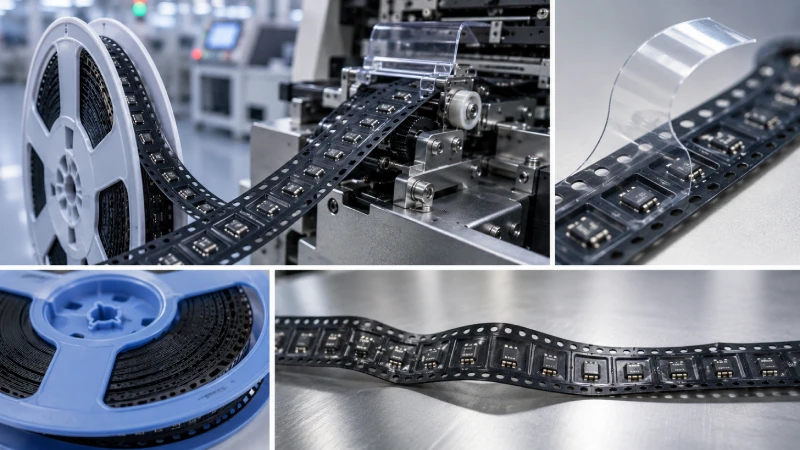
Why Carrier Tape Feeding Problems Are Often Matching Problems
A carrier tape feeding problem is not always caused by one single part. In many real production cases, the issue comes from poor matching between the component, carrier tape, cover tape, reel, and feeding process.
For example, a component may fit into the pocket, but still move during transportation because the pocket clearance is too large. A cover tape may seal the tape, but still create unstable peeling because the peel force is not suitable. A reel may hold the tape, but still cause feeding interruption because the winding tension is uneven.
This is why buyers should look at the full packaging system. Stable feeding depends on several matching points:
- Component size and shape should match the pocket dimensions.
- Pocket depth should support pickup height and component stability.
- Carrier tape width and pitch should match feeder requirements.
- Cover tape peel force should be stable and suitable.
- Reel size and winding should support smooth unwinding.
- Packaging should protect components during storage and transport.
For suppliers that need full packaging support, tape and reel packaging should be reviewed as a complete system instead of treating carrier tape, cover tape, and reel as separate items.
When Carrier Tape Design Should Be Reviewed
Carrier tape design should be reviewed when feeding problems repeat across different machines, production lines, or batches. If only one feeder has a problem, equipment setup may be the first area to check. But if the same issue continues with the same component package, the tape design may need closer attention.
One clear sign is unstable component seating. If the component does not sit flat inside the pocket, it may tilt, rotate, or move before pickup. This often happens with non-standard components, small precision parts, connectors, metal stamped parts, sensors, or components with uneven shapes.
Another sign is repeated mis-pick. If the nozzle cannot pick the component reliably, the pocket may be too deep, too loose, or not shaped correctly for the part. Even a small amount of movement inside the pocket can affect pickup accuracy, especially for high-speed SMT lines.
Carrier tape design should also be reviewed when components rotate inside the pocket. Rotation can cause incorrect orientation, vision recognition problems, and placement errors. For asymmetrical parts, the pocket may need better side control or a more customized shape.
Tape deformation is another important warning. If the pocket area collapses, bends, or loses shape after winding or storage, the tape material, thickness, forming depth, and reel support should be reviewed. For deeper pockets or heavier components, standard tape design may not provide enough stability.
In these situations, a custom embossed carrier tape can help improve pocket fit, component support, and feeding stability.
When Cover Tape or Reel Matching May Be the Issue
Not every feeding problem requires a new carrier tape design. Sometimes the pocket is acceptable, but cover tape or reel matching creates instability.
Cover tape should be checked when peeling is uneven, too tight, too loose, or causes the tape to shake. During feeding, the cover tape should open smoothly without disturbing the component position. If peeling creates vibration, the component may shift before the nozzle reaches it. If sealing is weak, the cover tape may open during transport or storage, increasing the risk of contamination or component loss.
The cover tape width, sealing temperature, sealing pressure, adhesive type, and carrier tape material should be considered together. A suitable cover tape helps maintain protection before feeding and stable exposure during the pick-and-place process.
Reel matching should be checked when the tape does not unwind smoothly, shifts sideways, or appears damaged near the reel flange. The reel must support the tape without squeezing, bending, or twisting it. If the flange is weak or the reel is damaged, the tape may not enter the feeder correctly.
The plastic reel should match the carrier tape width, reel diameter requirement, component weight, and shipping condition. For wider carrier tape or heavier components, reel strength and winding quality become more important.
In many cases, the best solution is to review the full package: carrier tape, cover tape, reel, winding direction, sealing quality, and sample feeding performance.
Practical Checks Before Changing the Packaging Design
Before changing the carrier tape design, buyers can make several simple checks. These checks help identify whether the issue comes from the packaging, the machine, storage, or handling.
First, confirm whether the problem happens on one feeder or several feeders. If it only happens on one feeder, machine setup or feeder condition may be involved. If it happens across different feeders, the packaging should be reviewed more seriously.
Second, inspect the tape and reel visually. Check whether the tape is bent, warped, cracked, or compressed. Look at the reel flange and winding condition. Poor winding or reel damage can create feeding problems even when pocket dimensions are correct.
Third, check the component position inside the pocket. The part should sit flat, stable, and correctly oriented. If the component moves when the tape is lightly handled, the pocket may be too loose or not shaped properly.
Fourth, review cover tape peeling. Peel force should be stable. The cover tape should not tear, leave residue, or shake the component during peeling.
Finally, share samples, drawings, photos, or short feeding videos with the packaging supplier. This makes it easier to judge whether the issue is related to pocket design, cover tape matching, reel condition, or complete tape-and-reel setup.
How Jiushuo Helps Improve Carrier Tape Feeding Stability
Jiushuo supports SMT packaging buyers with embossed carrier tape, cover tape, plastic reels, and complete tape-and-reel packaging matching. Instead of only supplying one item, Jiushuo can help review how each packaging part works together for stable feeding.
For custom or non-standard components, Jiushuo can design embossed carrier tape pockets based on drawings, samples, or component specifications. The goal is to help the component sit properly, reduce movement, protect the part, and support stable pickup.
Jiushuo can also help match carrier tape with suitable cover tape, considering sealing strength, peel stability, and material compatibility. For reel selection, Jiushuo provides plastic reel options that support winding, storage, transport, and feeding requirements.
For customers who need a more complete solution, Jiushuo’s tape and reel packaging support can help match carrier tape, cover tape, reel, sealing, winding, and packaging inspection before bulk supply.
Need Help Solving Carrier Tape Feeding Problems?
Carrier tape feeding problems can come from many different points. The cause may be pocket design, cover tape peeling, reel condition, tape deformation, component fit, or matching between all packaging materials.
If you are facing feeder jamming, mis-pick, component tilt, poor peeling, or unstable feeding, Jiushuo can help review your current packaging setup. You can share component drawings, samples, current carrier tape specifications, issue photos, or feeding videos. Based on this information, Jiushuo can help check whether your carrier tape, cover tape, reel, or full tape-and-reel packaging design needs adjustment.
FAQ
What are the most common carrier tape feeding problems?
Common problems include feeder jamming, mis-pick, missed pick, component tilt, component rotation, cover tape peeling problems, tape deformation, poor unwinding, and reel mismatch. These issues may affect SMT feeding stability and pick-and-place accuracy.
Can poor pocket design cause pick-and-place problems?
Yes. If the pocket is too loose, too deep, too shallow, or not shaped for the component, the part may move, tilt, rotate, or sit too low. This can make it difficult for the nozzle to pick the component reliably.
Why does cover tape peeling affect SMT feeding?
Cover tape peeling affects how smoothly the component is exposed before pickup. If peel force is too high, too low, or inconsistent, it can cause vibration, tearing, weak exposure, or component movement inside the pocket.
How do reels affect carrier tape feeding?
Reels affect how the tape unwinds and enters the feeder. A damaged reel, wrong reel size, weak flange, poor winding tension, or side pressure can cause uneven feeding, tape shifting, or jamming.
Should I change the carrier tape if feeding problems happen?
Not immediately. First check the feeder, tape condition, reel condition, cover tape peeling, winding quality, storage, and component fit. If the same problem repeats across different feeders or batches, then the carrier tape design should be reviewed.
What information should I provide to a carrier tape supplier?
You should provide component drawings, samples, current tape dimensions, reel size, cover tape requirement, feeding issue photos or videos, and packaging quantity requirements. This helps the supplier understand whether the problem is related to pocket fit, cover tape matching, reel support, or complete packaging design.