
What Is Carrier Tape?
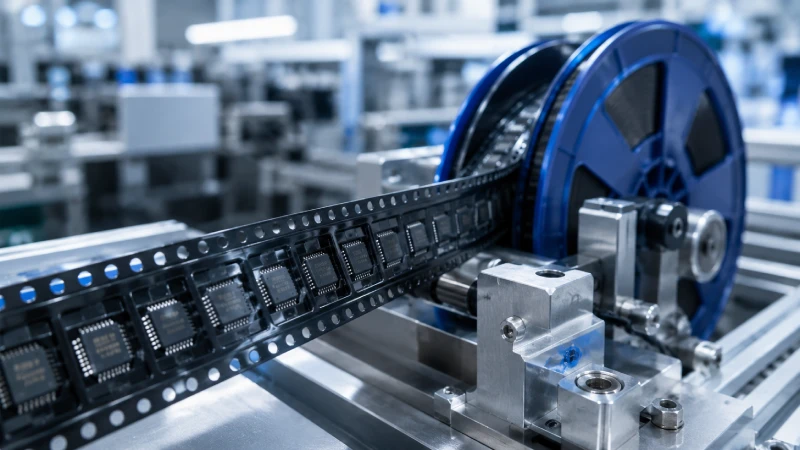
Carrier tape is a specialized packaging material used in the electronics manufacturing industry to store, protect, and transport electronic components during automated SMT (Surface Mount Technology) assembly processes.
It is commonly used together with cover tape and reels in tape-and-reel packaging systems, allowing pick-and-place machines to feed components accurately and efficiently during PCB assembly.
Carrier tape is widely used for packaging:
- IC chips
- Resistors
- Capacitors
- Connectors
- LEDs
- Sensors
- Semiconductor devices
- Precision electronic parts
In modern electronics manufacturing, carrier tape plays a critical role in improving automation efficiency, protecting sensitive components, and reducing production errors.
If you are new to SMT packaging, you can first explore different types of carrier tape used in industrial electronic packaging applications.
How Does Carrier Tape Work?
Carrier tape contains precisely formed pockets designed to hold electronic components securely during transportation and automated assembly.
The standard tape-and-reel packaging structure includes:
- Carrier tape
- Cover tape
- Plastic reel
- Pick-and-place feeding system
During SMT production:
- Components are loaded into the pockets
- Cover tape seals the pockets
- The tape is wound onto reels
- Automated feeders deliver components to SMT machines
The spacing, pocket depth, pitch, and dimensional accuracy must meet strict EIA standards to ensure compatibility with automated equipment.
Without properly designed carrier tape, components may shift, flip, jam, or become damaged during high-speed assembly.
Main Types of Carrier Tape
Different electronic components require different carrier tape structures. The most common carrier tape categories include embossed carrier tape, anti-static carrier tape, and custom carrier tape solutions.
Embossed Carrier Tape
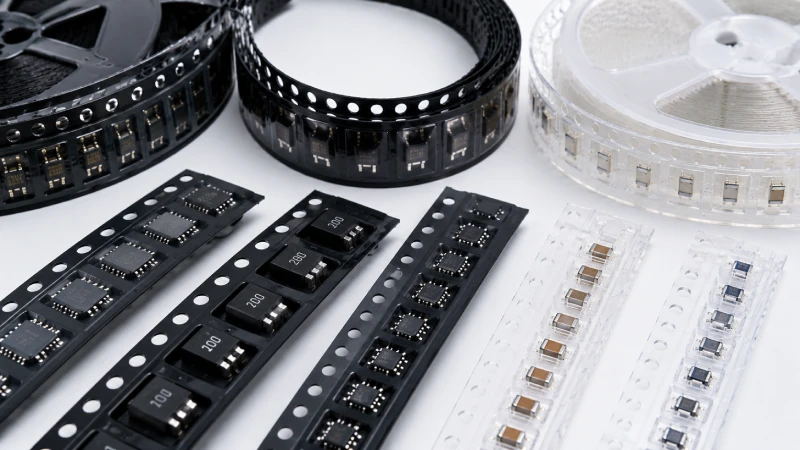
Embossed carrier tape is the most widely used type in SMT packaging.
It is manufactured by thermoforming plastic film into component pockets. This structure offers excellent dimensional consistency and high-speed automation compatibility.
Typical materials include:
- PS (Polystyrene)
- PET
- PC
- ABS
For a deeper understanding of thermoformed packaging structures, you can read more about embossed carrier tape and its industrial applications.
Advantages of Embossed Carrier Tape
- High pocket precision
- Excellent feeding stability
- Suitable for automated packaging
- Compatible with high-speed SMT lines
- Available in conductive and anti-static versions
Common Applications
Embossed carrier tape is commonly used for:
- Semiconductor packaging
- IC packaging
- LED packaging
- Connector packaging
- Automotive electronics
- Consumer electronics
Anti-Static Carrier Tape
Electronic components are highly sensitive to electrostatic discharge (ESD).
Static electricity can damage semiconductors, integrated circuits, and microelectronic devices during transportation or assembly.
To reduce ESD risks, manufacturers often use anti-static carrier tape for sensitive electronic components.
Why Anti-Static Properties Matter
Anti-static carrier tape helps:
- Prevent ESD damage
- Improve product reliability
- Reduce manufacturing defects
- Protect sensitive IC components
- Meet electronics industry compliance standards
Typical Surface Resistance Range
Anti-static carrier tape usually maintains surface resistance within controlled ranges such as:
- 10⁵–10¹¹ Ω
The exact requirement depends on component sensitivity and customer specifications.
Custom Carrier Tape
Not all electronic components fit standard carrier tape dimensions.
Many manufacturers require customized pocket designs for unique products, irregular shapes, or specialized handling requirements.
In these situations, custom carrier tape solutions become essential.
What Can Be Customized?
Custom carrier tape can include:
- Pocket dimensions
- Pocket depth
- Material selection
- Anti-static performance
- Tape width
- Sprocket hole positioning
- High-temperature resistance
- Component orientation design
Industries Using Custom Carrier Tape
Custom carrier tape is widely used in:
- Automotive electronics
- Medical electronics
- Aerospace electronics
- Industrial control systems
- Precision semiconductor packaging
Carrier Tape Materials Explained
Different materials provide different mechanical and electrical properties.
Choosing the correct material affects:
- Pocket stability
- Heat resistance
- Transparency
- Conductivity
- Formability
- Production cost
PS (Polystyrene)
PS is one of the most common carrier tape materials.
Advantages:
- Cost-effective
- Easy to thermoform
- Stable dimensions
- Suitable for standard SMT packaging
Applications:
- ICs
- Capacitors
- Resistors
- Small electronic components
PET (Polyethylene Terephthalate)
PET carrier tape offers stronger durability and better heat resistance than PS.
Advantages:
- High transparency
- Strong mechanical strength
- Good dimensional stability
- Better environmental resistance
Applications:
- High-precision components
- Optical devices
- Advanced semiconductor packaging
PC (Polycarbonate)
PC material provides excellent impact resistance and high-temperature performance.
Advantages:
- Strong durability
- High heat resistance
- Excellent dimensional consistency
Applications:
- Automotive electronics
- Industrial electronics
- High-reliability packaging
ABS Material
ABS carrier tape combines toughness and formability.
Advantages:
- Good impact resistance
- Stable forming properties
- Suitable for larger pockets
Applications:
- Connectors
- Mechanical electronic parts
- Specialized industrial components
Why Carrier Tape Is Important in SMT Manufacturing
Carrier tape is not just packaging material. It directly affects manufacturing efficiency and product quality.
Improves Automation Efficiency
Modern SMT production lines operate at extremely high speeds.
Proper carrier tape design ensures:
- Smooth feeding
- Accurate component positioning
- Reduced downtime
- Stable machine operation
Protects Electronic Components
Carrier tape protects components from:
- Physical impact
- Vibration
- Contamination
- Moisture exposure
- Static electricity
This is especially important for delicate semiconductor devices.
Reduces Packaging Errors
Poorly designed packaging can cause:
- Component flipping
- Pocket misalignment
- Feeding jams
- Pick-and-place failures
High-quality carrier tape minimizes these risks.
Standard Carrier Tape Sizes
Carrier tape widths typically follow EIA standards.
Common widths include:
| Tape Width | Typical Components |
|---|---|
| 8mm | Small chips, resistors, capacitors |
| 12mm | ICs, LEDs |
| 16mm | Larger IC packages |
| 24mm | Connectors |
| 32mm+ | Large industrial components |
Pocket design depends on:
- Component dimensions
- Orientation requirements
- Feeding direction
- Vacuum pickup design
How to Choose the Right Carrier Tape
Selecting the correct carrier tape requires evaluating several factors.
Component Dimensions
Pocket dimensions must securely hold the component without excessive movement.
Critical factors include:
- Length
- Width
- Height
- Lead structure
- Tolerance
ESD Requirements
Sensitive electronic components may require:
- Conductive materials
- Anti-static materials
- Static shielding solutions
Production Speed
High-speed SMT lines require:
- Stable feeding
- Precise pocket accuracy
- Consistent sprocket hole positioning
Environmental Conditions
Some applications require:
- High-temperature resistance
- Moisture resistance
- Chemical resistance
- Long-term storage stability
Carrier Tape Manufacturing Process
Carrier tape is typically produced using thermoforming technology.
The process generally includes:
- Material preparation
- Heating
- Pocket forming
- Punching sprocket holes
- Inspection
- Rewinding
Precision tooling and forming control are essential for maintaining dimensional accuracy.
Advanced manufacturing systems may also include:
- Vision inspection
- Online measurement
- ESD testing
- Automated winding systems
Future Trends in Carrier Tape Packaging
As electronic devices become smaller and more advanced, carrier tape technology continues to evolve.
Key trends include:
Miniaturization
Smaller electronic components require:
- Higher precision pockets
- Ultra-thin materials
- Improved forming accuracy
Smart Manufacturing Integration
Modern packaging systems increasingly integrate:
- Automated inspection
- AI quality control
- Data traceability
- Smart production monitoring
Sustainable Materials
Manufacturers are also exploring:
- Recyclable materials
- Reduced plastic waste
- Environmentally friendly packaging solutions
Conclusion
Carrier tape is an essential part of modern SMT and semiconductor packaging.
It enables automated production, protects sensitive electronic components, and improves manufacturing efficiency across the electronics industry.
From standard embossed carrier tape to anti-static and fully customized solutions, selecting the right carrier tape directly affects packaging reliability and production performance.
As SMT manufacturing continues evolving toward higher precision and automation, carrier tape technology will remain a critical foundation of electronic component packaging systems.