

ในการผลิต SMT สมัยใหม่ Carrier Tape เป็นมากกว่าสื่อบรรจุภัณฑ์ มันทำหน้าที่เป็นอินเทอร์เฟซที่สำคัญระหว่างบรรจุภัณฑ์ชิ้นส่วนและอุปกรณ์ประกอบอัตโนมัติ Carrier Tape ที่ออกแบบมาอย่างดีจะปกป้องชิ้นส่วนระหว่างการขนส่ง ช่วยให้การป้อนมีเสถียรภาพ ลดระยะเวลาหยุดทำงานของเครื่องจักร และเพิ่มประสิทธิภาพการผลิตโดยรวม
เนื่องจากชิ้นส่วนอิเล็กทรอนิกส์มีขนาดเล็กลง เบาขึ้น และซับซ้อนมากขึ้น ความสำคัญของการออกแบบ Carrier Tape จึงเพิ่มขึ้นอย่างมาก ไม่ว่าคุณจะบรรจุภัณฑ์ IC, LED, เซ็นเซอร์, คอนเนคเตอร์, อุปกรณ์ MEMS หรือชิ้นส่วนพาสซีฟ การออกแบบ Carrier Tape ที่เหมาะสมส่งผลโดยตรงต่ออัตราผลผลิตและความน่าเชื่อถือในการประกอบ
คู่มือการออกแบบ Carrier Tape ฉบับสมบูรณ์นี้อธิบายหลักการสำคัญ มาตรฐาน วัสดุ และข้อควรพิจารณาทางวิศวกรรมที่เกี่ยวข้องกับการออกแบบโซลูชัน Carrier Tape สำหรับการผลิตอิเล็กทรอนิกส์สมัยใหม่
การออกแบบ Carrier Tape คืออะไร?
การออกแบบ Carrier Tape หมายถึงกระบวนการออกแบบพ็อคเก็ตภายใน Carrier Tape ที่ยึดชิ้นส่วนอิเล็กทรอนิกส์อย่างปลอดภัยระหว่างการจัดเก็บ การขนส่ง และการทำงานหยิบและวางอัตโนมัติ
กระบวนการออกแบบรวมถึง:
- การกำหนดขนาดพ็อคเก็ต
- การเลือกวัสดุที่เหมาะสม
- การกำหนดทิศทางของชิ้นส่วน
- การกำหนดความกว้างและระยะพิทช์ของเทป
- การตรวจสอบความเข้ากันได้ของ Cover Tape
- การป้องกัน ESD เมื่อจำเป็น
- การตรวจสอบประสิทธิภาพของฟีดเดอร์
เป้าหมายสูงสุดคือการทำให้แน่ใจว่าชิ้นส่วนทุกชิ้นอยู่ในตำแหน่งที่เหมาะสมตลอดห่วงโซ่อุปทาน ขณะที่อุปกรณ์ SMT สามารถหยิบชิ้นส่วนได้อย่างมีประสิทธิภาพและแม่นยำ
หากคุณยังใหม่กับกระบวนการบรรจุภัณฑ์ การทำความเข้าใจพื้นฐานของ Carrier Tape เป็นจุดเริ่มต้นที่ดีก่อนที่จะลงรายละเอียดการออกแบบ
เหตุใดการออกแบบ Carrier Tape จึงสำคัญ
ผู้ผลิตหลายรายประเมินผลกระทบของการออกแบบ Carrier Tape ต่ำเกินไป จนกระทั่งปัญหาการป้อนเริ่มส่งผลต่อการผลิต
เทปที่ออกแบบไม่ดีอาจนำไปสู่:
- การหมุนของชิ้นส่วน
- การพลิกของชิ้นส่วน
- พ็อคเก็ตติดขัด
- การหยิบผิดตำแหน่ง
- ข้อผิดพลาดในการวาง
- เครื่องหยุดทำงานเพิ่มขึ้น
- ความเสียหายของผลิตภัณฑ์
แม้แต่ข้อผิดพลาดเล็กน้อยในขนาดก็สามารถทำให้เกิดความล้มเหลวในการวางนับพันครั้งในการผลิต SMT ปริมาณมาก
ในทางกลับกัน Carrier Tape ที่ออกแบบอย่างเหมาะสมช่วยให้:
- การยึดชิ้นส่วนที่เชื่อถือได้
- การป้อนผ่านอุปกรณ์อัตโนมัติอย่างราบรื่น
- ตำแหน่งหยิบที่สม่ำเสมอ
- อัตราการปฏิเสธต่ำลง
- ประสิทธิภาพการผลิตสูงขึ้น
ต้นทุนในการปรับปรุงการออกแบบ Carrier Tape มักจะต่ำกว่าต้นทุนของเวลาหยุดทำงานเนื่องจากการผลิตจากปัญหาบรรจุภัณฑ์
มาตรฐานอุตสาหกรรมที่มีผลต่อการออกแบบ Carrier Tape
การออกแบบ Carrier Tape โดยทั่วไปพัฒนาตามมาตรฐาน EIA-481 ซึ่งกำหนดข้อกำหนดบรรจุภัณฑ์เทปและรีลสำหรับชิ้นส่วนอิเล็กทรอนิกส์
ข้อกำหนดหลักรวมถึง:
- ความกว้างของเทป
- ระยะพิทช์ของพ็อคเก็ต
- ขนาดรูสพร็อคเก็ต
- ตำแหน่งของพ็อคเก็ต
- ทิศทางของชิ้นส่วน
- การจัดตำแหน่ง Cover Tape
การปฏิบัติตามมาตรฐาน EIA-481 ช่วยให้มั่นใจในความเข้ากันได้กับฟีดเดอร์ SMT ที่ใช้โดยผู้ผลิตอุปกรณ์รายใหญ่ทั่วโลก
สำหรับการใช้งานในยานยนต์ อวกาศ การแพทย์ และเซมิคอนดักเตอร์ อาจมีมาตรฐานเพิ่มเติมที่เกี่ยวข้อง การออกแบบตามมาตรฐานอุตสาหกรรมจะลดความเสี่ยงด้านความเข้ากันได้และปรับปรุงความน่าเชื่อถือของห่วงโซ่อุปทาน
การทำความเข้าใจขนาดสำคัญในการออกแบบ Carrier Tape
โครงการ Carrier Tape ที่ประสบความสำเร็จทุกโครงการเริ่มต้นด้วยการวัดขนาดชิ้นส่วนที่แม่นยำ
ความยาว ความกว้าง และความสูงของชิ้นส่วน
วิศวกรต้องประเมิน:
- ความยาวรวมของชิ้นส่วน
- ความกว้างรวมของชิ้นส่วน
- ความสูงสูงสุดของชิ้นส่วน
- ช่วงพิกัดความเผื่อ
- ตำแหน่งลีดหรือเทอร์มินอล
ข้อมูลขนาดที่แม่นยำเป็นพื้นฐานของการออกแบบพ็อคเก็ต
แม้ว่าชิ้นส่วนจะดูเรียบง่าย พิกัดความเผื่อในการผลิตอาจส่งผลต่อประสิทธิภาพของพ็อคเก็ตอย่างมีนัยสำคัญ
ความยาวและความกว้างของพ็อคเก็ต
ขนาดพ็อคเก็ตควรใหญ่พอให้บรรจุได้ง่าย แต่เล็กพอป้องกันการเคลื่อนไหวมากเกินไป
หากพ็อคเก็ตใหญ่เกินไป:
- ชิ้นส่วนอาจหมุน
- เสถียรภาพในการป้อนลดลง
- ความแม่นยำในการหยิบและวางลดลง
หากพ็อคเก็ตเล็กเกินไป:
- ชิ้นส่วนอาจเสียหาย
- การบรรจุทำได้ยาก
- ความต้านทานในการป้อนเพิ่มขึ้น
การออกแบบที่สมดุลระหว่างการยึดและการเข้าถึง
ความลึกของพ็อคเก็ต
ความลึกของพ็อคเก็ตต้องควบคุมอย่างระมัดระวัง
พ็อคเก็ตตื้นอาจทำให้ชิ้นส่วนเคลื่อนที่และเสียหาย ในขณะที่พ็อคเก็ตลึกเกินไปอาจป้องกันไม่ให้หัวดูดสุญญากาศเข้าถึงชิ้นส่วนได้อย่างมีประสิทธิภาพ
การคำนวณความลึกมักพิจารณา:
- ความหนาของชิ้นส่วน
- ระยะห่างของ Cover Tape
- ความสามารถในการเข้าถึงของหัวดูด
- ความเปราะบางของชิ้นส่วน
ทิศทางของชิ้นส่วน
ทิศทางของชิ้นส่วนเป็นหนึ่งในการตัดสินใจออกแบบที่สำคัญที่สุด
เครื่องหยิบและวางต้องพึ่งพาทิศทางที่สม่ำเสมอเพื่อให้ประกอบได้แม่นยำ
ปัจจัยที่มีผลต่อทิศทางรวมถึง:
- เครื่องหมายขั้ว
- ตำแหน่งพิน 1
- เรขาคณิตของชิ้นส่วน
- ข้อกำหนดทิศทางของฟีดเดอร์
การวางแนวที่ไม่ถูกต้องอาจทำให้เกิดข้อผิดพลาดในการประกอบได้ แม้ว่าขนาดของ Carrier Tape จะสมบูรณ์แบบก็ตาม
การเลือกวัสดุ Carrier Tape ที่เหมาะสม
การเลือกวัสดุส่งผลโดยตรงต่อประสิทธิภาพ ความทนทาน และต้นทุน
ชิ้นส่วนอิเล็กทรอนิกส์ที่แตกต่างกันต้องใช้วัสดุ Carrier Tape ที่แตกต่างกัน ขึ้นอยู่กับความไวและการใช้งานของชิ้นส่วนนั้น
Polystyrene (PS)
PS เป็นหนึ่งในวัสดุ Carrier Tape ที่ใช้มากที่สุด
ข้อดีได้แก่:
- คุ้มต้นทุน
- ขึ้นรูปด้วยความร้อนได้ง่าย
- ความคงตัวของมิติที่ดี
- ประสิทธิภาพการผลิตสูง
Carrier Tape ที่ทำจาก PS มักใช้สำหรับ:
- ตัวต้านทาน (Resistors)
- ตัวเก็บประจุ (Capacitors)
- แพ็คเกจ IC ขนาดเล็ก
- ชิ้นส่วน SMT ทั่วไป
PET (Polyethylene Terephthalate)
PET ให้ความทนทานและทนต่อสภาพแวดล้อมที่ดีขึ้น
ข้อดีได้แก่:
- มีความแข็งแรงสูงกว่า
- ทนความร้อนได้ดีกว่า
- ทนต่อการสึกหรอดีขึ้น
- ความสม่ำเสมอของมิติที่ยอดเยี่ยม
PET มักถูกเลือกใช้สำหรับการใช้งานในอุตสาหกรรมและยานยนต์ที่มีความต้องการสูง
Polycarbonate (PC)
PC มีคุณสมบัติเชิงกลและความโปร่งใสที่เหนือกว่า
ข้อดีได้แก่:
- ทนต่อแรงกระแทกได้ดีเยี่ยม
- ความแม่นยำของมิติสูง
- ความสามารถในการยึดติดที่แข็งแรง
- ความใสของแสงที่เหนือกว่า
Carrier Tape ที่ทำจาก PC มักใช้สำหรับชิ้นส่วนเซมิคอนดักเตอร์ที่มีมูลค่าสูง
ความสำคัญของการออกแบบป้องกันไฟฟ้าสถิต
การคายประจุไฟฟ้าสถิต (ESD) เป็นหนึ่งในความเสี่ยงที่ร้ายแรงที่สุดสำหรับชิ้นส่วนอิเล็กทรอนิกส์สมัยใหม่
อุปกรณ์ที่ไวต่อไฟฟ้าสถิต เช่น:
- IC
- MOSFET
- เซ็นเซอร์
- ไมโครโปรเซสเซอร์
- อุปกรณ์ MEMS
อาจได้รับความเสียหายถาวรจากไฟฟ้าสถิต
สำหรับการใช้งานเหล่านี้ ผู้ผลิตมักใช้โซลูชัน Anti-Static Carrier Tape ที่กระจายประจุไฟฟ้าสถิตและลดความเสี่ยง ESD ตลอดการขนส่งและการประกอบ
โดยทั่วไปแล้ว Anti-static Carrier Tape จะรวมสารเติมแต่งที่เป็นสื่อนำไฟฟ้าหรือกระจายประจุเข้าไปในโครงสร้างของวัสดุ เพื่อให้สอดคล้องกับข้อกำหนด ESD ของอุตสาหกรรม
หลักการออกแบบ Embossed Carrier Tape
Carrier Tape สมัยใหม่ส่วนใหญ่ผลิตโดยใช้กระบวนการ Embossed Carrier Tape
แตกต่างจาก Punched Carrier Tape ตรงที่ Embossed Carrier Tape ช่วยให้มีรูปทรง Pocket ที่ซับซ้อนกว่าและควบคุมมิติได้แม่นยำกว่า
เหตุใด Embossed Carrier Tape จึงครองตลาด
ข้อดีได้แก่:
- การยึดติดชิ้นส่วนที่ดีกว่า
- ขนาด Pocket ที่แม่นยำกว่า
- ค่าใช้จ่ายในการทำเครื่องมือสำหรับรูปทรงที่ซับซ้อนต่ำกว่า
- ความเข้ากันได้กับ Feeder ที่ดีขึ้น
- ความยืดหยุ่นในการผลิตสูงกว่า
ข้อดีเหล่านี้ทำให้ Embossed Carrier Tape เป็นโซลูชันที่ต้องการสำหรับการใช้งานบรรจุภัณฑ์ SMT ส่วนใหญ่
การปรับปรุงรูปทรง Pocket
การออกแบบ Pocket สมัยใหม่อาจรวมถึง:
- มุมโค้งมน
- ขอบลบมุม
- หน้าต่างสำหรับหยิบด้วยระบบสุญญากาศ
- คุณสมบัติป้องกันการหมุน
- โครงสร้างป้องกันขานำ
คุณสมบัติการออกแบบเหล่านี้ช่วยเพิ่มความปลอดภัยในการขนส่งและประสิทธิภาพการหยิบและวาง
ความท้าทายทั่วไปในการออกแบบ Carrier Tape
แม้แต่ผู้ผลิตที่มีประสบการณ์ก็ยังพบความท้าทายในการออกแบบ
การหมุนของชิ้นส่วน
ปัญหาที่พบบ่อยที่สุดประการหนึ่งคือการหมุนของชิ้นส่วนภายใน Pocket
สาเหตุได้แก่:
- ระยะห่างของ Pocket มากเกินไป
- รูปทรง Pocket ไม่เหมาะสม
- คุณสมบัติการยึดติดไม่เพียงพอ
วิธีแก้ไขมักเกี่ยวข้องกับการออกแบบขนาด Pocket ใหม่หรือเพิ่มการควบคุมการวางแนว
ปัญหาเกี่ยวกับการป้อน
ปัญหาเกี่ยวกับการป้อนอาจเกิดจาก:
- ระยะพิทช์ของเทปไม่ถูกต้อง
- ความสม่ำเสมอของ Pocket ไม่ดี
- การเสียรูปของวัสดุ
- ตำแหน่งรู Sprocket ไม่แม่นยำ
การทดสอบอย่างครอบคลุมเป็นสิ่งสำคัญในการระบุและขจัดปัญหาการป้อนก่อนเริ่มการผลิต
ปัญหาเกี่ยวกับการลอก Cover Tape
แรงลอกต้องอยู่ในขีดจำกัดที่ยอมรับได้
แรงลอกที่มากเกินไปอาจทำให้ชิ้นส่วนเสียหาย ในขณะที่แรงลอกไม่เพียงพออาจทำให้ Cover Tape หลุดระหว่างการขนส่ง
การเลือกวัสดุและพารามิเตอร์การปิดผนึกที่เหมาะสมเป็นสิ่งสำคัญ
ปัญหาไฟฟ้าสถิต
ปัญหา ESD มักเกิดขึ้นในสภาพแวดล้อมที่มีความชื้นต่ำ
การใช้วัสดุที่เป็นสื่อนำไฟฟ้าหรือป้องกันไฟฟ้าสถิตช่วยลดโอกาสการเกิดความเสียหายจากไฟฟ้าสถิตได้อย่างมาก
กระบวนการออกแบบ Custom Carrier Tape
ชิ้นส่วนอิเล็กทรอนิกส์จำนวนมากต้องการบรรจุภัณฑ์เฉพาะทางที่ไม่สามารถรองรับได้ด้วยการออกแบบเทปมาตรฐาน
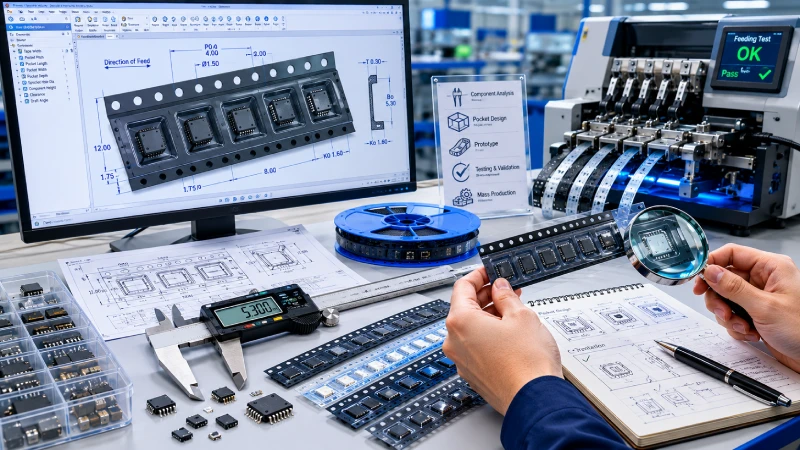
ในสถานการณ์เหล่านี้ ผู้ผลิตจะพัฒนาโซลูชัน Custom Carrier Tape ที่ปรับให้เหมาะกับรูปทรงของชิ้นส่วนเฉพาะ
ขั้นตอนที่ 1: การวิเคราะห์ชิ้นส่วน
กระบวนการเริ่มต้นด้วย:
- ตัวอย่างชิ้นส่วน
- แบบทางเทคนิค
- โมเดล CAD 3 มิติ
- ข้อกำหนดด้านความคลาดเคลื่อน
วิศวกรวิเคราะห์คุณลักษณะทางกายภาพของชิ้นส่วนก่อนพัฒนาโซลูชันบรรจุภัณฑ์
ขั้นตอนที่ 2: วิศวกรรม Pocket
ผู้ออกแบบสร้างรูปทรง Pocket โดยอิงจาก:
- ข้อกำหนดในการยึดติด
- ประสิทธิภาพการป้อน
- การวางแนวของชิ้นส่วน
- คุณสมบัติของวัสดุ
โดยทั่วไปจะใช้ซอฟต์แวร์ CAD ขั้นสูงในขั้นตอนนี้
ขั้นตอนที่ 3: การผลิตต้นแบบ
เทปต้นแบบถูกผลิตขึ้นเพื่อการทดสอบตรวจสอบ
ต้นแบบเหล่านี้ช่วยให้วิศวกรประเมินประสิทธิภาพในโลกแห่งความเป็นจริงก่อนที่จะดำเนินการผลิตเครื่องมือ
ขั้นตอนที่ 4: การทดสอบการทำงาน
การทดสอบอาจรวมถึง:
- การทดสอบการสั่นสะเทือน
- การจำลองการขนส่ง
- การทดสอบแรงลอก
- การทดสอบการป้อนด้วย Feeder
- การทดสอบแบบตก
ขั้นตอนนี้จะตรวจสอบว่าการออกแบบทำงานได้อย่างน่าเชื่อถือภายใต้สภาวะการทำงานจริง
ขั้นตอนที่ 5: การทำ Tooling สำหรับการผลิต
หลังจากเสร็จสิ้นการตรวจสอบความถูกต้องแล้ว จะมีการผลิต Tooling สำหรับการผลิตและเริ่มการผลิตจำนวนมาก
ผลลัพธ์คือโซลูชัน Carrier Tape ที่ปรับให้เหมาะสมทั้งสำหรับการปกป้องชิ้นส่วนและการประกอบอัตโนมัติ
แนวทางปฏิบัติที่ดีที่สุดสำหรับการออกแบบ Carrier Tape
โครงการ Carrier Tape ที่ประสบความสำเร็จมักปฏิบัติตามหลักการสำคัญหลายประการ
ลดการเคลื่อนที่ของชิ้นส่วนให้น้อยที่สุด
เว้นระยะห่างที่เพียงพอโดยไม่สร้างพื้นที่ว่างมากเกินไป
พิจารณาอุปกรณ์ SMT ตั้งแต่เนิ่นๆ
การตัดสินใจออกแบบควรคำนึงถึงข้อกำหนดของ Feeder และ Pick-and-Place ตั้งแต่เริ่มต้น
ให้ความสำคัญกับการป้องกัน ESD
เมื่อบรรจุภัณฑ์อุปกรณ์ที่ไวต่อการปล่อยประจุไฟฟ้าสถิต ควรพิจารณาวัสดุป้องกันไฟฟ้าสถิตเป็นข้อกำหนดมากกว่าตัวเลือก
ตรวจสอบความถูกต้องผ่านการทดสอบ
การจำลองเพียงอย่างเดียวไม่เพียงพอ
การทดสอบทางกายภาพยังคงจำเป็นสำหรับการตรวจสอบประสิทธิภาพ
ร่วมมือกับซัพพลายเออร์ที่มีประสบการณ์
ผู้ผลิต Carrier Tape ที่มีประสบการณ์สามารถระบุปัญหาที่อาจเกิดขึ้นก่อนการลงทุนด้าน Tooling ซึ่งช่วยลดต้นทุนการพัฒนาและเร่งระยะเวลาโครงการ
แนวโน้มในอนาคตของการออกแบบ Carrier Tape
เมื่ออุตสาหกรรมอิเล็กทรอนิกส์พัฒนาขึ้น เทคโนโลยี Carrier Tape ก็ก้าวหน้าต่อไป
แนวโน้มหลายประการกำลังกำหนดอนาคตของการออกแบบ Carrier Tape:
- การบรรจุชิ้นส่วนขนาดเล็กพิเศษ
- ความเร็วในการผลิต SMT ที่สูงขึ้น
- เทคโนโลยีการป้องกัน ESD ที่ดีขึ้น
- วัสดุรีไซเคิลที่ยั่งยืน
- การเพิ่มประสิทธิภาพบรรจุภัณฑ์ด้วย AI
- การบูรณาการการผลิตอัจฉริยะ
การพัฒนาเหล่านี้จะต้องใช้โซลูชัน Carrier Tape ที่ซับซ้อนมากขึ้นซึ่งสามารถตอบสนองความต้องการของการผลิตอิเล็กทรอนิกส์รุ่นต่อไป
บทสรุป
การออกแบบ Carrier Tape เป็นกระบวนการทางวิศวกรรมที่สำคัญซึ่งส่งผลโดยตรงต่อประสิทธิภาพการผลิต SMT การปกป้องชิ้นส่วน และความน่าเชื่อถือในการประกอบ
การออกแบบที่ประสบความสำเร็จต้องพิจารณาอย่างรอบคอบถึงขนาดของชิ้นส่วน เรขาคณิตของ Pocket การเลือกวัสดุ การป้องกัน ESD ความเข้ากันได้ของ Feeder และมาตรฐานอุตสาหกรรม
ไม่ว่าคุณจะบรรจุชิ้นส่วนแบบพาสซีฟมาตรฐานหรืออุปกรณ์เซมิคอนดักเตอร์เฉพาะทาง การลงทุนในการออกแบบ Carrier Tape ที่เหมาะสมจะช่วยเพิ่มประสิทธิภาพการผลิตได้อย่างมากในขณะที่ลดความเสี่ยงในการปฏิบัติงาน
เมื่อผลิตภัณฑ์อิเล็กทรอนิกส์มีขนาดเล็กลงและซับซ้อนมากขึ้น ความสำคัญของการออกแบบ Carrier Tape ที่ชาญฉลาดจะเพิ่มขึ้นอย่างต่อเนื่อง