
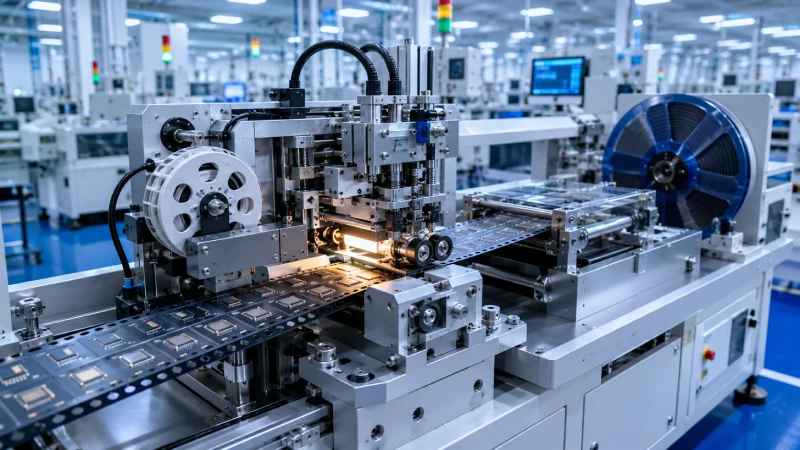
In modern SMT and semiconductor manufacturing, packaging quality is just as important as component quality itself. Even a high-performance IC or precision electronic component can become unusable if the tape-and-reel packaging process fails during transportation, storage, or automated pick-and-place assembly.
This is where a tape reel packaging machine with sealing function becomes essential.
By combining automated carrier tape feeding, cover tape sealing, inspection, and reel winding into one integrated workflow, these machines help manufacturers improve packaging consistency, reduce labor costs, and ensure stable SMT production performance.
Today, automated sealing packaging machines are widely used in semiconductor packaging, LED manufacturing, passive component assembly, automotive electronics, and consumer electronics industries where packaging precision and sealing reliability directly affect downstream production efficiency.
In this guide, we’ll explain how sealing packaging machines work, why sealing quality matters, how to choose the right system, and what features manufacturers should prioritize when investing in automated tape-and-reel packaging solutions.
What Is a Tape Reel Packaging Machine with Sealing Function?
A tape reel packaging machine with sealing function is an automated packaging system designed to package electronic components into carrier tape pockets and seal them using cover tape before winding them onto reels for SMT assembly.
The process typically includes:
- Carrier tape feeding
- Component loading
- Cover tape heat sealing
- Reel winding
- Inspection and quality control
Unlike basic packaging systems that rely on manual cover tape application, modern sealing machines integrate automatic heat sealing technology directly into the packaging workflow. This allows manufacturers to maintain consistent peel strength, reduce packaging defects, and improve production speed.
In SMT production environments, stable sealing quality is critical because poorly sealed carrier tape can cause:
- Component loss during shipping
- Feeding errors in pick-and-place machines
- Pocket contamination
- SMT downtime
- Increased production rejects
This is why more manufacturers are adopting fully automated tape reel packaging systems rather than relying on semi-manual packaging operations.
Companies looking for scalable automation solutions often use advanced systems such as the fully automatic carrier tape packaging machineto improve efficiency and packaging consistency across high-volume SMT production lines.
Why the Sealing Function Is Critical in Tape & Reel Packaging
The sealing function is one of the most important parts of the entire tape-and-reel packaging process.
Without stable sealing performance, even perfectly formed carrier tape pockets cannot protect sensitive electronic components properly.
Preventing Component Loss During Transportation
Electronic components experience vibration, movement, and impact during shipping and handling. If the cover tape seal is weak or inconsistent, components may escape from the carrier tape pockets before reaching the SMT production line.
This is especially critical for:
- IC chips
- LEDs
- MLCCs
- Precision semiconductor devices
- Automotive electronic components
Reliable heat sealing helps maintain secure pocket closure throughout transportation and storage.
Maintaining SMT Pick-and-Place Stability
SMT feeders rely on consistent peel force when removing cover tape during component feeding.
If sealing strength varies too much:
- Cover tape may peel unevenly
- Components may jump from pockets
- Feeders may jam
- SMT machines may stop unexpectedly
Stable sealing quality ensures smooth automated feeding and reduces downtime on high-speed production lines.
Improving Packaging Reliability
Modern electronics manufacturers increasingly require higher packaging standards due to:
- Smaller component sizes
- Faster SMT production speeds
- Higher export quality requirements
- Increased automation
A well-designed sealing packaging machine helps maintain repeatable packaging quality while reducing operator-related variability.
How the Sealing Process Works in Automated Packaging Machines
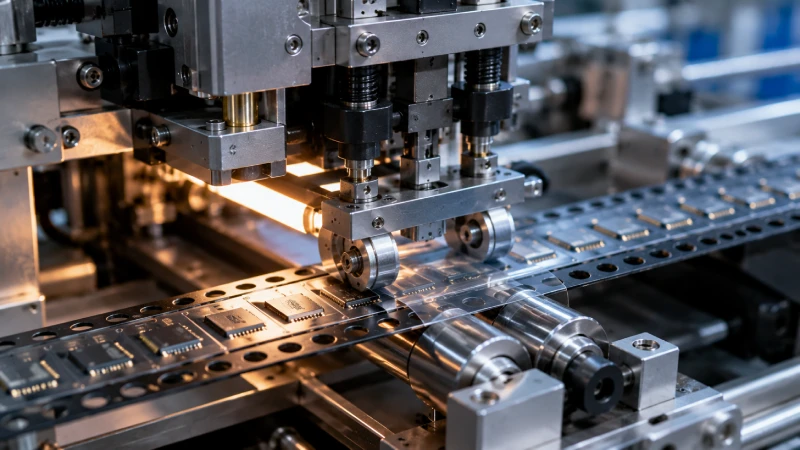
The sealing process in tape reel packaging systems mainly uses heat-seal cover tape technology.
The machine applies controlled heat and pressure to bond the cover tape onto the carrier tape surface while protecting the components inside the pockets.
Heat-Seal Cover Tape Technology
The sealing station typically contains:
- Heating elements
- Pressure rollers
- Temperature controllers
- Precision alignment systems
During operation:
- Components are loaded into carrier tape pockets
- Cover tape is aligned over the carrier tape
- Controlled heat activates the adhesive layer
- Pressure ensures consistent bonding
- The sealed tape moves toward reel winding
This process must remain highly stable to avoid sealing defects.
Key Parameters That Affect Sealing Quality
Several variables influence sealing consistency:
Temperature
Insufficient heat may cause weak sealing, while excessive heat can deform carrier tape pockets or damage components.
Pressure
Uneven pressure may create partial sealing or inconsistent peel strength.
Packaging Speed
High-speed production requires synchronized sealing control to maintain stability.
Material Compatibility
Different carrier tapes and cover tapes require specific sealing parameters.
To maintain proper sealing performance, manufacturers often use dedicated testing equipment such as the carrier tape peel strength tester to verify sealing consistency and peel force accuracy.
Main Types of Tape Reel Packaging Machines with Sealing Function
Different manufacturers require different levels of automation depending on production volume, component type, and packaging complexity.
Semi-Automatic Packaging Machines
Semi-automatic systems are commonly used for:
- Small batch production
- R&D packaging
- Prototype assembly
- Flexible product changes
Advantages include:
- Lower investment cost
- Easier setup
- Flexible operation
However, they usually require more operator involvement and provide lower production speed.
Fully Automatic Packaging Machines
Fully automatic systems are designed for high-volume SMT manufacturing.
These machines can automatically handle:
- Component feeding
- Tape alignment
- Heat sealing
- Reel winding
- Inspection
- Counting
Benefits include:
- Higher packaging speed
- Lower labor cost
- Better consistency
- Reduced defect rates
- Improved scalability
Many electronics manufacturers upgrade to Tape & Reel Packaging Machines for Carrier Tape Assembly when scaling production capacity or improving packaging automation.
Customized Packaging Machines
Some applications require customized sealing systems for:
- Irregular components
- Deep-pocket carrier tapes
- Wide tape formats
- Heavy components
- Precision semiconductor packaging
Custom sealing modules help manufacturers optimize packaging performance for specialized applications.
Industries That Use Sealing Packaging Machines
Tape reel packaging machines with sealing function are widely used across the electronics industry.
Semiconductor & IC Packaging
Semiconductor manufacturers require extremely stable sealing performance because IC components are highly sensitive to contamination and packaging instability.
LED Component Packaging
LED packaging lines rely on accurate sealing to prevent:
- Component flipping
- Pocket contamination
- Surface damage
Passive Component Manufacturing
MLCCs, resistors, inductors, and capacitors are often packaged at very high speed, requiring consistent sealing quality for reliable feeder performance.
Automotive Electronics
Automotive components typically require stricter packaging standards due to:
- Long transportation distances
- Harsh storage environments
- High reliability requirements
Consumer Electronics
Large-scale consumer electronics manufacturing relies heavily on automated tape-and-reel packaging for smartphones, wearables, and smart devices.
Key Features to Look for When Choosing a Packaging Machine
Choosing the right sealing packaging machine involves more than simply comparing production speed.
Manufacturers should evaluate several critical factors before investing.
Stable Temperature Control
Precise temperature control is essential for consistent sealing quality.
Advanced systems use:
- PID temperature control
- Real-time monitoring
- Automatic compensation systems
These features help prevent sealing variation during long production runs.
High Sealing Accuracy
A reliable sealing system should maintain:
- Uniform peel strength
- Stable alignment
- Consistent sealing pressure
Poor sealing accuracy can create major SMT feeding issues later.
Compatible Carrier Tape Sizes
The machine should support the carrier tape widths used in your production line.
Common sizes include:
- 8mm
- 12mm
- 16mm
- 24mm
- 32mm
- Custom widths
Easy Product Changeover
Modern SMT factories often handle multiple product types.
Quick-change tooling and flexible setup reduce downtime between packaging runs.
Integrated Inspection Systems
Advanced systems may include:
- Vision inspection
- Missing component detection
- Seal monitoring
- Counting systems
These features improve packaging quality control and reduce defects.
Common Packaging Challenges and How Sealing Machines Solve Them
Many packaging problems originate from unstable sealing performance.
Cover Tape Peeling During Shipping
Weak sealing can cause cover tape separation during transport.
Automated heat-seal systems help maintain stable bonding strength.
Component Flipping
Improper sealing pressure may allow components to move inside pockets.
Precision sealing helps stabilize component positioning.
Seal Inconsistency
Manual sealing operations often produce inconsistent peel force.
Automated systems reduce operator-related variability.
Production Downtime
Unstable packaging quality may interrupt SMT feeder operation.
Consistent sealing helps maintain smooth automated assembly.
How to Improve Tape Reel Packaging Quality
Improving packaging quality requires both proper equipment and stable process control.
Use Compatible Materials
Carrier tape and cover tape compatibility significantly affects sealing performance.
Manufacturers should verify:
- Material specifications
- Heat-seal compatibility
- Adhesive characteristics
Regularly Test Peel Strength
Routine peel-force testing helps identify sealing instability before packaging defects reach customers.
Maintain Stable Process Parameters
Operators should regularly monitor:
- Temperature
- Pressure
- Production speed
- Alignment accuracy
Use Automated Inspection
Automated inspection systems help detect:
- Missing components
- Seal defects
- Tape alignment problems
- Reel winding issues
These systems reduce human inspection errors while improving packaging consistency.
How to Choose the Right Tape Reel Packaging Machine
Before purchasing a machine, manufacturers should evaluate their actual production requirements.
Key questions include:
- What component types are being packaged?
- What production speed is required?
- Which carrier tape widths are needed?
- Is future production expansion expected?
- What level of automation is required?
A machine that works well for small-batch semiconductor packaging may not be suitable for high-speed SMT assembly lines.
Manufacturers should also consider:
- Maintenance support
- Spare parts availability
- Sealing stability
- Integration capability
- Long-term scalability
Conclusion
As SMT production speeds continue increasing and electronic components become smaller and more sensitive, packaging quality is becoming a critical part of manufacturing reliability.
A tape reel packaging machine with sealing function helps manufacturers improve:
- Packaging consistency
- SMT feeding stability
- Production efficiency
- Transportation protection
- Overall packaging quality
Whether you operate a semiconductor packaging facility, LED production line, or high-speed SMT factory, investing in reliable sealing automation can significantly reduce defects and improve long-term production performance.
If you are looking for advanced carrier tape packaging solutions, explore Jiushuo’s Tape & Reel Packaging Machines for Carrier Tape Assembly or contact the team to discuss customized tape-and-reel packaging requirements for your production line.