

For OEM sourcing teams, electronic component suppliers, EMS companies and SMT packaging teams, tape and reel packaging is more than a packing method. It affects how components are protected, stored, transported, fed into SMT lines and finally used in production.
A reliable tape and reel packaging supplier should not only provide carrier tape. Buyers also need to confirm whether the carrier tape, cover tape and reel work together as a complete packaging system. If one element is not suitable, the result may be unstable feeding, poor sealing, component movement, ESD risk or extra inspection work before production.
That is why choosing a tape and reel packaging solution should be treated as a packaging compatibility decision, not only a price comparison. The right supplier should understand component protection, SMT feeding needs, reel selection, cover tape sealing and sample confirmation before mass production.
This guide explains how buyers can evaluate a tape and reel packaging supplier for OEM components and what information should be confirmed before quotation.
What Buyers Should Expect from a Tape and Reel Packaging Supplier
A qualified tape and reel packaging supplier should support the full packaging process, from component review to sample confirmation and production supply. For OEM components, packaging requirements may vary by size, shape, surface sensitivity, ESD requirement, storage condition and SMT feeding process.
Buyers should expect the supplier to help confirm several key points. First, the carrier tape pocket must fit the component properly. Second, the cover tape should seal consistently and peel smoothly during SMT use. Third, the plastic reel should match the tape width, winding quantity and handling requirements. Fourth, the overall packaging should support stable transport and feeding without creating unnecessary risk.
For procurement teams, the goal is not to select the most complex packaging. The goal is to select packaging that is suitable, repeatable and easy to confirm before mass production. A good supplier should explain options clearly and avoid promising that one packaging format can fit every component.
Jiushuo supports OEM component packaging projects with carrier tape, cover tape, plastic reels and related packaging coordination. This makes it easier for buyers to confirm the full packaging set through one supplier instead of sourcing each element separately.
Key Packaging Elements Buyers Should Confirm
| Packaging Element | What Buyers Should Confirm |
|---|---|
| Carrier Tape | Pocket size, depth, tape width, material, component orientation, feeding hole consistency and ESD requirement |
| Embossed Carrier Tape | Whether the pocket shape supports component seating, protection and stable SMT feeding |
| Cover Tape | Sealing strength, peel consistency, material compatibility and clean opening during use |
| Plastic Reel | Reel diameter, hub size, width, strength, packaging quantity and handling stability |
| Component Protection | Movement control, surface protection, anti-static needs, dust protection and transport reliability |
| SMT Feeding | Smooth unwinding, stable pocket position, consistent cover tape peeling and reduced feeding interruption |
| Sample Confirmation | Trial samples, test packaging, buyer review and adjustment before mass production |
| Production Reliability | Batch consistency, lead time, inspection process, packaging support and communication efficiency |
This table can be used as a simple buyer checklist before placing an order. It also helps sourcing and quality teams align on what should be confirmed before quotation, sampling and production approval.
Why Carrier Tape, Cover Tape, and Reel Must Be Matched
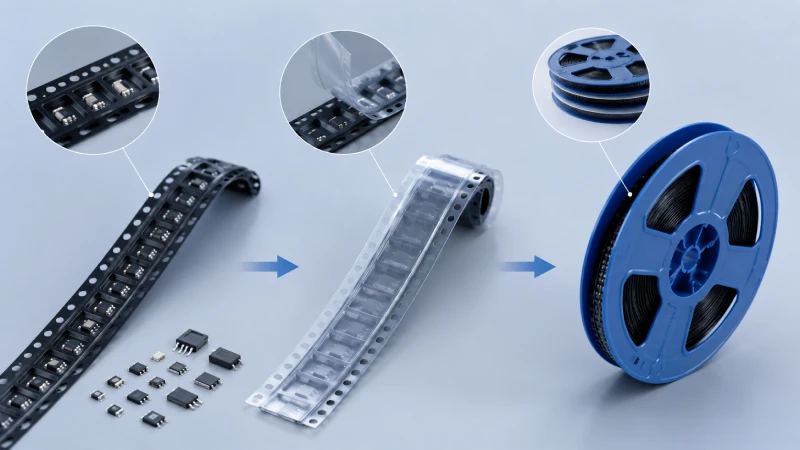
Tape and reel packaging works as a system. Even if the carrier tape is well made, the packaging may still fail to perform well if the cover tape or reel is not suitable.
The carrier tape controls the component position. It should hold the component securely enough to reduce movement, but not create difficulty during pick-and-place. The pocket should match the component’s size, height, orientation and sensitivity. For many OEM components, a standard tape may be enough. For components that require deeper pockets or more specific seating, embossed carrier tape may be a better option.
The cover tape protects the components inside the carrier tape. It should seal properly during storage and transport, while still peeling smoothly during SMT feeding. If the peel force is too high, it may create feeding interruption. If the sealing is too weak, components may be exposed or move during handling. This is why buyers should evaluate cover tape together with carrier tape, not as a separate afterthought.
The reel also matters. The plastic reel supports winding, storage, labeling, transport and SMT loading. If the reel is too weak, unsuitable in size or not matched to the tape width, it may affect handling and feeding stability. A suitable plastic reel helps keep the tape organized, protected and ready for production use.
When these three elements are not matched, buyers may face component movement, loose sealing, reel deformation, difficult unwinding, feeding stops or repackaging work. For OEM projects, these risks can create production delays and extra quality checks. A complete carrier tape and reel packaging supplier should help buyers confirm the match before moving into mass production.
How to Evaluate Carrier Tape for OEM Components
Carrier tape is usually the first packaging element buyers consider, but it should be evaluated based on the component and the full SMT process.
The first question is whether the component can use an existing standard carrier tape or needs a customized design. For simple components with common dimensions, a standard option may reduce cost and lead time. For components with special height, irregular shape, delicate structure or tighter placement needs, a more specific pocket design may be required.
Buyers should confirm the component length, width, height and orientation in the tape. They should also check whether the component needs anti-static or conductive material support. If the component is sensitive to movement, dust, surface contact or electrostatic discharge, the carrier tape material and pocket shape should be reviewed carefully.
A good carrier tape supplier should help buyers understand practical details such as pocket fit, tape width, pocket depth, feeding hole consistency and component orientation. The explanation does not need to be overly technical, but it should be clear enough for sourcing, quality and SMT teams to make a shared decision.
The key point is that carrier tape should not be selected only by component size. It should be selected by considering protection, feeding, handling, ESD needs and production reliability together.
How to Evaluate Cover Tape Sealing and Peel Performance
Cover tape is often underestimated during sourcing, but it has a direct impact on component protection and SMT feeding. It must protect the components during storage and transportation, while also opening smoothly when the tape is loaded into production.
Buyers should confirm whether the cover tape is compatible with the selected carrier tape material. They should also ask about sealing strength, peel consistency and whether the cover tape can support stable feeding during the expected use condition.
In practical production, poor cover tape selection may cause several issues. If sealing is weak, the cover tape may loosen during transport or handling. If peel force is inconsistent, the SMT process may become unstable. If the cover tape does not open cleanly, operators may need extra checks or adjustments.
For OEM component suppliers and EMS companies, this can become a production efficiency issue, not only a packaging issue. A qualified tape and reel packaging supplier should help confirm cover tape together with the carrier tape and reel, especially before mass production.
How to Choose the Right Plastic Reel
The reel is the part of the packaging that buyers may notice last, but it plays an important role in storage, transport, SMT loading and production handling.
Buyers should confirm reel diameter, reel width, hub size and strength. They should also confirm the expected quantity per reel and whether the reel is suitable for the selected carrier tape width. For some projects, labeling and identification requirements should also be discussed, especially when multiple component types or packaging lots are involved.
A weak or unsuitable reel may deform during transport, make handling difficult or affect tape unwinding. This can increase the risk of feeding problems even when the carrier tape and cover tape are acceptable.
For OEM packaging projects, the better approach is to choose the plastic reel as part of the full tape and reel packaging set. Jiushuo can support plastic reel selection together with carrier tape and cover tape matching, helping buyers reduce coordination problems across separate suppliers.
SMT Feeding Stability: What Buyers Should Check
SMT feeding stability is one of the most important concerns for EMS companies and quality teams. Packaging that looks acceptable during visual inspection may still create problems if the tape does not unwind smoothly, the components move inside the pockets or the cover tape does not peel consistently.
Buyers should check whether the tape supports stable pocket position, smooth reel unwinding and consistent component orientation. The component should sit properly in the pocket and remain stable during normal handling and feeding. The cover tape should peel without excessive resistance or sudden changes.
For procurement teams, this does not mean every detail must become overly engineering-heavy. It means the supplier should understand how packaging affects production use. A supplier that can discuss feeding stability, sample testing and packaging adjustment is usually more helpful than a supplier that only quotes by tape width and quantity.
Before mass production, buyers should request sample confirmation where needed. This helps identify possible mismatches before large-volume packaging begins.
ESD and Component Protection Requirements
Many OEM components require anti-static or conductive packaging support. The exact requirement depends on the component type, sensitivity and customer specification.
Buyers should confirm whether the component has ESD sensitivity and whether a specific surface resistance range is required. They should also review storage and transport conditions. In some cases, anti-static carrier tape may be enough. In other cases, conductive material may be needed. The cover tape and reel should also be considered within the overall protection plan.
It is important to avoid assuming that all packaging materials provide the same level of ESD protection. Buyers should communicate ESD needs before quotation and sampling so that the supplier can recommend suitable materials.
For sensitive components, packaging protection should include not only ESD control but also movement control, dust protection and stable handling. The purpose is to keep the component in good condition from packaging to SMT production.
Information Needed Before Quotation
To receive an accurate quotation from a tape and reel packaging supplier, buyers should prepare as much packaging information as possible. A supplier can usually respond faster and more accurately when the component and packaging requirements are clear.
Important information includes component drawings, datasheets, component dimensions, component height, shape and orientation. Buyers should also provide the required tape width if known, expected quantity per reel, reel diameter requirement and ESD or anti-static requirement.
If the buyer already has a cover tape requirement, packaging standard or customer specification, this should also be shared. If there were previous SMT feeding issues, the supplier should know this before recommending a solution.
For new projects, buyers may also provide target production volume, sample quantity, expected lead time and delivery destination. These details help the supplier recommend a packaging approach that fits both technical and procurement needs.
Accurate quotation depends on more than component size. It depends on the full packaging requirement, including carrier tape, cover tape, reel, ESD needs, quantity and production expectation.
Sample Confirmation Before Mass Production
Sample confirmation is one of the most practical ways to reduce packaging risk. It allows buyers and suppliers to review the packaging before moving into higher-volume production.
A good supplier should be able to support initial packaging review, sample carrier tape confirmation, cover tape sealing check and reel winding review. The buyer can then evaluate whether the component sits correctly, whether the packaging is easy to handle and whether the tape and reel format supports the intended production process.
Sample confirmation does not replace the buyer’s own validation process, but it improves confidence before mass production. It also gives both sides an opportunity to adjust pocket design, material choice, sealing approach or reel selection before the order becomes larger and more difficult to modify.
For OEM components, this step is especially useful when the component is new, customized, sensitive or used in a production environment where feeding interruption can create higher cost.
Why Supplier Coordination Matters for OEM Packaging Projects
OEM packaging projects often involve several teams, including sourcing, engineering, quality, warehouse and production. If these teams are not aligned, packaging decisions may be delayed or misunderstood.
A capable supplier should help simplify this coordination. The supplier should communicate clearly about packaging design, material selection, sample schedule, production lead time, inspection process and delivery requirements.
This is where working with a complete tape and reel packaging supplier can be valuable. Instead of sourcing carrier tape, cover tape and reels separately, buyers can coordinate the full packaging set with one supplier. This can reduce communication gaps and improve consistency across sample and production stages.
Jiushuo supports tape and reel packaging for OEM components by providing carrier tape, embossed carrier tape, cover tape, plastic reels and related packaging support. For buyers who need a carrier tape and reel packaging supplier with complete packaging coordination, this can make the sourcing process more efficient and easier to manage.
Need a Tape and Reel Packaging Supplier for OEM Components?
If you are evaluating tape and reel packaging for OEM components, Jiushuo can help review your packaging requirements and recommend a suitable combination of carrier tape, cover tape and plastic reel.
You can share your component drawing, datasheet, packaging standard, ESD requirement or sample needs. Jiushuo’s team can support packaging confirmation before production and help reduce the risk of mismatch between component protection, SMT feeding and packaging reliability.
To start your project, visit Jiushuo’s SMT tape and reel packaging solution page or send your component details for quotation support.
FAQ
What should buyers confirm when choosing a tape and reel packaging supplier?
Buyers should confirm carrier tape fit, cover tape sealing, reel size, ESD needs, SMT feeding stability, sample availability and production consistency. The supplier should be able to support the full packaging set, not only one part of the packaging.
Is carrier tape enough for OEM component packaging?
No. Carrier tape is only one part of the packaging system. Cover tape and plastic reel selection also affect component protection, handling, storage and SMT feeding performance.
When should embossed carrier tape be used?
Embossed carrier tape is often used when components need deeper pockets, better positioning or improved protection during tape and reel packaging. It is also useful when the component shape or height cannot be handled well by a simple standard pocket.
Why is cover tape peel performance important?
Cover tape must protect components during storage and transport while still peeling smoothly during SMT feeding. Poor peel consistency may cause feeding interruption, unstable handling or extra inspection work.
What information is needed for a tape and reel packaging quotation?
Buyers should provide component drawings, dimensions, quantity, tape width if known, reel size, ESD requirements, orientation needs, cover tape requirements and any existing packaging standard or SMT feeding concerns.
Can one tape and reel packaging solution fit all OEM components?
No. Tape and reel packaging should be selected based on component size, shape, sensitivity, ESD requirement, SMT process needs and packaging quantity. A reliable supplier should confirm compatibility before recommending a solution.