
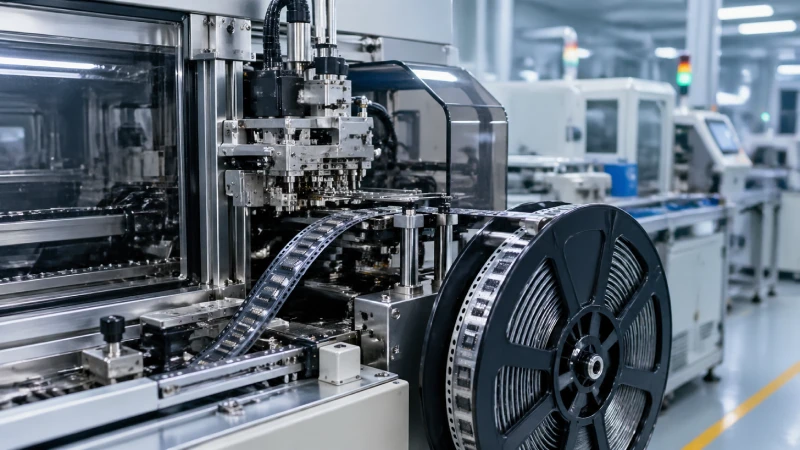
In modern electronics manufacturing, efficiency, precision, and consistency are no longer optional—they are essential. A tape and reel machine plays a critical role in achieving all three by automating the packaging of electronic components into carrier tapes and reels for SMT (Surface Mount Technology) processes.
Whether you are packaging ICs, LEDs, connectors, or passive components, choosing the right machine can significantly impact your production speed, labor cost, and product quality. In this guide, we’ll walk you through how tape and reel machines work, the different types available, cost considerations, and how to select the best solution for your operation.
What Is a Tape and Reel Machine?
A tape and reel machine is an automated system used to package electronic components into carrier tape pockets, seal them with cover tape, and wind them onto reels. This standardized packaging format is essential for automated pick-and-place machines used in SMT assembly lines.
The machine performs several key functions:
- Precisely placing components into carrier tape pockets
- Sealing the tape with cover tape (heat or pressure)
- Winding the sealed tape onto reels
- Ensuring consistent spacing and alignment
Compared to manual packaging, tape and reel machines drastically improve efficiency and reduce human error. More importantly, they ensure compatibility with downstream automation, which is critical for high-volume electronics production.
How Tape and Reel Machines Work (Step-by-Step Process)
Understanding the workflow of a tape and reel machine helps you evaluate performance and identify the right configuration for your needs.
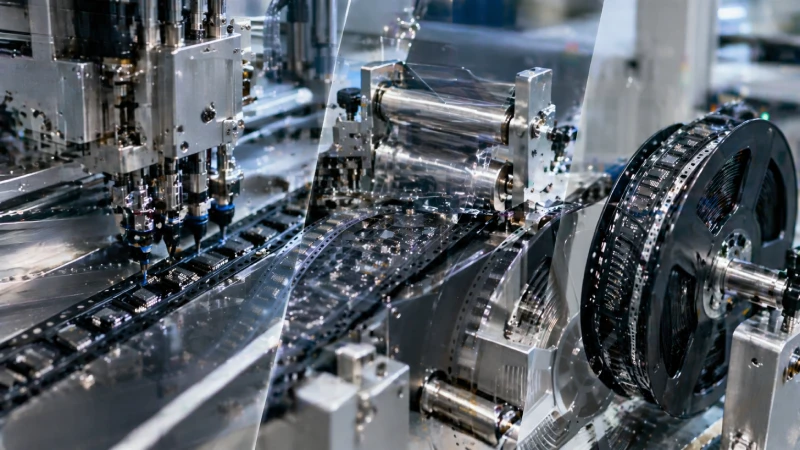
1. Component Feeding
Components are fed into the system via trays, tubes, or bulk feeders. Precision feeding ensures correct orientation and minimizes misplacement.
2. Pocket Positioning
The carrier tape is indexed forward, aligning each pocket precisely under the placement head.
3. Component Placement
Components are placed into the pockets using mechanical or vacuum pick-and-place systems.
4. Cover Tape Sealing
A cover tape is applied and sealed over the carrier tape. This step is critical for protecting components during transport and handling.
5. Reel Winding
The sealed tape is wound onto reels in a uniform and tension-controlled manner.
6. Inspection & Output
Optional inspection systems check for missing, misaligned, or defective components before final output.
To explore different configurations and systems, you can review tape and reel packaging machines for carrier tape assembly.
Types of Tape and Reel Machines (By Automation Level)
Choosing the right type of machine depends on your production volume, product complexity, and budget.
Fully Automatic Tape and Reel Machines
Fully automatic machines are designed for high-volume production environments where speed and consistency are critical.
Key advantages:
- High throughput with minimal labor
- Consistent quality and repeatability
- Integration with upstream/downstream automation
Example solution: fully automatic carrier tape packaging machine.
These systems are ideal for large-scale manufacturers producing millions of components daily.
Semi-Automatic Tape and Reel Machines
Semi-automatic machines offer a balance between automation and flexibility, making them suitable for small to medium production runs.
Key benefits:
- Lower initial investment
- Flexible handling of different components
- Easier operation and setup
Example solution: semi-automatic carrier tape packaging machine.
They are commonly used by contract manufacturers or companies handling multiple product types.
Visual Inspection Tape and Reel Machines
Quality control becomes critical when dealing with high-value or sensitive components. Machines with integrated visual inspection systems help ensure packaging accuracy.
Key features:
- Real-time defect detection
- Reduced risk of downstream failures
- Improved customer satisfaction
Example solution: semi-automatic visual inspection carrier tape packaging machine.
Specialized Tape and Reel Machines
Some production environments require specialized solutions:
- Micro-adhesive sealing systems for delicate components
- Pallet transfer systems for automated material flow
- Automatic reel changing systems for continuous production
- Carrier tape forming systems for custom packaging
These machines are often integrated into larger automated production lines.
Quality Control in Tape and Reel Packaging
Packaging defects can lead to costly failures during SMT assembly. That’s why quality control is a critical part of any tape and reel process.
Common issues include:
- Improper cover tape adhesion
- Component misalignment
- Missing components
- Damaged carrier tape pockets
Among these, cover tape peel strength is one of the most important parameters. If the seal is too weak, components may fall out. If it’s too strong, pick-and-place machines may fail to remove the cover tape efficiently.
To ensure proper sealing performance, manufacturers rely on tools like the carrier tape peel strength tester for packaging validation.
Implementing proper testing and inspection significantly reduces defect rates and improves production reliability.
Tape and Reel Machine Cost Breakdown
The cost of a tape and reel machine can vary widely depending on several factors.
Typical Price Ranges:
- Semi-automatic machines: lower investment, suitable for flexible production
- Fully automatic machines: higher upfront cost but better long-term ROI
Key Cost Factors:
- Automation level
- Production speed
- Inspection systems
- Customization requirements
- Integration with existing production lines
ROI Consideration:
While fully automatic systems require higher initial investment, they can dramatically reduce labor costs and increase output, often delivering a strong return on investment within a short period.
How to Choose the Right Tape and Reel Machine
Selecting the right machine is not just about budget—it’s about matching the equipment to your production needs.
1. Based on Production Volume
- High-volume production → Fully automatic machine
- Low to medium volume → Semi-automatic machine
2. Based on Component Type
- Small ICs or passive components → High precision required
- Larger components → Flexible handling systems
3. Based on Automation Needs
- Fully automated lines → Integrated systems
- Standalone operations → Modular machines
4. Based on Quality Requirements
- High-reliability industries → Inspection + testing systems
- Standard applications → Basic configurations
The best approach is to work with an experienced supplier who can evaluate your production process and recommend a tailored solution.
Tape and Reel Machine vs Manual Packaging
| Factor | Tape and Reel Machine | Manual Packaging |
|---|---|---|
| Speed | High | Low |
| Accuracy | Consistent | Variable |
| Labor Cost | Low | High |
| Scalability | Excellent | Limited |
| Quality Control | Automated | Manual |
For any operation aiming to scale, automation is not just beneficial—it’s necessary.
Future Trends in Tape and Reel Automation (2026+)
The industry is rapidly evolving, with new technologies improving efficiency and quality:
- AI-powered visual inspection systems
- Fully automated, unmanned production lines
- Integration with MES and smart factory systems
- Advanced reel-changing automation for continuous operation
Companies that adopt these technologies early gain a significant competitive advantage.
Get the Right Tape and Reel Machine for Your Production
Choosing the right tape and reel machine can transform your production efficiency, reduce costs, and improve product quality. But the key is selecting a solution that aligns with your specific components, volume, and automation goals.
Jiushuo offers a full range of solutions—from semi-automatic systems to fully automated packaging lines—designed to meet the needs of modern electronics manufacturers.
Or contact the engineering team to get a customized recommendation tailored to your production requirements.