
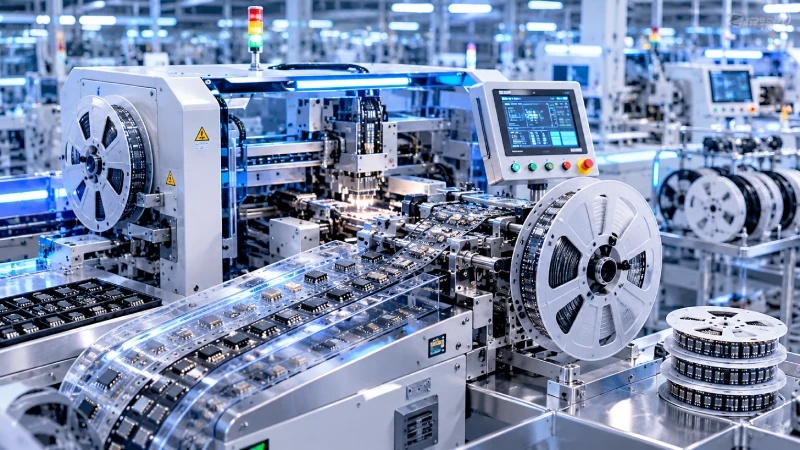
Modern SMT manufacturing depends heavily on packaging precision, production speed, and component protection. As electronic components become smaller and production volumes continue to rise, manufacturers are increasingly relying on automated packaging systems to improve efficiency and reduce errors. This is where the SMD component tape reel machine plays a critical role.
A high-quality tape and reel packaging system helps ensure accurate component placement, stable feeding during SMT assembly, reduced manual labor, and improved product consistency. Whether you are packaging ICs, LEDs, resistors, capacitors, or miniature semiconductor devices, choosing the right machine can directly impact production quality and operational costs.
In this guide, we will explain how SMD component tape reel machines work, the different machine types available, key features to evaluate, and how to select the best solution for your SMT packaging needs.
If you are exploring professional SMT packaging equipment, you can first review Tape & Reel Packaging Machines for Carrier Tape Assembly to understand the available automation solutions for modern electronics manufacturing.
What Is an SMD Component Tape Reel Machine?
An SMD component tape reel machine is an automated or semi-automated packaging system used to place surface-mount electronic components into carrier tape pockets, seal them with cover tape, and wind the finished tape onto reels for SMT production.
Tape and reel packaging has become the industry standard for automated PCB assembly because it allows SMT pick-and-place machines to feed components continuously and accurately during high-speed manufacturing.
A typical packaging system includes:
- Carrier tape
- Cover tape
- Reel winding system
- Feeding mechanism
- Inspection system
- Sealing module
The machine carefully positions each electronic component into embossed carrier tape pockets. After placement, the cover tape seals the pockets to secure the components during transportation and SMT feeding.
These machines are widely used for packaging:
- IC chips
- LEDs
- Capacitors
- Resistors
- Sensors
- Connectors
- Semiconductor devices
- Precision micro-components
Without reliable tape reel packaging, manufacturers may face issues such as component flipping, misalignment, feeder jams, static damage, and production interruptions.
How Does an SMD Tape Reel Machine Work?
Although machine configurations vary depending on automation level and component type, most SMD tape reel machines follow a similar packaging workflow.
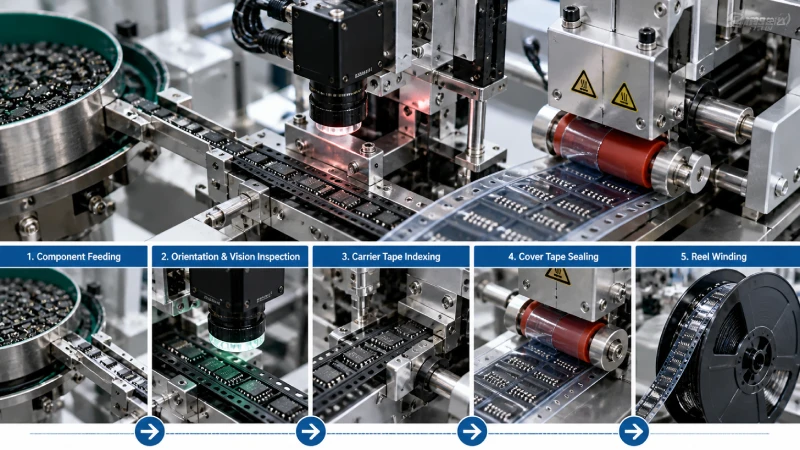
Component Feeding
The first step is component feeding. Components may enter the machine through:
- Vibratory bowl feeders
- Tray feeding systems
- Tube feeding systems
- Manual loading stations
For high-volume semiconductor packaging, automated tray transfer systems are commonly used to improve consistency and reduce labor dependency.
Component Alignment and Orientation
Once components enter the system, the machine aligns and positions them correctly before packaging.
Modern systems often include:
- CCD vision inspection
- Direction detection
- Polarity verification
- Pocket positioning control
Accurate orientation is especially important for polarized or highly sensitive electronic components.
Carrier Tape Indexing
The carrier tape moves through the machine in synchronized steps. Precision indexing systems ensure every pocket aligns correctly with the placement position.
This step directly affects:
- Packaging accuracy
- Feeder compatibility
- SMT line stability
Cover Tape Sealing
After components are inserted into the carrier tape pockets, the machine seals the tape using heat sealing or adhesive sealing technology.
For miniature and high-precision components, micro-adhesive sealing systems are often preferred because they provide stable sealing strength while minimizing thermal influence on sensitive parts.
Manufacturers handling small electronic devices can consider the Micro-Adhesive Carrier Tape Packaging Machine for Tape Sealing for precision SMT packaging applications.
Reel Winding and Output
Finally, the sealed carrier tape is wound onto reels under controlled tension.
Advanced systems may also include:
- Automatic counting
- Barcode printing
- Traceability systems
- Reel changing automation
- Finished reel inspection
This complete process allows manufacturers to achieve stable, repeatable, and high-speed SMT packaging.
Main Types of SMD Component Tape Reel Machines
Different production environments require different levels of automation. Choosing the right machine depends on production volume, component complexity, and budget.
Fully Automatic Tape Reel Machines
Fully automatic systems are designed for high-volume SMT production environments.
These machines typically provide:
- Automatic feeding
- Vision inspection
- Sealing
- Reel winding
- Defect detection
- Continuous operation
Advantages include:
- Minimal labor requirements
- Higher packaging speed
- Stable production quality
- Reduced human error
- Better scalability
They are ideal for:
- Semiconductor factories
- EMS providers
- Large electronics manufacturers
- 24/7 production environments
For large-scale automated packaging, the Fully Automatic Carrier Tape Packaging Machine is suitable for improving throughput and packaging consistency.
Semi-Automatic Tape Reel Machines
Semi-automatic machines combine manual operation with automated packaging functions.
These systems are commonly used for:
- Small-batch production
- R&D projects
- Flexible manufacturing
- Lower-volume packaging
Benefits include:
- Lower investment cost
- Easier operation
- Flexible changeover
- Suitable for diverse component types
Factories with frequent product changes often prefer the Semi-Automatic Carrier Tape Packaging Machine because of its flexibility and operational simplicity.
Visual Inspection Packaging Machines
High-value electronic components require stricter packaging quality control.
Machines equipped with visual inspection systems can detect:
- Missing components
- Reverse orientation
- Damaged parts
- Positioning errors
These systems improve packaging reliability and reduce downstream SMT defects.
For enhanced quality assurance, manufacturers can evaluate the Semi-Automatic Visual Inspection Carrier Tape Packaging Machine.
Pallet Transfer Packaging Machines
Pallet transfer systems automate the transfer of components from trays into carrier tape packaging.
They are especially useful for:
- IC packaging
- Semiconductor devices
- Precision electronic components
Benefits include:
- Reduced handling damage
- Higher positioning accuracy
- Improved automation
The Pallet Transfer Carrier Tape Packaging Machine is designed for automated tray-to-reel packaging workflows.
Key Features to Look for in an SMD Tape Reel Machine
Selecting the right equipment requires more than simply comparing price. Buyers should evaluate machine performance, flexibility, and long-term production value.
Packaging Accuracy
Precision is critical in SMT packaging. Poor pocket alignment can cause feeder problems and production interruptions.
Look for:
- Stable indexing systems
- High repeatability
- Accurate component positioning
Vision Inspection System
Advanced inspection systems improve packaging quality by automatically identifying defects.
Important functions include:
- Missing component detection
- Orientation verification
- Position correction
- Surface inspection
Production Speed
Packaging speed directly affects manufacturing efficiency.
Consider:
- Components per minute (CPM)
- Reel output capacity
- Continuous operation stability
ESD Protection
Electrostatic discharge can damage sensitive semiconductor components.
A reliable system should include:
- Anti-static design
- ESD-safe materials
- Grounding protection
Flexible Tape Compatibility
Modern production lines often handle multiple component sizes.
Choose machines compatible with:
- Various tape widths
- Different pocket depths
- Multiple reel sizes
Fast Changeover Capability
Quick tooling replacement reduces downtime and improves production flexibility.
This is especially important for:
- Contract manufacturers
- Multi-product facilities
- Small-batch production environments
Industries That Use SMD Component Tape Reel Machines
SMD tape reel machines are widely used across modern electronics manufacturing industries.
Consumer Electronics
Smartphones, wearable devices, and home electronics require massive volumes of SMT-packaged components.
Automotive Electronics
Automotive PCBs demand highly reliable packaging for:
- Sensors
- Control modules
- ADAS systems
- Power management components
LED Manufacturing
LED packaging requires stable alignment and protective sealing during high-speed handling.
Medical Electronics
Medical devices require precision packaging with strict quality control standards.
Industrial Electronics
Industrial automation systems rely on consistent SMT packaging for long-term operational stability.
As SMT manufacturing continues to expand globally, automated tape and reel packaging has become essential for maintaining competitive production efficiency.
Common Packaging Problems and How Modern Machines Solve Them
Poor packaging quality can create serious downstream SMT production issues.
Component Flipping
Vision systems and alignment control help ensure proper orientation before sealing.
Pocket Mismatch
Precision indexing systems improve carrier tape synchronization and reduce positioning errors.
Poor Sealing Strength
Inconsistent sealing can cause components to escape during transportation or SMT feeding.
Manufacturers can improve sealing reliability using dedicated validation equipment such as the Carrier Tape Peel Strength Tester for Packaging Validation.
Static Damage
ESD-safe designs reduce electrostatic discharge risks during packaging.
Reel Tension Instability
Automatic tension control systems help maintain stable winding and prevent tape deformation.
Modern packaging systems combine automation, inspection, and precision motion control to significantly reduce these packaging challenges.
How to Choose the Right SMD Tape Reel Machine
Choosing the best machine depends on your production requirements, component types, and long-term automation goals.
Evaluate Your Production Volume
High-volume production lines benefit from fully automatic systems, while smaller operations may prefer semi-automatic equipment.
Understand Your Component Size Range
Micro-components often require:
- Higher precision
- Advanced inspection
- Specialized sealing technology
Determine Your Automation Requirements
Consider:
- Labor availability
- Production targets
- Future expansion plans
- ROI expectations
Evaluate Supplier Support
A reliable equipment supplier should provide:
- Technical support
- Custom tooling
- Installation assistance
- Operator training
- Maintenance services
Consider Future Scalability
As production demand increases, scalable automation solutions help reduce future upgrade costs.
Before purchasing equipment, manufacturers should also verify compatibility with:
- Existing SMT lines
- Carrier tape specifications
- Reel standards
- Factory layout
Why Automation Is Becoming Essential in SMT Packaging
The electronics industry is moving rapidly toward higher automation levels.
Several factors are driving this trend:
- Rising labor costs
- Miniaturized components
- Higher packaging precision requirements
- Faster production cycles
- Industry 4.0 integration
Modern SMD packaging machines increasingly include:
- Smart monitoring systems
- Production data tracking
- Vision AI inspection
- Remote diagnostics
- Automated defect analysis
Factories investing in packaging automation can improve:
- Production consistency
- Packaging quality
- Operational efficiency
- Long-term manufacturing scalability
Conclusion
SMD component tape reel machines have become essential equipment in modern SMT manufacturing. From semiconductor packaging to consumer electronics production, reliable tape and reel systems help manufacturers improve efficiency, protect sensitive components, and maintain stable SMT assembly performance.
Whether you need flexible semi-automatic equipment or fully automated high-speed packaging systems, selecting the right machine can significantly improve packaging quality and reduce production costs.
As electronics manufacturing continues evolving toward greater automation and precision, investing in advanced tape reel packaging technology is becoming increasingly important for long-term competitiveness.