
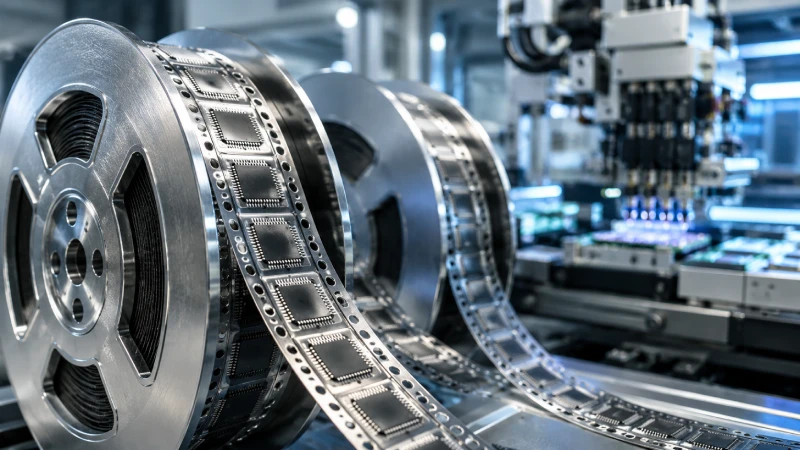
In modern SMT and semiconductor packaging, carrier tape material selection directly affects component protection, feeding stability, production efficiency, and long-term reliability. While plastic and paper carrier tapes dominate standard electronic packaging applications, metal carrier tape materials are increasingly used in high-precision and high-temperature environments where conventional materials may not provide enough strength, conductivity, or dimensional stability.
Metal carrier tape is commonly used for semiconductor devices, high-power LEDs, automotive electronics, aerospace components, and other sensitive electronic products that require superior anti-static performance and precise positioning during automated pick-and-place processes.
Compared with traditional plastic carrier tape, metal carrier tape offers better heat resistance, higher mechanical strength, improved conductivity, and reduced deformation during transportation or high-speed assembly. However, selecting the wrong metal material can lead to oxidation issues, excessive production costs, feeding instability, or poor forming precision.
This guide explains the most common metal carrier tape materials, their advantages, applications, manufacturing considerations, and how to choose the right material for your SMT packaging project.
What Is Metal Carrier Tape?
Metal carrier tape is a precision packaging material designed to transport and protect electronic components during automated SMT assembly. Similar to plastic carrier tape, it contains embossed or formed pockets that securely hold electronic parts while allowing accurate indexing through pick-and-place machines.
Unlike standard plastic tapes, metal carrier tapes are manufactured using conductive metal sheets or alloy materials. These materials provide higher structural rigidity and enhanced electrostatic discharge (ESD) protection, making them suitable for demanding industrial applications.
A typical metal carrier tape structure includes:
- Precision-formed cavities
- Sprocket holes for indexing
- Conductive surface properties
- Cover tape sealing compatibility
- Reel packaging compatibility
During SMT production, the carrier tape feeds components into automated placement equipment at high speed. The stability of the tape directly affects placement accuracy and production efficiency.
Manufacturers that require ultra-high precision packaging often combine metal carrier tapes with advanced carrier tape packaging machines to maintain consistent pocket dimensions and stable reel winding performance.
Common Metal Carrier Tape Materials
Different applications require different metal carrier tape materials. Factors such as conductivity, heat resistance, corrosion resistance, and production cost all influence material selection.
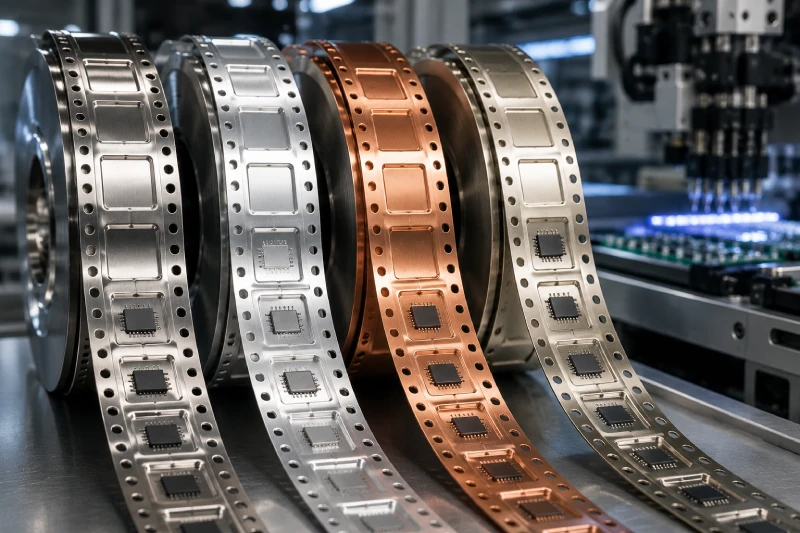
Stainless Steel Carrier Tape
Stainless steel is one of the most widely used metal carrier tape materials for high-end electronic packaging.
Its main advantages include:
- Excellent corrosion resistance
- High dimensional stability
- Strong mechanical strength
- High-temperature resistance
- Long-term durability
Stainless steel carrier tape is commonly used in semiconductor packaging, automotive electronics, and harsh industrial environments where stable performance is critical.
Because stainless steel maintains its shape under temperature fluctuations, it is ideal for applications requiring consistent feeding accuracy during high-speed SMT assembly.
Aluminum Carrier Tape
Aluminum carrier tape offers a lightweight alternative to stainless steel while still providing relatively good conductivity and thermal performance.
Advantages include:
- Lower weight
- Easier forming process
- Good heat dissipation
- Lower overall material cost
Aluminum is commonly used when manufacturers need a balance between performance and production efficiency. However, aluminum may not provide the same rigidity or wear resistance as stainless steel in extremely demanding applications.
Copper Alloy Carrier Tape
Copper alloy materials are mainly selected for applications requiring excellent electrical conductivity and EMI shielding performance.
Key benefits include:
- Superior conductivity
- Enhanced ESD protection
- Stable electrical performance
- Suitable for sensitive electronic devices
Copper alloy carrier tape is typically used for precision electronic components and specialized semiconductor applications.
Nickel-Plated Metal Carrier Tape
Nickel-plated carrier tapes are designed to improve corrosion resistance and conductive surface stability.
The nickel coating helps:
- Reduce oxidation
- Improve durability
- Enhance surface conductivity
- Increase environmental resistance
This type of material is often used for long-term storage or export packaging environments with high humidity exposure.
Why Metal Carrier Tape Is Used in High-End Electronic Packaging
The growing demand for miniaturized and highly sensitive electronic components has increased the importance of advanced packaging materials.
Superior Dimensional Stability
Metal carrier tapes provide excellent rigidity and structural stability compared with plastic materials. This reduces deformation during transportation, storage, and automated feeding.
Stable pocket dimensions help ensure:
- Accurate component positioning
- Reduced pick-and-place errors
- Improved production consistency
In high-speed SMT lines, even slight dimensional changes can cause feeding instability or component misalignment.
Better Heat Resistance
Many electronic manufacturing environments involve elevated temperatures, especially during semiconductor processing and reflow-related operations.
Metal materials can withstand higher temperatures without warping or softening, making them suitable for demanding thermal environments.
Enhanced ESD Protection
Electrostatic discharge can damage sensitive electronic components during transportation or assembly.
Conductive metal carrier tape materials help dissipate static electricity more effectively than standard plastic materials, reducing the risk of ESD-related failures.
Higher Mechanical Strength
Heavy or fragile electronic components require stable pocket support during handling and reel transportation.
Metal carrier tapes provide:
- Better pocket strength
- Reduced deformation risk
- Improved transportation durability
This becomes especially important for precision semiconductor devices and automotive electronic components.
Metal Carrier Tape vs Plastic Carrier Tape
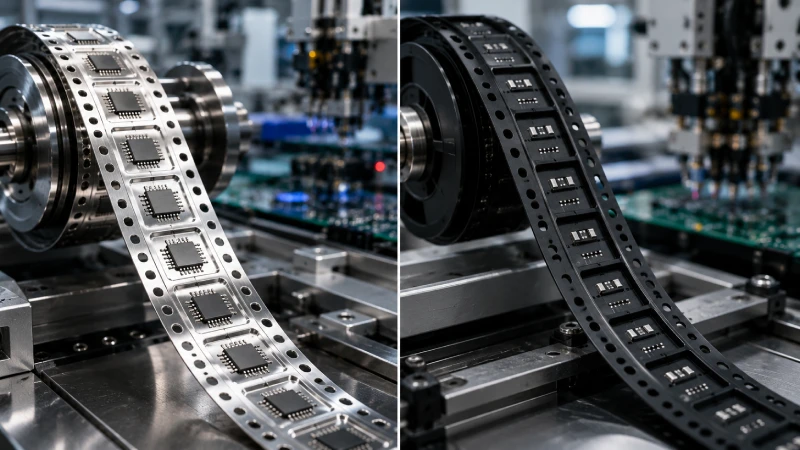
Choosing between metal and plastic carrier tape depends on application requirements, budget, and environmental conditions.
| Feature | Metal Carrier Tape | Plastic Carrier Tape |
|---|---|---|
| Conductivity | Excellent | Moderate to Good |
| Heat Resistance | Very High | Limited |
| Mechanical Strength | Excellent | Moderate |
| Production Cost | Higher | Lower |
| Weight | Heavier | Lightweight |
| Dimensional Stability | Excellent | Moderate |
| Typical Applications | Semiconductor, automotive | Standard SMT components |
Plastic carrier tape remains suitable for most conventional SMT packaging applications because it offers lower cost and easier mass production.
However, metal carrier tape becomes necessary when manufacturers require:
- Extreme dimensional precision
- High-temperature resistance
- Enhanced ESD protection
- Heavy component support
- Long-term durability
For advanced production environments, many manufacturers combine metal tapes with automated tape and reel packaging machines to improve packaging consistency and reduce manual handling errors.
Industries That Use Metal Carrier Tape Materials
Metal carrier tape materials are widely used across industries that demand reliability, conductivity, and precision packaging performance.
Semiconductor Industry
Semiconductor devices often require ultra-stable packaging environments due to their sensitivity to static electricity and dimensional variation.
Metal carrier tapes help maintain consistent feeding performance during automated chip packaging and assembly.
Automotive Electronics
Automotive components must operate under harsh temperature and vibration conditions.
Metal carrier tapes provide stronger protection for sensors, power devices, and electronic modules used in automotive systems.
Aerospace Electronics
Aerospace electronics require extremely reliable packaging materials because failure risks are unacceptable in mission-critical systems.
Metal carrier tape materials help improve packaging stability and durability for aerospace applications.
High-Power LED Packaging
High-power LED components generate significant heat during operation and may require conductive packaging solutions.
Metal carrier tapes help improve thermal stability and handling precision during manufacturing.
Medical Electronics
Medical devices often require high packaging precision and stable environmental performance.
Metal carrier tapes support the safe handling of miniature electronic medical components.
Key Factors When Choosing Metal Carrier Tape Materials
Selecting the correct metal carrier tape material requires balancing performance, reliability, and production cost.
Component Size and Weight
Heavier components require stronger pocket support to prevent movement during transportation and feeding.
Larger components may also require thicker metal materials for improved rigidity.
Conductivity Requirements
ESD-sensitive devices often require highly conductive packaging materials.
Manufacturers should evaluate:
- Static dissipation requirements
- Environmental humidity
- Electrical sensitivity levels
Operating Temperature
Applications involving elevated temperatures require materials with stable thermal performance.
Stainless steel is commonly selected for high-temperature environments due to its superior heat resistance.
Corrosion Resistance
Humidity exposure and long-term storage conditions can increase oxidation risks.
Nickel-plated or stainless steel materials are often preferred for export packaging or harsh environments.
Forming Precision
Precision pocket forming directly affects component feeding accuracy.
High-quality carrier tape forming machines help maintain consistent cavity dimensions and stable reel quality.
Cost Considerations
While metal carrier tape provides superior performance, it also increases material and processing costs.
Manufacturers should carefully balance:
- performance requirements
- production volume
- packaging environment
- long-term reliability needs
Common Problems with Metal Carrier Tape Materials
Despite their advantages, metal carrier tapes can still encounter several manufacturing and operational issues.
Material Deformation
Improper forming processes may cause dimensional inconsistencies or cavity deformation.
Precision tooling and stable forming equipment are essential for maintaining accuracy.
Surface Oxidation
Some metal materials may oxidize under humid conditions, affecting conductivity and surface quality.
Protective coatings and proper storage environments help reduce oxidation risks.
Feeding Instability
Poor reel winding or inconsistent pocket dimensions can lead to feeding errors during SMT assembly.
Manufacturers often use automated inspection systems to improve packaging consistency.
High Production Cost
Metal carrier tape production involves more complex processing than plastic tape manufacturing.
Cost optimization typically focuses on:
- material selection
- forming efficiency
- tooling lifespan
- automation integration
Future Trends in Metal Carrier Tape Materials
As electronic devices continue to shrink in size while increasing in performance, carrier tape materials must evolve to support higher precision packaging requirements.
Future development trends include:
- Ultra-thin metal carrier tape materials
- Hybrid conductive materials
- Improved corrosion-resistant coatings
- AI-based vision inspection systems
- Higher precision forming technologies
Automation will also play a larger role in next-generation packaging systems. Advanced SMT tape and reel packaging machines are increasingly integrated with vision inspection, MES systems, and intelligent feeding technologies to improve production efficiency and reduce defects.
Conclusion
Metal carrier tape materials play an increasingly important role in high-end SMT and semiconductor packaging applications. Compared with traditional plastic materials, metal carrier tapes provide superior dimensional stability, stronger conductivity, higher heat resistance, and better mechanical durability.
However, selecting the correct material requires careful evaluation of component characteristics, environmental conditions, conductivity requirements, and production cost considerations.
Whether you are packaging semiconductor devices, automotive electronics, aerospace components, or high-power LEDs, choosing the right metal carrier tape material can significantly improve packaging reliability and SMT production efficiency.
For manufacturers seeking stable, high-precision packaging performance, combining advanced metal carrier tape materials with automated packaging equipment is becoming an essential part of modern electronic manufacturing.