
Introduction
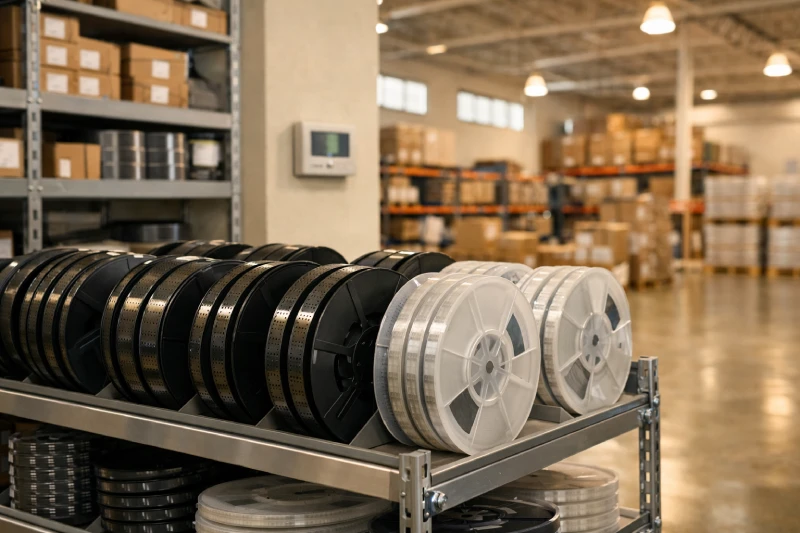
Carrier tape performance on the SMT line is often evaluated only after feeding problems appear. However, many instability issues do not originate from design or manufacturing defects, but from improper storage conditions before the tape ever reaches the feeder. Minor deformation, moisture exposure, reel compression, or electrostatic imbalance during storage can gradually change pocket geometry and dimensional consistency. These changes may not be visible during routine visual inspection, yet they can directly affect indexing accuracy and component positioning during high-speed placement.
For packaging engineers and procurement teams, storage is not simply a warehousing matter — it is a reliability control point. Understanding how environmental conditions, storage orientation, and handling practices influence carrier tape integrity helps reduce avoidable downtime and troubleshooting costs. The following sections outline practical engineering considerations to help prevent storage-related performance risks before materials move to the SMT production line.
Why Does Improper Storage Affect Carrier Tape Feeding Stability?
Carrier tape is designed to maintain dimensional stability under controlled conditions. During storage, however, environmental stress and mechanical loading can gradually alter its geometry. Even slight pocket distortion or reel edge compression may affect how the tape advances through feeder rails. These deviations are often subtle and may not be detected until intermittent feeding issues appear during production.
Temperature fluctuation can cause expansion and contraction cycles that influence pitch consistency. Prolonged exposure to high humidity may change material rigidity, especially in thinner gauge structures. When reels are stacked under uneven pressure, the outer layers may deform more than inner layers, creating inconsistent tension during unwinding. Over time, these small changes accumulate and translate into indexing variation, pocket misalignment, or component micro-shift inside the cavity.
From an engineering perspective, feeding instability is rarely random. Storage conditions determine whether the tape maintains its original structural tolerance before entering the SMT line. Recognizing storage as part of the process control chain helps reduce unexpected line interruptions and unnecessary feeder troubleshooting.
What Temperature and Humidity Conditions Are Safe for Carrier Tape Storage?
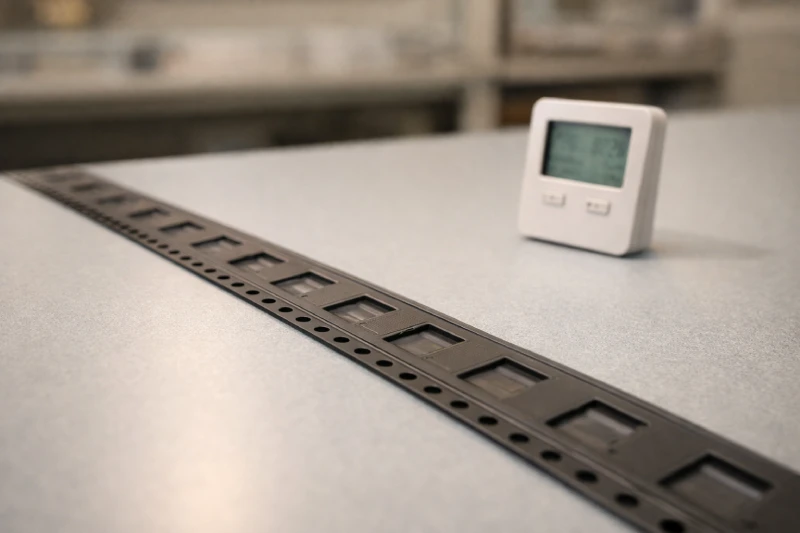
Carrier tape materials respond gradually to environmental exposure, even when no visible damage appears. Stable temperature helps preserve dimensional consistency, while excessive fluctuation can introduce repeated expansion and contraction cycles. Over time, these cycles may influence pocket geometry and pitch alignment, especially in precision applications where tolerance control is critical.
Humidity control is equally important. Elevated moisture levels can alter surface characteristics and reduce structural rigidity, particularly in thinner or highly formed pocket designs. In certain cases, high humidity may also influence electrostatic behavior, affecting how components settle within cavities before sealing. On the other hand, extremely dry conditions may increase static buildup, which can create handling risks during unwinding or feeding.
For engineering teams, the objective is not to maintain extreme environmental control, but to ensure stable and moderate conditions without sudden variation. Consistency is more critical than exact numbers. Monitoring warehouse climate and avoiding storage near heat sources, loading docks, or direct airflow can significantly reduce environmental stress before materials move toward SMT assembly.
How Long Can Carrier Tape Be Stored Before Performance Degrades?
Carrier tape does not typically fail due to age alone, but prolonged storage increases the probability of environmental influence and mechanical stress accumulation. Over time, even under moderate conditions, material relaxation may slightly alter flatness or pocket rigidity. These gradual changes are rarely dramatic, yet they can affect performance in high-speed SMT environments where consistency matters.
Inventory duration should therefore be evaluated together with storage quality. A reel kept in stable, controlled conditions may remain reliable longer than one exposed to temperature fluctuation or repeated handling. Batch traceability and rotation practices such as first-in, first-out (FIFO) help minimize unnecessary aging risk.
For procurement and warehouse teams, the key question is not simply “how long can it sit,” but whether storage conditions have remained consistent throughout that period. Establishing a reasonable inventory turnover cycle reduces uncertainty and helps maintain predictable feeding behavior once the tape enters production.
Should Carrier Tape Be Stored Vertically or Horizontally?
Storage orientation influences how mechanical load is distributed across the reel. When reels are stacked horizontally for extended periods, the lower layers may experience uneven compression. This pressure can gradually affect edge alignment or introduce slight deformation to the outer wraps. While such changes are often minimal, they may alter unwinding tension or feeding smoothness during production.
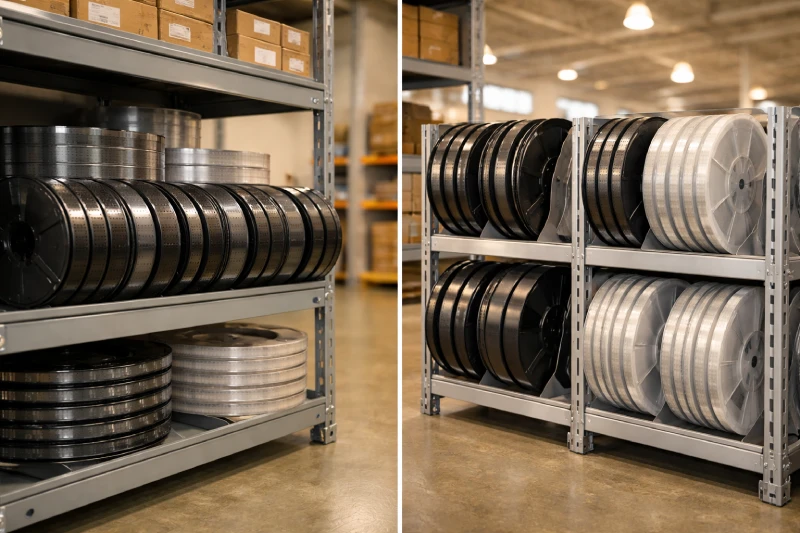
Vertical storage reduces continuous surface compression, but it requires stable support to prevent leaning or imbalance. If reels tilt or rest against hard surfaces, localized stress can form along the flange or tape edge. Improper shelving or overloading may also distort reel geometry, indirectly influencing pitch stability when the tape advances through feeder mechanisms.
From an engineering standpoint, the goal is balanced load distribution and structural support. Storage systems should minimize sustained pressure on any single area of the reel. Consistent orientation, adequate spacing, and controlled stacking height help preserve dimensional integrity before the tape reaches the SMT line.
How to Prevent Moisture, Dust, and Mechanical Compression During Storage?
Environmental contamination and physical stress are common but preventable storage risks. Moisture exposure may gradually affect material stiffness and surface condition, especially when reels are left unsealed in fluctuating warehouse climates. Using protective packaging that limits humidity exchange helps maintain dimensional consistency before deployment. Storage areas should also avoid proximity to loading docks or zones with frequent air exchange, where environmental variation is harder to control.
Dust accumulation can interfere with cavity cleanliness and may introduce minor friction during unwinding. Even small particles trapped between layers can increase localized pressure when reels are tightly wound. Keeping storage shelves clean and ensuring reels remain covered reduces contamination risk.
Mechanical compression is another overlooked factor. Excessive stacking height or tightly packed pallets may concentrate weight unevenly across reel flanges. Over time, this sustained load can influence tape flatness or edge condition. Managing stacking limits, spacing reels properly, and avoiding direct heavy contact help preserve structural stability before materials transition to the SMT process.
Does Storage Condition Differ for Custom or Anti-Static Carrier Tape?
Different carrier tape constructions may respond differently to storage environments. Custom pocket geometries, especially those designed with tighter dimensional tolerances, can be more sensitive to long-term mechanical stress or temperature variation. Even minor distortion may influence component seating consistency when cavity dimensions are highly optimized.
Anti-static structures also require stable environmental control. Material formulations intended to manage electrostatic behavior can be influenced by extreme humidity shifts. Excessively dry conditions may increase static potential during unwinding, while prolonged high humidity can alter surface characteristics. Maintaining balanced and consistent storage conditions helps preserve the intended performance profile.
For engineering and procurement teams, the key consideration is matching storage discipline with product sensitivity. When handling custom or electrostatic-controlled designs, minimizing environmental fluctuation becomes even more critical to maintaining predictable SMT performance.
How to Inspect Carrier Tape Before Moving It to the SMT Line?
Before transferring stored carrier tape to production, a brief inspection helps identify potential storage-related impact. Visual examination should focus on reel edge alignment, flange integrity, and any signs of deformation on the outer wraps. Uneven winding, surface irregularities, or compression marks may indicate prolonged mechanical stress.
Checking flatness and pocket uniformity on a short unwound section can reveal subtle distortion. The tape should advance smoothly without irregular tension or resistance. Engineers may also observe whether components seat consistently within cavities before sealing, especially if the material has been stored for an extended period.
This pre-production evaluation does not require complex testing. A structured inspection routine reduces uncertainty and helps confirm that storage conditions have not compromised dimensional stability prior to SMT feeding.