
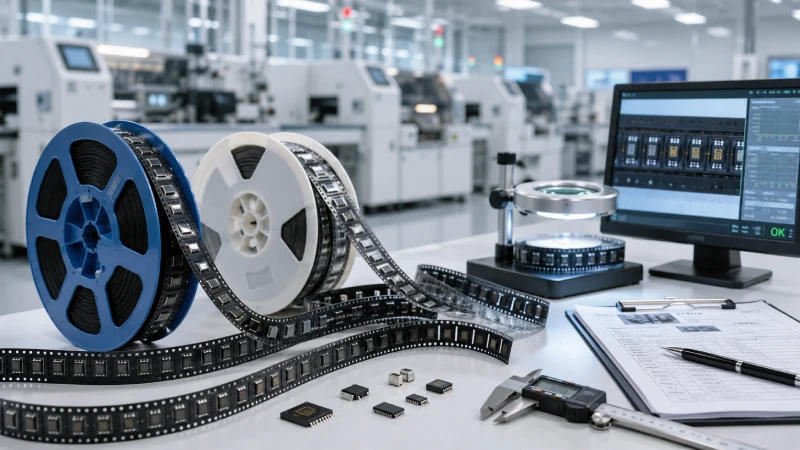
Choosing an embossed carrier tape manufacturer is not only about finding a supplier that can form plastic tape pockets. For SMT packaging buyers, electronic component suppliers, semiconductor distributors, and OEM sourcing teams, the real question is whether the manufacturer can help protect components, keep parts properly positioned, and support stable feeding during downstream assembly.
Embossed carrier tape plays a direct role in how components are stored, shipped, sealed, and presented to pick-and-place equipment. If the pocket fit is poor, components may tilt, rotate, jump during cover tape peeling, or become difficult to pick during SMT feeding. These issues may not appear serious during purchasing, but they can create quality complaints, line interruptions, and extra handling costs later.
That is why buyers should evaluate an embossed carrier tape supplier as a packaging solution partner, not just a tape producer. A capable supplier should understand material selection, pocket design, tape width, cover tape matching, reel packaging, sampling, and inspection. If you are reviewing suppliers for a new project, Jiushuo’s embossed carrier tape for SMT packaging can be a practical starting point for understanding available tape options and packaging support.
Why Manufacturer Capability Matters in SMT Packaging
In SMT packaging, the carrier tape is not a passive packaging material. It controls how components are held in position from packing to machine feeding. A well-made embossed carrier tape helps reduce component movement, protect sensitive parts, and keep the feeding process consistent.
For buyers, this means supplier capability matters at several stages. Before production, the manufacturer should understand the component shape, size, orientation, and handling risk. During sample development, the supplier should confirm whether the pocket design is suitable for the part. During production, the tape should remain consistent across batches, with stable pocket forming, clean winding, and suitable cover tape sealing.
A low-cost supplier may still be able to produce simple carrier tape, but if the supplier cannot help review pocket fit, tape width, material choice, or sealing compatibility, the buyer may face avoidable problems after mass production. For components supplied to OEMs, EMS factories, or semiconductor customers, reliable packaging is part of product quality.
Key Capabilities to Check When Choosing an Embossed Carrier Tape Manufacturer
When comparing embossed carrier tape manufacturers, buyers should look beyond a basic quotation. The most useful evaluation is whether the supplier can connect manufacturing capability with real packaging benefits.
| Manufacturer Capability | What Buyers Should Check | Buyer Benefit |
|---|---|---|
| Material options | Availability of PS, PC, PET, conductive, anti-static, or clear material options | Helps match packaging to visibility, protection, and ESD needs |
| Pocket design support | Ability to design pockets based on component shape, size, and orientation | Reduces movement, rotation, and unstable pickup |
| Tape width availability | Support for common SMT tape widths and suitable reel matching | Easier compatibility with packaging and feeding equipment |
| Cover tape compatibility | Ability to recommend matching cover tape and sealing conditions | Improves sealing stability and peeling performance |
| EIA-481 support | Understanding of common tape-and-reel packaging expectations | Helps meet downstream customer and SMT process requirements |
| Sampling process | Prototype samples before bulk production | Reduces risk before mass order confirmation |
| Inspection capability | Dimensional checks, visual inspection, winding checks, and packaging review | Supports consistent batch quality |
| Lead time control | Clear sample and production schedules | Helps purchasing teams plan delivery and project timelines |
This table can be used as a simple supplier review checklist. The goal is not to turn every buyer into a packaging engineer. The goal is to ask the right questions before placing an order.
Material Options: Choosing the Right Tape for Your Components
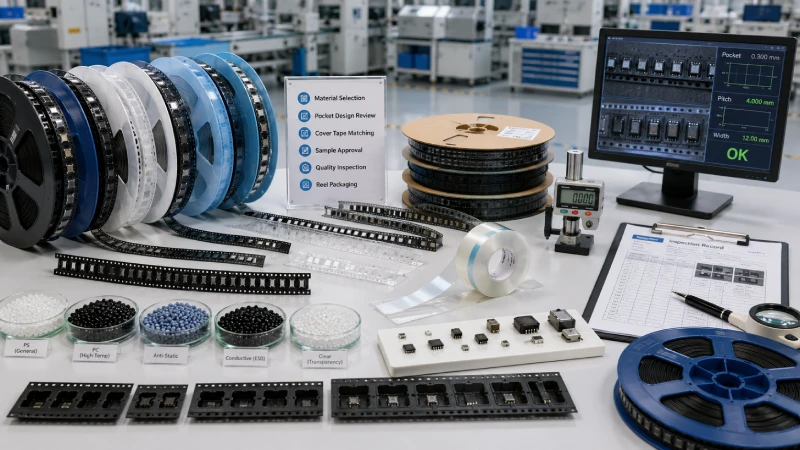
Material selection should match the component and the packaging environment. For some parts, clear carrier tape may be helpful because it allows easier visibility during inspection. For ESD-sensitive components, conductive or anti-static carrier tape may be required to reduce electrostatic risk. For heavier or larger components, the tape material may need to provide better forming strength and pocket stability.
Buyers do not always need to decide the material alone. A good embossed carrier tape manufacturer should ask about the component type, ESD sensitivity, storage conditions, shipping method, and downstream packaging requirements. These details help the supplier recommend a practical material option instead of simply quoting the cheapest available tape.
For projects where material, pocket shape, and packaging format need to be developed around the component, Jiushuo’s custom carrier tape service can help buyers evaluate a more tailored solution.
Pocket Fit and Feeding Stability: What Buyers Should Ask
Pocket fit is one of the most important factors in embossed carrier tape quality. The pocket should hold the component securely enough to reduce movement, but not so tightly that the part becomes difficult to pick or remove during assembly.
From the buyer’s perspective, several practical questions matter:
Will the component sit flat inside the pocket?
Is there enough clearance without excessive shaking?
Can the pocket help reduce rotation during transport?
Will the part remain stable when the cover tape is peeled?
Is the tape suitable for smooth SMT feeding?
These questions are more useful than focusing only on technical pocket dimension terms. A capable supplier should be able to review component drawings, datasheets, or actual samples before confirming the design. For irregular, tall, fragile, or ESD-sensitive components, sample testing becomes especially important.
The best result is not simply a pocket that looks correct on paper. The best result is a packaging format that protects the part, feeds smoothly, and meets the buyer’s production requirements.
Standard vs Custom Embossed Carrier Tape
Not every project needs a custom solution. In some cases, standard embossed carrier tape can be enough. In other cases, custom embossed carrier tape is the safer and more reliable choice.
Standard Embossed Carrier Tape
Standard embossed carrier tape is suitable when the component size and shape are common, the required tape width is already available, and the packaging requirement does not involve special orientation or protection needs. Buyers may choose standard tape when they need faster delivery, lower development cost, or packaging for components that fit existing pocket formats.
For simple components, standard tape can be practical and efficient. However, buyers should still confirm material, tape width, cover tape matching, and reel packaging before placing a bulk order. Even a standard tape should be checked for basic fit and feeding stability.
Custom Embossed Carrier Tape
Custom embossed carrier tape is more suitable when the component has an unusual shape, a fragile structure, a heavier body, or a special orientation requirement. It is also useful when standard pockets allow too much movement, cause component rotation, or create pickup issues during SMT feeding.
A custom solution usually begins with component information, such as drawings, samples, or datasheets. The manufacturer then reviews the component shape, pocket direction, tape width, material, cover tape matching, and reel packaging needs. This process may take longer than standard tape selection, but it can reduce long-term quality risk.
For buyers comparing both options, Jiushuo’s embossed carrier tape product page explains the general product direction, while the custom embossed carrier tape manufacturer page is more suitable for projects requiring special pocket development.
Cover Tape Matching Is Part of the Supplier Decision
Embossed carrier tape should not be evaluated alone. Cover tape is part of the same packaging system. If the cover tape does not seal properly, components may not stay protected. If the peel behavior is unstable, parts may move during feeding or become difficult for pick-and-place equipment to handle.
Buyers should ask whether the carrier tape manufacturer can recommend compatible cover tape. The supplier should consider the carrier tape material, sealing conditions, component sensitivity, and feeding requirements. The goal is not only to close the pocket, but to create a stable packaging format that performs well during storage, transport, and SMT feeding.
Key buyer concerns include stable sealing, smooth peeling, reduced component jumping, and compatibility with the selected carrier tape material. For complete packaging matching, buyers can review Jiushuo’s cover tape options together with the selected embossed carrier tape.
EIA-481 Support and Tape-and-Reel Packaging Experience
Many electronic component suppliers and semiconductor distributors need packaging that aligns with common tape-and-reel expectations. This is especially important when components are supplied to OEMs, EMS factories, or automated assembly lines.
A qualified embossed carrier tape supplier should understand tape width, pocket layout, sprocket hole consistency, reel matching, and cover tape compatibility. The supplier should also be able to discuss packaging direction, reel size, and downstream handling needs.
For buyers, EIA-481 support does not need to become an overly technical conversation. The practical question is whether the supplier understands standard tape-and-reel packaging requirements and can help reduce mismatch between packaging design and SMT feeding. This is important when buyers need packaging that can be accepted by multiple downstream customers.
If your project requires carrier tape, cover tape, and reel packaging as a complete solution, Jiushuo’s tape and reel packaging service can help connect these packaging elements into one practical process.
Sampling, Lead Time, and Production Communication
Before mass production, sampling is one of the most useful steps for reducing purchasing risk. A sample allows buyers and suppliers to confirm pocket fit, material choice, tape width, cover tape matching, and overall packaging appearance.
Buyers should ask the supplier how sample development works. Does the supplier need component samples? Can they work from a drawing or datasheet? How long does the sample process take? If the first sample needs adjustment, how will the modification be handled? These questions help avoid confusion before bulk production.
Lead time should also be discussed clearly. Standard embossed carrier tape may have a shorter lead time if the material and size are available. Custom embossed carrier tape usually requires more time because pocket design, tooling, sampling, and approval may be involved. A reliable manufacturer should communicate sample lead time, production lead time, and shipping arrangement in a clear way.
Good communication is especially valuable for OEM sourcing and quality teams. It helps purchasing, engineering, packaging, and logistics teams stay aligned before the order moves into production.
Inspection Points Buyers Should Confirm Before Bulk Orders
Inspection is another important part of supplier evaluation. Buyers do not need to inspect every detail themselves, but they should understand what the manufacturer checks before shipment.
Common inspection points include pocket forming quality, dimensional consistency, tape flatness, sprocket hole consistency, cover tape sealing condition, winding quality, visual defects, reel packaging, and batch consistency. These checks help ensure the tape is not only produced, but produced in a stable and repeatable way.
For custom projects, inspection becomes even more important because the tape is designed around a specific component. A small inconsistency in pocket forming or winding may affect how the component sits inside the tape or how smoothly the tape feeds through equipment.
Buyers should ask suppliers what inspection process they use, what records can be provided if needed, and how quality issues are handled. A supplier that can answer these questions clearly is usually easier to work with for long-term production.
What to Send Before Requesting a Quote
A clear request helps the manufacturer respond faster and recommend the right solution. Before requesting a quote, buyers should prepare as much project information as possible.
Useful information includes:
- Component drawing or datasheet
- Component samples, if available
- Component length, width, height, and orientation requirement
- Required tape width, if already known
- Material preference or ESD requirement
- Cover tape requirement
- Quantity estimate
- Reel size or packaging format
- Target application or SMT process requirement
- Expected sample and production timeline
- Shipping destination
Even if buyers do not have every detail ready, sharing the available information is still helpful. For example, if the buyer does not know the correct tape width, the supplier may be able to recommend one after reviewing the component size and packaging requirement.
The more complete the information, the easier it is for the embossed carrier tape manufacturer to determine whether a standard tape is suitable or whether a custom pocket design is needed.
Why Choose Jiushuo as Your Embossed Carrier Tape Manufacturer
Jiushuo supports embossed carrier tape solutions for SMT component packaging, including standard tape options and custom carrier tape development. For buyers who need reliable component protection, stable pocket fit, and practical packaging support, Jiushuo can help review material selection, pocket design, tape width, cover tape matching, sampling, production, and inspection requirements.
Jiushuo works with packaging needs from electronic component suppliers, semiconductor distributors, OEM sourcing teams, and SMT-related customers. Whether the project requires a common tape format or a customized pocket for special components, the goal is to provide a packaging solution that supports protection, handling, and feeding stability.
Need Embossed Carrier Tape for Your SMT Packaging Project?
If you are sourcing embossed carrier tape for electronic components, send Jiushuo your component drawing, sample, tape width requirement, material preference, cover tape requirement, and quantity estimate. Jiushuo can help review whether standard embossed carrier tape is suitable or whether a custom pocket design is needed.
For SMT packaging buyers and component suppliers, early packaging review can reduce production risk and improve downstream handling. Contact Jiushuo to request an embossed carrier tape quote, sample evaluation, or packaging recommendation for your project.
FAQ
How do I choose the right embossed carrier tape manufacturer?
Choose a manufacturer that can support material selection, pocket design, tape width matching, cover tape compatibility, sampling, production communication, and inspection. For SMT packaging, supplier experience with component protection and feeding stability is more important than price alone.
When do I need custom embossed carrier tape?
Custom embossed carrier tape is usually needed when the component has an unusual shape, fragile structure, heavier body, special orientation requirement, or when standard tape causes movement, rotation, or unstable pickup.
What materials are commonly used for embossed carrier tape?
Common options may include PS, PC, PET, conductive, anti-static, or clear materials. The right choice depends on component sensitivity, ESD requirements, visibility needs, storage conditions, and packaging requirements.
Does cover tape affect SMT feeding stability?
Yes. Cover tape affects sealing, peeling, and component stability during feeding. A suitable cover tape helps keep components protected while allowing smooth peeling during the SMT process.
What information should I send for a quote?
Send the component drawing or datasheet, component sample if available, dimensions, orientation requirement, tape width, material preference, cover tape requirement, quantity estimate, reel size, and target timeline.
Can embossed carrier tape support EIA-481 packaging requirements?
A qualified embossed carrier tape supplier should understand common tape-and-reel packaging requirements, including tape width, pocket layout, sprocket hole consistency, reel matching, and cover tape compatibility. Buyers should confirm the exact requirement with the supplier before production.