
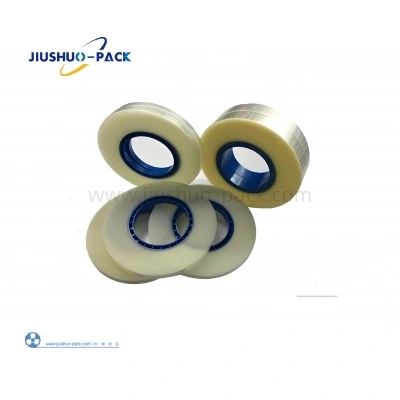
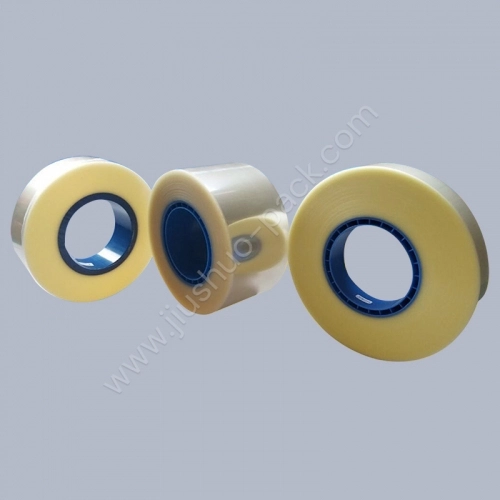
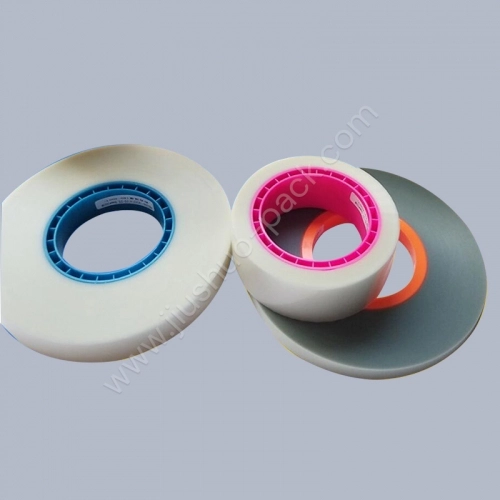
Precision Carrier Tape Packaging Solutions from China

Heat Activated Cover Tape for SMT Automated Packaging

Heat Activated Cover Tape is designed for pressure-based continuous sealing systems used in high-throughput SMT taping operations.The sealing layer activates under controlled mechanical pressure, eliminating the need for external heating modules while maintaining consistent seal integrity across long production runs.

This cover tape is positioned for automated, inline packaging environments where sealing stability, width alignment, and peel-force consistency are critical to downstream pick-and-place performance.

It is intended for integration with embossed carrier tapes in reel-to-reel processes requiring uninterrupted operation and repeatable sealing behavior.

    Production Environment Suitability

  • Pressure-only continuous sealing lines
  • High-speed SMT taping machines with roller-based sealing
  • Inline taping systems without external heating control
  • Reel-to-reel automated packaging workflows
  • Stable feeder peel performance requirements
  • Long-run production with minimal parameter drift
  • Share:

Sealing Structure & Working Principle

  • Sealing Structure

    Heat Activated Cover Tape features a multi-layer film structure with a pressure-responsive sealing layer designed for continuous taping systems. The sealing layer remains stable during handling and forms a uniform bond when compressed against the carrier tape flange.

    The structure supports consistent sealing performance across long reel-to-reel production runs.

    Working Principle

    Sealing is achieved through pressure-based activation during continuous contact at the sealing station. Applied pressure and contact time create a repeatable seal line along both carrier tape flanges.

    The sealed interface delivers stable, predictable peel behavior at standard SMT feeder peel angles, supporting reliable downstream feeding.
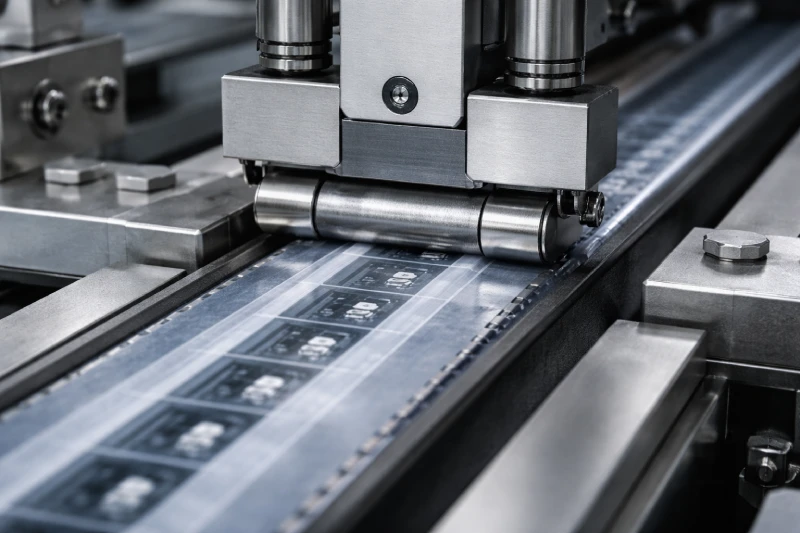
  • Heat activated cover tape sealing structure showing pressure-based bonding onto embossed carrier tape during continuous SMT reel-to-reel packaging

Anti-Static Configuration & Model Classification

Heat Activated Cover Tape is available in anti-static configurations to support stable handling of ESD-sensitive components during taping, storage, transport, and feeder use. The anti-static layer is engineered to reduce charge accumulation on the cover tape surface without changing the pressure-based sealing behavior.

Configuration Logic

  • Single-sided anti-static: anti-static performance on the outer surface for handling and line contact control

  • Double-sided anti-static: anti-static on both sides for applications requiring controlled charge behavior across the full tape interface

Model Classification (Heat Activated)

  • JSLF-06D — Single-sided anti-static heat activated cover tape

  • JSLF-06S — Double-sided anti-static heat activated cover tape

What to Confirm Before Selection

  • Component ESD sensitivity level and handling requirement

  • Required anti-static coverage (single vs double side)

  • Reel length preference aligned with line changeover frequency

  • Target peel behavior stability at feeder-level operation

Models shown below focus on anti-static configurations for pressure-based continuous sealing lines.

Product Model Type Cover Tape ESD Thickness Length
Heat Activated Cover Tape JSLF-06D Single-sided anti-static cover tape ESD anti-static 10^7–10^9 58u ± 5u 200M/R, 400M/R, 500M/R
Heat Activated Cover Tape JSLF-06S Double-sided anti-static cover tape ESD anti-static 10^7–10^9 58u ± 5u 200M/R, 400M/R, 500M/R

Carrier Tape Compatibility & Width Matching

For stable production, cover tape width must match the carrier tape width so the sealing line forms consistently on both flanges without overhang, skew, or partial contact.

  • Compatibility Focus

    • Compatible with standard embossed carrier tapes used in SMT automated packaging

    • Sealing performance depends on flange geometry, tape flatness, and width tolerance control

    • Width mismatch can lead to edge lifting, inconsistent seal bands, or unstable peel behavior at feeder level

  • Width Matching Rule

    • Select cover tape width based on carrier tape width specification

    • Confirm final width with actual carrier tape samples when flange structure or material differs from standard

Width Matching Select cover tape width based on carrier tape width to ensure full flange coverage and stable sealing bands.

Specification 8 12 16 24 32 44 56 72 88
Carrier tape width (mm) 8 12 16 24 32 44 56 72 88
Cover tape width (mm) 5.3 9.3 13.3 21.3 25.5 37.5 49.5 65.5 81.5

Suitable SMT Automation Scenarios

Heat Activated Cover Tape is suited for SMT taping environments where continuous operation, sealing stability, and feeder-level consistency are prioritized over flexible manual adjustment. It is typically applied in automated lines where sealing parameters are fixed and optimized for long production runs.

Typical application scenarios include:

  • High-speed reel-to-reel SMT taping lines

  • Automated taping systems integrated with inspection or vision stations

  • Component packaging lines requiring consistent peel behavior at feeder level

  • Continuous production with minimal line stops or parameter changes

  • Applications where external heating control is not available or not preferred

This cover tape performs best in environments where carrier tape design, sealing pressure, and line speed are standardized, allowing the pressure-activated sealing layer to operate within a stable process window.

Process Stability & Handling Considerations

Heat Activated Cover Tape is designed for pressure-based continuous sealing, where process stability depends on maintaining a consistent sealing window across the full reel length.

Stable results come from controlling sealing contact conditions and minimizing variation introduced by line setup, tape geometry, and storage handling.

  • Process Stability Factors

    • Sealing pressure consistency: stable, repeatable pressure at the sealing head/rollers to keep the seal band uniform
    • Contact time vs line speed: changes in speed alter dwell time and can shift sealing stability if the window is narrow
    • Tape path control: stable guiding and edge alignment to prevent flange offset and uneven seal bands
    • Carrier tape flatness and flange condition: flange deformation, warpage, or debris can reduce sealing continuity
    • Reel tension control: avoid excessive tension that can induce edge lift or micro-shift along the tape path
  • Handling & Storage Considerations

    • Keep reels sealed and protected from contamination (dust/oil) at the sealing interface
    • Avoid bending, creasing, or edge damage that can disturb flange contact and peel behavior
    • Use consistent unwind direction and reel mounting to reduce tracking variation
    • Validate performance after long storage or environmental exposure using a short line trial before mass runs

Line-Side Setup Checklist (Before Production)

  • Confirm width match and edge alignment using carrier tape samples

  • Set and lock sealing pressure, then verify seal band continuity across both flanges

  • Run a short trial at target line speed to confirm stable peel behavior at feeder-level conditions

Sampling, Validation & Delivery Timeline

  • Sampling Scope

    • Model confirmation (JSLF-06D or JSLF-06S)
    • Cover tape width selection based on carrier tape specification
    • Sample reel preparation aligned with intended sealing method and line speed
  • Line Validation Focus

    • Seal band continuity across both carrier tape flanges
    • Peel behavior consistency at standard feeder peel angles
    • Stability across short trial runs and extended reel sections
  • Delivery Timeline Logic

    • Sample preparation after specification confirmation
    • Validation feedback used to lock final configuration
    • Production scheduling aligned with reel length and order volume
This staged approach reduces line risk by ensuring the sealing interface is verified before scaling to full production.

Request A Quote

Header Form