
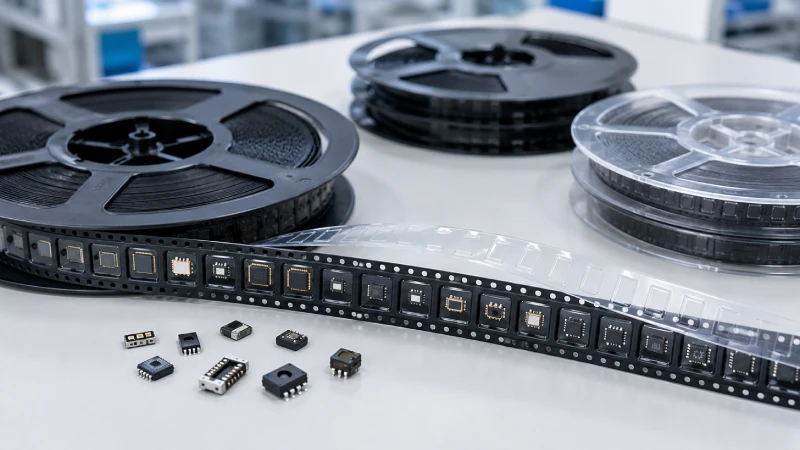
Reliable tape-and-reel packaging involves much more than placing electronic components into a strip of carrier tape. For components to remain protected during handling, transportation, storage, and automated assembly, the carrier tape, pocket structure, cover tape, plastic reel, winding direction, and ESD performance must work as one coordinated system.
A carrier tape may fit a component correctly, but the final package can still fail if the cover tape does not seal consistently, the reel does not match the tape width, or the winding direction is unsuitable for the SMT feeder. This is why electronic component manufacturers and sourcing teams should evaluate the complete packaging combination rather than purchasing each material separately.
Jiushuo supports buyers with carrier tape solutions, cover tape, plastic reels, custom pocket development, sampling, and coordinated tape-and-reel packaging materials for different electronic components and production requirements.
What Is Included in a Complete Tape-and-Reel Packaging Solution?
A complete tape-and-reel packaging solution normally consists of several closely connected elements.
Carrier Tape
Carrier tape holds and separates individual components. Its width, pitch, material, pocket depth, and sprocket-hole position must suit both the component and the downstream packaging process.
For relatively simple components, an existing standard carrier tape may be available. However, components with unusual dimensions, tall profiles, fragile leads, asymmetric shapes, or strict orientation requirements often need custom embossed carrier tape.
The carrier tape pocket should allow the component to enter and leave the pocket smoothly while limiting unnecessary movement during winding and transportation.
Cover Tape
Cover tape seals the components inside the carrier tape pockets. It helps prevent components from escaping, becoming contaminated, or changing orientation during handling.
The correct cover tape for carrier tape should be selected according to the carrier tape width, material, sealing method, sealing rail design, and required peel performance.
A strong seal is not automatically a good seal. If the peel force is too high or unstable, the cover tape may interrupt automated feeding. If it is too low, the tape may open during winding, shipping, or storage.
Plastic Reel
The plastic reel supports the packaged tape and keeps it organized during transport, storage, and use. Reel diameter, reel width, hub size, and winding direction should be confirmed before mass production.
Different projects may require different reel capacities. A smaller reel may be convenient for samples or low-volume production, while a larger reel can hold more components and reduce reel changes on the assembly line.
Jiushuo provides plastic reel options for carrier tape that can be selected according to tape width and packaging requirements.
Supporting Packaging Details
A complete solution may also include:
- Leader and trailer tape
- Component orientation control
- ESD packaging requirements
- Labels and traceability information
- Moisture-barrier or outer packaging
- Components-per-reel confirmation
- Sample reels for production testing
These details may look secondary, but they often determine whether the finished reel can be used directly and efficiently by the buyer.
Packaging Elements and Why They Matter
| Packaging Element | Main Function | Why It Matters |
|---|---|---|
| Carrier tape | Holds and separates components | Controls position, orientation, pitch, and protection |
| Pocket design | Matches component geometry | Reduces movement, rotation, sticking, and damage |
| Cover tape | Seals components inside pockets | Prevents components from escaping or becoming contaminated |
| Plastic reel | Supports winding and storage | Maintains tape alignment and simplifies equipment loading |
| ESD material | Controls electrostatic risk | Protects static-sensitive electronic components |
| Winding direction | Determines component presentation | Must match the packaging machine and SMT feeder |
| Leader and trailer | Supports loading and unloading | Provides enough empty tape for machine setup |
| Sample validation | Tests the complete combination | Reduces risk before mass production |
No single item can guarantee packaging reliability on its own. Stable performance depends on how all the elements interact.
Component Fit Is the Starting Point
The first step in developing a tape-and-reel packaging solution is understanding the component.
Buyers should provide the maximum component length, width, height, weight, and dimensional tolerances whenever possible. It is also important to identify leads, pins, terminals, projections, fragile surfaces, optical areas, and preferred pickup surfaces.
Pocket clearance must be controlled carefully. Excessive clearance can allow the component to move, rotate, tilt, or change orientation. Insufficient clearance may cause sticking, difficult loading, surface pressure, or damage to delicate features.
Component height is another important consideration. The pocket must be deep enough to hold the part without allowing it to press against the cover tape. However, a pocket that is unnecessarily deep may increase material use, reduce winding efficiency, or affect reel selection.
A drawing or datasheet may be sufficient for an initial review. For irregular or sensitive parts, physical samples can provide additional information about actual fit, surface contact, balance, and handling behavior.
Why Carrier Tape, Cover Tape, and Reel Must Be Considered Together
Carrier tape, cover tape, and reels are sometimes sourced as separate products. In practice, they form one packaging system.
Carrier tape width directly affects the appropriate cover tape width and reel width. The cover tape must sit correctly on the carrier tape sealing rails without interfering with the sprocket holes. At the same time, the reel must provide enough space for the tape to wind smoothly without excessive sidewall contact.
Pocket depth and component height also influence cover tape performance. If a component sits too high, it may touch the cover tape and affect sealing or peeling. If the component moves inside the pocket, it may create inconsistent pressure against the cover tape during transportation.
The reel diameter and hub design affect how tightly the tape bends during winding. Deep pockets, tall components, and rigid carrier tape materials may require more careful reel selection to avoid pocket deformation.
Winding direction is equally important. The component must be presented in the correct orientation when the tape is unwound and loaded into the buyer’s production equipment. A reel that is wound incorrectly may be unusable even when the tape dimensions and component fit are otherwise correct.
For new products, it is therefore safer to evaluate a complete tape-and-reel packaging solution instead of approving the carrier tape, cover tape, and reel independently.
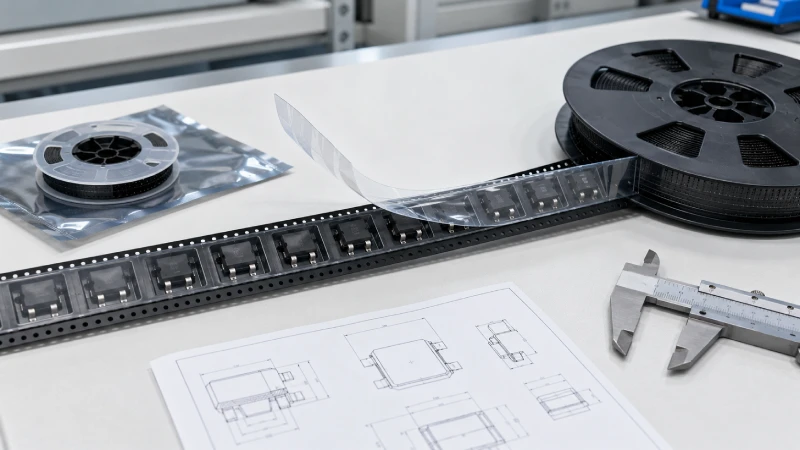
ESD Requirements for Electronic Components
Electrostatic discharge can damage sensitive components during loading, packaging, transportation, or assembly. The required level of ESD protection depends on the component type, sensitivity, handling environment, and customer specification.
Conductive or antistatic carrier tape materials may be considered for semiconductors, ICs, sensors, and other static-sensitive components. Cover tape and related packaging materials should also be evaluated as part of the ESD protection strategy.
However, one ESD material is not suitable for every product. Buyers should state their electrical resistance, surface resistance, or packaging standard requirements before sample production.
The material should provide the required protection while still supporting pocket forming, dimensional stability, sealing, winding, inspection, and downstream feeding.
Building the Packaging Solution Step by Step
A structured process helps buyers reduce repeated modifications and approval delays.
1. Review the Component and Packaging Requirements
The supplier should first review:
- Component drawing or datasheet
- Physical samples, if available
- Maximum dimensions and weight
- Orientation and polarity
- Fragile or restricted-contact areas
- Tape width and pitch requirements
- ESD requirements
- Expected quantity
At this stage, the objective is to identify the main packaging risks before selecting materials.
2. Select or Develop the Carrier Tape
The next step is determining whether an existing carrier tape can be used or whether a custom pocket is needed.
The carrier tape selection should consider:
- Pocket length, width, and depth
- Component clearance
- Support points
- Orientation control
- Tape width and pitch
- Carrier tape material
- Sprocket-hole format
A custom solution should control the component without placing excessive pressure on sensitive areas.
3. Match the Cover Tape
After the carrier tape structure is defined, the cover tape can be selected according to:
- Carrier tape width
- Sealing rail position
- Carrier tape material
- Sealing process
- Required peel behavior
- Storage and transportation conditions
The final combination should be tested instead of relying only on general material compatibility.
4. Confirm the Plastic Reel
The reel should match the carrier tape width and intended tape length. Buyers should also confirm:
- Reel diameter
- Reel width
- Hub diameter
- Components per reel
- Winding direction
- Leader and trailer lengths
- Equipment-loading requirements
5. Prepare and Approve Samples
Sample approval should evaluate the complete packaging combination, not just an empty section of carrier tape.
Actual or representative components should be loaded, sealed with the proposed cover tape, and wound onto the intended reel. This allows buyers to inspect component movement, cover tape sealing, peel stability, reel winding, orientation, and feeder compatibility.
6. Move to Mass Production
Once the sample is approved, the final specifications should be recorded clearly. These may include the carrier tape drawing, material, cover tape type, reel size, winding direction, quantity per reel, and labeling requirements.
Production inspection should verify that the bulk order remains consistent with the approved sample.
Common Problems a Complete Solution Helps Prevent
Evaluating the entire packaging system can help reduce several common problems.
Component Movement or Rotation
This is often caused by excessive pocket clearance, insufficient support, or an incorrect component orientation. Movement may damage leads, affect pickup position, or create feeding errors.
Components Sticking in the Pocket
A pocket that is too tight can make loading and removal difficult. Surface texture, component tolerances, pocket draft, and contact points may all contribute to sticking.
Cover Tape Opening During Transport
Weak or inconsistent sealing can allow the cover tape to lift during winding, shipping, or storage. The cover tape, carrier tape material, and sealing process should be evaluated together.
Unstable Peel Performance
Peel force that changes along the reel may interrupt the SMT feeding process. Stable peeling is generally more important than simply achieving a high seal strength.
Pocket Deformation During Winding
The reel diameter, hub size, carrier tape rigidity, and pocket depth can affect how the tape winds. Deep pockets may deform if the tape is wound too tightly or onto an unsuitable hub.
Incorrect Component Presentation
An incorrect winding direction or polarity orientation can make the reel incompatible with the buyer’s equipment. Direction drawings or approved reference samples should be used to prevent misunderstandings.
What Buyers Should Include in a Quotation Request
Providing complete information at the quotation stage can improve accuracy and reduce additional communication.
A useful quotation checklist includes:
- Component name and application
- Component drawing or datasheet
- 3D file, if available
- Physical component samples
- Maximum length, width, and height
- Component weight
- Dimensional tolerances
- Required component orientation
- Polarity or pickup-surface requirements
- Fragile leads or restricted-contact areas
- ESD or material requirements
- Preferred tape width and pitch
- Cover tape or sealing requirements
- Reel diameter and hub size
- Winding direction
- Components per reel
- Leader and trailer requirements
- Sample quantity
- Estimated mass-production quantity
- Target delivery schedule
- Current packaging samples or problem descriptions
Not every project will require all of this information at the first stage. However, the more relevant details the supplier receives, the easier it is to recommend a suitable packaging combination.
Separate Material Purchasing or a Matched Packaging Solution?
Purchasing carrier tape, cover tape, and reels separately may be appropriate when the buyer already has a fully approved specification and only needs replacement materials.
A coordinated solution is usually more suitable when:
- A new component is being introduced
- The component requires a custom pocket
- The existing cover tape has sealing or peel problems
- The buyer is changing packaging equipment
- The reel size or winding direction is uncertain
- The component has special ESD requirements
- Previous packaging caused feeding instability
- Sample validation is required before production
Coordinated sourcing can reduce communication gaps between multiple suppliers and make it easier to identify whether a problem comes from the carrier tape, cover tape, reel, or the way the materials interact.
Request a Complete Tape-and-Reel Packaging Evaluation
A reliable packaging project starts with accurate component information and coordinated material selection.
Jiushuo can support electronic component manufacturers, distributors, OEM sourcing teams, and SMT packaging buyers with carrier tape, custom embossed carrier tape, cover tape, plastic reels, component-fit evaluation, sample preparation, and production supply.
To begin an evaluation, send your component drawing, datasheet, physical samples, ESD requirements, preferred tape width, reel specification, winding direction, and expected order quantity.
Request a tape-and-reel packaging quote for your electronic components.
FAQ
What is included in a complete tape-and-reel packaging solution?
A complete solution may include carrier tape, custom pocket design, cover tape, plastic reels, ESD material selection, winding direction, leader and trailer tape, sample reels, and production inspection.
Can Jiushuo supply carrier tape, cover tape, and plastic reels together?
Yes. The materials can be reviewed as a coordinated packaging combination according to the component, tape width, sealing process, reel format, and downstream application.
When is custom embossed carrier tape needed?
Custom embossed carrier tape is usually needed when a standard pocket cannot provide suitable fit, orientation, clearance, depth, protection, or ESD performance for the component.
How is the correct cover tape selected?
Cover tape should be selected according to carrier tape width, sealing rail position, carrier tape material, sealing method, required peel performance, and actual production conditions.
Should samples be approved before mass production?
Sample approval is recommended for new components, custom pockets, new cover tape combinations, unfamiliar reel formats, or applications with strict feeding requirements.
Can one tape-and-reel packaging solution work with every packaging machine?
No. Tape width, pitch, sprocket-hole format, cover tape, reel dimensions, winding direction, and feeder requirements should be confirmed for the actual equipment and application.