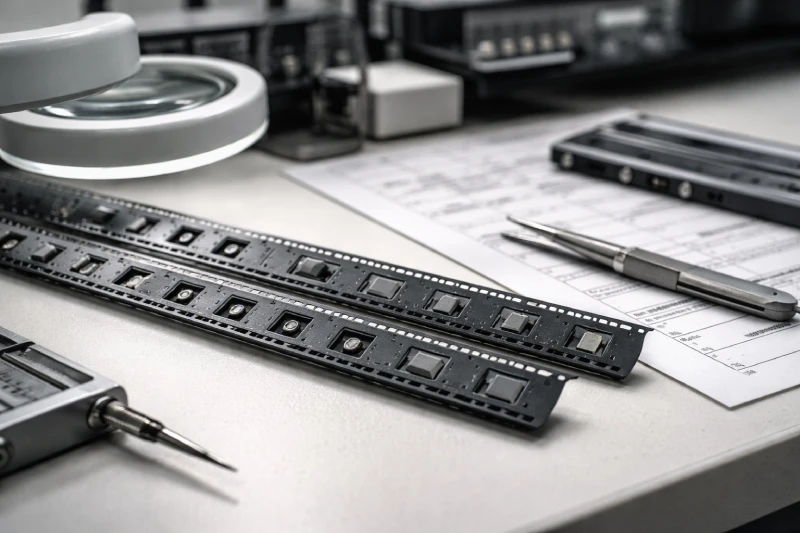
Scalability is established only after a design is validated and tooling is stabilized. Early-stage runs are typically used to confirm repeatability and loading performance, while volume production requires locked tooling parameters, controlled material sourcing, and consistent forming conditions to maintain dimensional stability across long orders.
Lead time follows a decision-based sequence, not a single fixed number. Time is primarily influenced by the number of design iterations required, prototype sampling cycles, validation scope (bench checks vs. feeder trials), and whether modifications are needed after feedback. Projects with clear acceptance criteria and complete input data generally move faster through sampling and approval.
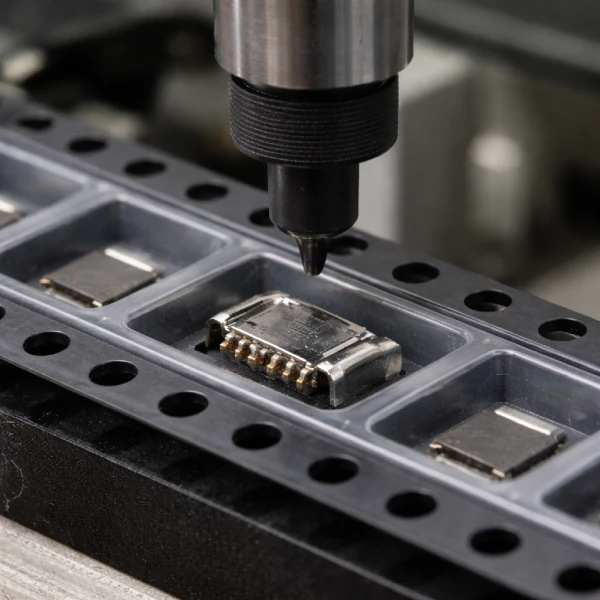
Production readiness is confirmed through process control points. Before scaling, key references such as pocket dimensions, indexing alignment, sealing behavior with cover tape, and inspection criteria are defined so that output consistency can be maintained across multiple batches.