

Choosing a carrier tape supplier for electronic components is not just a purchasing decision based on tape width and price. For electronic component manufacturers, component distributors, OEM buyers, EMS companies, and SMT packaging teams, the right supplier can help reduce packaging risks, improve tape-and-reel consistency, and support smoother component handling before automated assembly.
Electronic components vary widely in size, shape, weight, sensitivity, and packaging requirements. A small passive component may only need a stable standard tape format, while an IC, LED, connector, sensor, or irregular-shaped part may require a custom pocket design, ESD-safe material, matched cover tape, and suitable plastic reels. This is why buyers should evaluate a carrier tape supplier by looking at product range, customization ability, packaging support, sample confirmation, and quality control.
Jiushuo supplies carrier tape, embossed carrier tape, anti-static carrier tape, cover tape, and plastic reels for electronic component packaging applications. This makes it easier for buyers to confirm several tape-and-reel packaging materials through one supplier instead of managing every item separately.
What Should a Carrier Tape Supplier Provide?
A qualified carrier tape supplier should provide more than basic tape production. In electronic component packaging, the supplier should understand how tape, pocket design, material selection, cover tape, and reels work together.
For standard components, a supplier may recommend regular carrier tape formats that match common tape widths and pocket layouts. For components that need formed cavities, the supplier should be able to provide embossed carrier tape with suitable pocket depth and shape. For ESD-sensitive components, the supplier should support anti-static carrier tape or other ESD protection options based on the buyer’s requirement.
A good supplier should also help buyers confirm whether the selected cover tape can match the carrier tape properly. Cover tape affects sealing, peeling, storage protection, and SMT feeding performance. In addition, the supplier should be able to recommend suitable plastic reels according to tape width, reel diameter, component quantity, storage needs, and shipping requirements.
The supplier does not need to overcomplicate the process, but they should help buyers ask the right questions before production. This is especially important when the component is new, customized, sensitive, or difficult to package.
Key Supplier Capabilities Buyers Should Compare
When comparing carrier tape suppliers, buyers should look beyond whether the supplier can quote quickly. A fast quotation is useful, but it does not always mean the packaging solution is suitable.
The first point to check is product range. A supplier with a wider range of carrier tape, embossed tape, anti-static tape, cover tape, and reels can often support more complete tape-and-reel packaging needs. This does not mean every project should use one supplier for everything, but it can reduce communication gaps when multiple packaging materials must work together.
The second point is custom design ability. Many electronic components do not fit well into standard pocket formats. If the part is tall, fragile, irregular, or orientation-sensitive, the supplier should be able to review drawings, datasheets, or physical samples and suggest a pocket design that supports stable placement. The buyer should also confirm whether sample production is available before bulk ordering.
The third point is material and ESD support. Different components may require different material properties. Buyers do not always need to dive into deep material engineering, but they should clearly confirm whether the component requires standard, anti-static, or conductive packaging. For sensitive ICs, sensors, LEDs, or semiconductor-related components, ESD protection should be discussed early.
The fourth point is cover tape and reel matching. Carrier tape is only one part of the packaging system. If the cover tape does not seal or peel properly, or if the reel does not match the tape width and quantity, the final packaging may still cause problems during handling or SMT feeding.
Supplier Capability vs Buyer Consideration
| Supplier Capability | What Buyers Should Consider |
|---|---|
| Standard carrier tape supply | Does the supplier support the tape widths and formats used for your component type? |
| Embossed carrier tape production | Can the supplier create suitable pocket depth and shape for taller or irregular components? |
| Anti-static or conductive tape options | Are your components ESD-sensitive, and what protection level needs to be confirmed? |
| Custom pocket design | Can the supplier review component drawings or samples before production? |
| Cover tape supply | Can the supplier match carrier tape with suitable cover tape for sealing and peeling stability? |
| Plastic reel supply | Can the supplier provide reels that match tape width, quantity, storage, and shipping needs? |
| Sample support | Can you test component fit, sealing, peeling, and feeding before bulk order? |
| Quality control | Does the supplier check dimensions, pocket consistency, surface quality, and packaging condition? |
This comparison helps buyers move the discussion from “How much is the tape?” to “Can this supplier support our actual packaging requirement?” That shift is important because the lowest tape price may not reduce total cost if the packaging causes rework, unstable feeding, component movement, or delivery delays.
How Different Component Types Affect Supplier Selection
Different electronic components create different packaging priorities. Buyers should not assume that one carrier tape design fits every application.
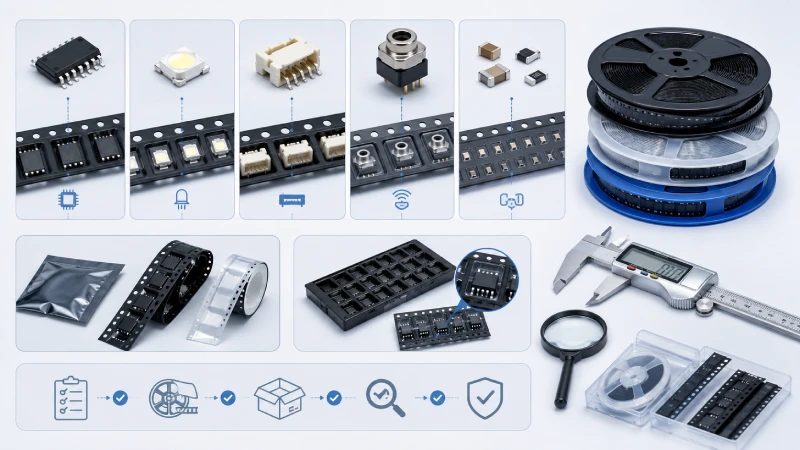
Passive Components
For passive components such as resistors, capacitors, and small chip components, the key concerns are usually stable tape dimensions, pocket consistency, and reliable feeding. These components are often used in high volumes, so consistency matters more than complex customization. Buyers should check whether the supplier can support repeatable production and stable quality over multiple orders.
ICs and Semiconductor Components
For ICs and semiconductor components, the requirements are often more careful. These parts may need better orientation control, pocket protection, and ESD-safe packaging. When sourcing tape for ICs, buyers should ask whether the supplier can provide ESD options, suitable pocket design, and sample confirmation. In many cases, anti-static carrier tape should be considered at the quotation stage, not after production has already started.
LEDs and Optical Components
For LEDs and optical components, packaging should help reduce movement and protect the component surface. Pocket shape, pocket depth, and orientation control may all affect packaging quality. If the component surface is sensitive, the buyer should also check whether the tape design can reduce unnecessary contact during transport and handling.
Connectors, Switches, and Larger Components
For connectors, switches, and larger electronic components, buyers often need stronger pocket support and suitable tape rigidity. These components may be taller or heavier than small passive parts. In this case, embossed carrier tape is often more suitable because it can provide formed pockets with the required depth and shape.
Custom or Irregular Components
For custom or irregular components, supplier communication becomes even more important. The buyer should provide drawings, samples, orientation requirements, and expected packaging conditions. The supplier should not simply recommend a standard tape without checking fit. A sample trial is usually the safer approach before confirming mass production.
Buyer-Side Confirmation Steps Before Choosing a Supplier
Before choosing a carrier tape supplier, buyers should prepare the basic component and packaging information. This helps the supplier recommend a more suitable solution and reduces repeated communication.
First, confirm the component size, shape, and orientation requirements. If the component has a specific top side, pin direction, sensitive surface, or loading direction, this should be made clear from the beginning.
Second, confirm whether the component is ESD-sensitive. Not every component requires anti-static or conductive tape, but for sensitive electronic parts, ESD requirements should not be ignored.
Third, decide whether standard carrier tape is enough or whether custom embossed tape is needed. If the component is not stable in a standard pocket, custom pocket design may be necessary.
Fourth, confirm the tape width, pocket pitch, pocket depth, and quantity per reel if these details are already known. If they are not known, the supplier should help review the component and suggest a suitable direction.
Fifth, match the carrier tape with appropriate cover tape and reels. A buyer sourcing carrier tape should also consider how the tape will be sealed, peeled, stored, and delivered. This is why cover tape and reel matching should be discussed as part of the full packaging requirement.
Finally, request samples or trial production whenever the project is new, customized, or sensitive. Sample testing can help confirm component fit, pocket stability, sealing condition, peeling behavior, and feeding performance before bulk order.
Quotation Checklist for Carrier Tape Buyers
Before requesting a quotation from a carrier tape supplier, buyers should prepare a clear quotation checklist. This does not need to be overly complicated, but it should include enough information for the supplier to evaluate the project properly.
Buyers should provide the component name and type, component drawing or datasheet, length, width, height, and any important tolerance information. If the tape width, pitch, or pocket layout is already known, those details should also be included.
The buyer should confirm whether the component requires standard, anti-static, or conductive packaging. If the component is ESD-sensitive, this should be stated clearly. For custom projects, the buyer should also explain the required component orientation and whether a physical sample is available.
The quotation request should also mention whether cover tape and plastic reels are needed. If the buyer wants a complete tape-and-reel packaging material supply, it is more efficient to ask about carrier tape, cover tape, and reels together. Jiushuo can support this type of combined quotation because it supplies carrier tape, embossed carrier tape, anti-static carrier tape, cover tape, and plastic reels.
A practical quotation request may include:
- Component name and application
- Drawing, datasheet, or physical sample
- Component length, width, and height
- Tape width and pocket pitch, if known
- Required pocket direction or orientation
- ESD requirement
- Estimated order quantity
- Cover tape requirement
- Plastic reel size or packaging quantity
- Sample or trial order requirement
- Delivery and packaging requirements
- Any previous packaging or SMT feeding issues
The clearer the quotation information, the easier it is for the supplier to recommend the right tape format and avoid unnecessary delays.
Why Work With a Supplier That Offers Tape, Cover Tape, and Reels Together?
In tape-and-reel packaging, carrier tape does not work alone. The tape must hold the component properly, the cover tape must seal and peel consistently, and the reel must match the tape format and packaging quantity. If these materials come from different suppliers, buyers may need to spend more time checking compatibility and solving communication issues.
Working with a supplier that offers multiple related packaging materials can make the confirmation process easier. It may help buyers match carrier tape with cover tape more efficiently, confirm reel size more conveniently, and reduce the chance of mismatch between different packaging materials.
This does not mean every buyer must use one supplier for every application. Some projects may have special requirements or approved supplier lists. However, for many electronic component packaging projects, sourcing from a supplier that understands the full tape-and-reel packaging process can reduce practical purchasing risks.
Jiushuo supports this type of buyer need by supplying carrier tape, embossed carrier tape, anti-static carrier tape, cover tape, and plastic reels. Buyers can discuss tape design, ESD needs, sealing, and reel matching through one supplier team, which is especially useful for new projects or custom component packaging.
Need a Carrier Tape Supplier for Your Electronic Components?
If you are sourcing a carrier tape supplier for electronic components, Jiushuo can help review your component type, packaging requirements, ESD needs, cover tape matching, and reel selection. Whether your project needs standard carrier tape, custom embossed carrier tape, anti-static carrier tape, cover tape, or plastic reels, our team can support sample confirmation before bulk production.
Send your component drawing, sample details, expected order quantity, and packaging requirements to request a suitable carrier tape quotation.
Request a Carrier Tape Quote
Send Component Details for Review
FAQ
How do I choose a carrier tape supplier for electronic components?
Choose a supplier based on product range, custom pocket design ability, ESD options, cover tape matching, reel supply, sample support, and quality control. The right supplier should help confirm whether your component needs standard carrier tape or custom embossed carrier tape.
When should I use embossed carrier tape?
Embossed carrier tape is usually used when electronic components need formed pockets for better positioning, protection, or feeding stability. It is often suitable for ICs, LEDs, connectors, sensors, and components with taller or irregular shapes.
Do all electronic components need anti-static carrier tape?
No. Not all electronic components require anti-static or conductive tape. Buyers should confirm whether the component is ESD-sensitive before choosing the carrier tape material and protection level.
Why is cover tape matching important?
Cover tape helps seal components inside the carrier tape pockets. If the cover tape does not match properly, it may affect sealing, peeling, storage protection, or SMT feeding. Buyers should confirm compatibility before bulk production.
Should I request samples before placing a bulk order?
Yes. Samples help confirm pocket fit, component orientation, sealing condition, peel behavior, and feeding stability. Sample confirmation is especially important for custom components, ESD-sensitive parts, or new packaging projects.
Can one supplier provide carrier tape, cover tape, and plastic reels?
Yes, some suppliers can provide several tape-and-reel packaging materials together. Jiushuo supplies carrier tape, embossed carrier tape, anti-static carrier tape, cover tape, and plastic reels, helping buyers simplify packaging material confirmation.