
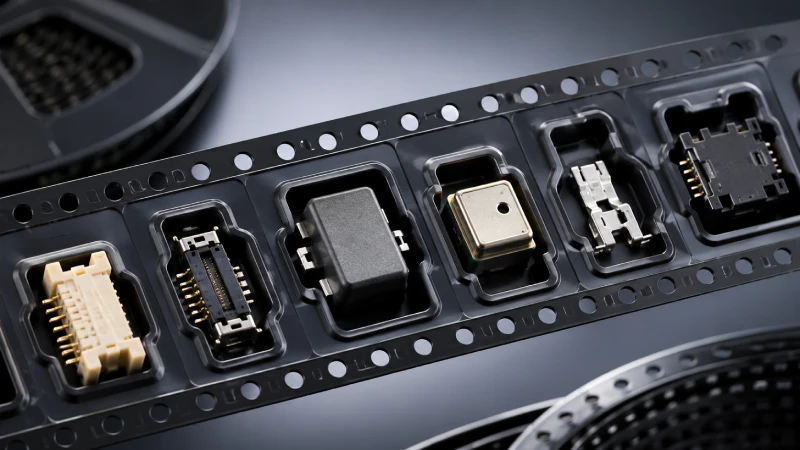
For many electronic components, carrier tape packaging looks simple from the outside. A component is placed into a pocket, sealed with cover tape, wound onto a reel, and then delivered to production lines or customers. But when the component is irregular, tall, fragile, heavier than usual, or difficult to orient, the pocket design becomes one of the most important factors affecting packaging reliability.
Standard carrier tape is often suitable for common SMD components with regular shapes and predictable dimensions. However, many components used in connectors, sensors, precision metal stamped parts, terminals, relays, and specialty electronic assemblies do not fit standard pocket structures well. If the pocket is too loose, the component may rotate. If the pocket is too shallow, the part may tilt or press against the cover tape. If the support points are not designed correctly, pins, leads, or fragile surfaces may be damaged during transport.
This is why many buyers need custom carrier tape for non-standard components instead of relying only on standard tape sizes. A good pocket design helps keep the component stable, protected, correctly oriented, and ready for smooth automated feeding.
Why Standard Carrier Tape May Not Work for Non-Standard Components
Standard carrier tape is designed for components with relatively common sizes, simple shapes, and stable placement behavior. Many small chips or regular rectangular parts can sit naturally in a standard pocket without serious movement. But non-standard components often create more packaging risks.
One common issue is loose fit. If the component has an uneven outline or does not match the pocket shape, it may move inside the pocket during handling, vibration, or transport. This movement can lead to rotation, wrong orientation, or pickup failure during SMT assembly.
Another issue is tilting. Tall components, thicker parts, and components with an uneven center of gravity may not sit flat in a shallow pocket. Once the component tilts, the cover tape may press against it, or the pickup nozzle may fail to contact the correct surface.
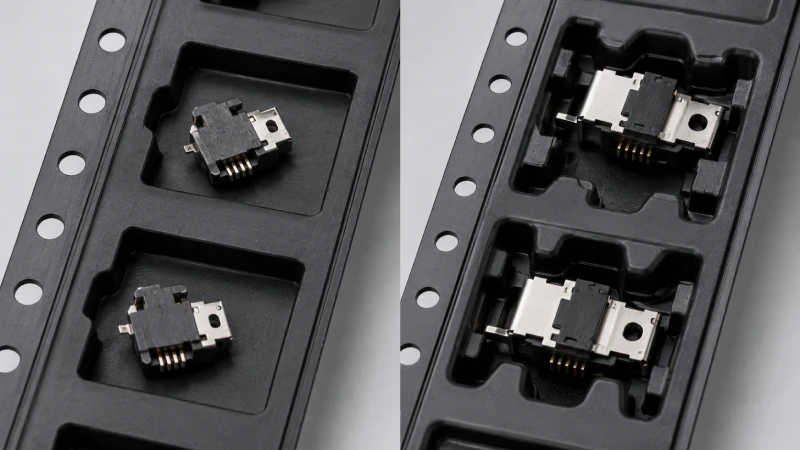
For connectors, terminals, and metal stamped parts, pin protection is also a major concern. A simple rectangular pocket may hold the main body of the component, but it may not provide enough clearance for pins, leads, sharp edges, or delicate contact areas. This can result in bent pins, scratches, or deformation before the component reaches the assembly line.
Fragile surfaces create another challenge. Some sensors, MEMS components, optical parts, or precision electronic components cannot tolerate pressure, friction, or repeated movement inside the pocket. In these cases, the pocket must be designed to reduce unnecessary contact while still keeping the part stable.
For sourcing teams and packaging buyers, the important point is simple: if the component does not sit safely, consistently, and correctly inside the pocket, standard carrier tape may not be the best choice.
Key Pocket Design Factors Buyers Should Consider
Good carrier tape pocket design does not need to be explained with complicated formulas. For most buyers, the key is to understand how pocket size, depth, shape, orientation, pitch, and cover tape matching affect real packaging performance.
Pocket Size and Fit
Pocket size is one of the first design points to consider. A pocket that is too tight may make loading difficult or create pressure on the component. A pocket that is too loose may allow the component to shake, rotate, or shift position.
For non-standard components, the best pocket fit is not always a simple “larger than the component” design. The pocket should provide enough clearance for safe loading and unloading, but also enough support to prevent excessive movement. This balance is especially important for parts with irregular outlines, uneven surfaces, or small protruding features.
Pocket Depth
Pocket depth is critical for tall, thick, or heavy components. If the pocket is too shallow, the component may sit too high and touch the cover tape. This can cause pressure marks, sealing problems, or unstable peeling during feeding.
A deeper embossed pocket can help hold the component more securely and reduce the risk of tilting. However, depth must also be matched with the component’s shape and pickup requirements. The goal is not simply to make the pocket deeper, but to make the component sit in a stable and accessible position.
This is one of the reasons buyers often choose embossed carrier tape pocket design for components that cannot be safely supported by flat or shallow packaging formats.
Shape Support
Irregular components often need more than a basic rectangular pocket. The pocket may need special support areas, clearance zones, ribs, or shaped profiles to hold the part correctly.
For example, a connector may need support around the main housing while leaving clearance for pins. A stamped metal part may need a pocket profile that prevents overlapping or bending. A sensor may need support at safe contact areas while avoiding pressure on the sensitive surface.
Shape support is one of the most important differences between standard tape and custom pocket design. It helps the component remain stable without forcing the pocket to touch fragile or functional areas.
Orientation Control
For automated assembly, orientation matters. If a component rotates inside the pocket, even slightly, it may cause pickup errors, vision inspection problems, or feeding interruptions.
Pocket design can help control orientation by matching the component shape more closely, adding support points, or designing the pocket so the part can only sit in one correct direction. This is especially useful for connectors, terminals, sensors, and components with asymmetric shapes.
For buyers, better orientation control means fewer packaging complaints, fewer line stoppages, and more predictable downstream assembly performance.
Pitch and Feeding Stability
Pitch refers to the spacing between pockets on the carrier tape. For buyers, the practical concern is whether the tape can feed smoothly through packaging equipment, inspection systems, and SMT feeders.
When components are larger, heavier, or unusually shaped, pitch selection becomes more important. If the pitch does not match the part size and feeding requirement, the tape may not run smoothly. Poor feeding stability can lead to pickup failure, machine stoppage, or inconsistent production speed.
Cover Tape Matching
Pocket design should never be considered alone. It must work together with the cover tape. The pocket must provide enough clearance so the component does not press against the sealed cover tape. At the same time, the cover tape must seal reliably and peel consistently during automated feeding.
For non-standard components, proper cover tape matching helps reduce problems such as weak sealing, excessive peel force, component movement during peeling, or surface contact damage. A stable packaging result depends on both the pocket and the sealing system working together.
Component Challenge vs Pocket Design Consideration
| Component Challenge | Pocket Design Consideration |
|---|---|
| Component rotates inside the pocket | Improve pocket fit, add shape support, or adjust clearance |
| Component tilts during transport | Increase pocket depth or add better bottom support |
| Pins or terminals are easily bent | Add clearance zones and avoid pressure on sensitive areas |
| Fragile surface is scratched | Reduce unnecessary contact points and check cover tape clearance |
| Heavy component moves inside the pocket | Use stronger shape support and suitable embossed material |
| Irregular shape cannot sit flat | Design a custom pocket profile based on samples or drawings |
| Pickup failure during SMT feeding | Improve orientation, pocket consistency, and pitch selection |
| Cover tape touches the component | Adjust pocket depth and match suitable cover tape |
This table shows why pocket design should be reviewed early, not only after packaging problems appear. When the component is non-standard, the pocket is not just a container. It is part of the protection, positioning, and feeding solution.
Standard vs Custom Pocket Design
When Standard Carrier Tape May Be Enough
Standard carrier tape may be suitable when the component has a common shape, low height, stable dimensions, and no special protection requirements. If the part sits flat, does not rotate, has no fragile surface, and can be picked up consistently, a standard tape option may be practical.
This is often the case for simple rectangular components or common SMD parts where packaging requirements are already well established. Standard tape may also be preferred when the project requires faster preparation and the component does not create special packaging risks.
However, buyers should still check the actual fit before confirming production. Even small differences in component height, surface structure, or lead position can affect packaging performance.
When Custom Embossed Carrier Tape Is Needed
Custom pocket design is usually needed when the component is irregular, tall, fragile, heavy, or difficult to position. It is also recommended when the component has exposed pins, leads, terminals, sharp edges, or sensitive surfaces that cannot be pressed or scratched.
For example, connectors may have plastic housings, metal pins, and uneven shapes. Sensors may require careful surface protection. Metal stamped parts may have thin sections that bend easily. Relays, fuses, and power components may be thicker and heavier than normal SMD parts.
In these cases, custom carrier tape allows the pocket to be designed around the actual component instead of forcing the component into a standard structure. This can reduce movement, improve orientation, protect delicate areas, and support smoother feeding.
Common Non-Standard Components That Need Custom Pocket Design
Many component categories may require custom pocket design. Connector suppliers often need carrier tape pockets that protect pins and keep the housing in the correct orientation. Sensor and MEMS suppliers may need pocket structures that reduce contact with sensitive areas. Metal stamped part suppliers may need special support to prevent bending, overlapping, or edge damage.
Terminals, contacts, springs, shields, clips, and other precision metal parts can also be difficult to package because they are thin, irregular, or easy to deform. A standard pocket may not hold them securely enough during transport or reel winding.
Larger electronic components such as relays, fuses, and power-related parts may need deeper pockets and stronger support because of their size and weight. If the component moves during transport, the risk of damage or feeding failure increases.
For these applications, custom pocket design is not only about making the tape fit the component. It is about making the full tape-and-reel packaging process more reliable from loading to shipment to final automated assembly.
How Jiushuo Designs Custom Embossed Carrier Tape Pockets
Jiushuo supports custom embossed carrier tape design based on drawings, samples, datasheets, and detailed packaging requirements. This helps buyers evaluate whether a standard tape option is suitable or whether a custom pocket is needed for better stability and protection.
The process usually starts with reviewing the component information. If drawings or datasheets are available, Jiushuo can check the basic dimensions, height, shape, and sensitive areas. If physical samples are available, they can help confirm real fit, contact points, and possible movement inside the pocket.
Next, the packaging direction and pickup requirements are considered. For many components, it is important to understand which side should face upward, where the pickup nozzle will contact the part, and how the component should be presented during feeding.
Based on this information, Jiushuo can design the pocket size, depth, shape support, orientation structure, and tape layout. The pocket can also be matched with suitable cover tape and reel packaging. For complete tape-and-reel delivery, the final packaging may also include matched plastic reel options according to tape width, component size, and reel quantity.
Sampling and verification are important steps before bulk production. For non-standard components, sample testing helps confirm whether the component sits correctly, whether the cover tape clearance is enough, and whether the feeding direction meets the customer’s requirement.
Quotation Checklist for Custom Carrier Tape Pocket Design
Before requesting a quotation, buyers can prepare the following information. This makes communication faster and helps the supplier recommend a more suitable pocket design.
- Component drawing, datasheet, or 3D file
- Physical samples, if available
- Component length, width, height, and weight
- Packaging direction or pickup orientation
- Tape width and pitch requirement, if already known
- Quantity per reel
- Cover tape requirement or sealing preference
- ESD or material requirement
- SMT feeding, inspection, or loading requirement
- Existing packaging problem, such as loose fit, rotation, tilting, bent pins, or difficult pickup
Not every buyer will have all these details at the beginning. However, the more information available, the easier it is to design a pocket that matches the real component and packaging process.
Need Custom Pocket Design for Non-Standard Components?
If your component is irregular, tall, fragile, heavy, or difficult to hold in a standard pocket, custom embossed carrier tape may help reduce packaging risks. The right pocket design can improve component stability, protect pins and surfaces, reduce movement during transport, and support smoother automated feeding.
Jiushuo can help design carrier tape pockets based on your drawings, samples, datasheets, and packaging requirements. Whether you are packaging connectors, sensors, metal stamped parts, terminals, relays, fuses, or other non-standard electronic components, our team can help evaluate the pocket size, depth, orientation, cover tape matching, and reel packaging solution.
Send Jiushuo your component information to discuss a suitable custom embossed carrier tape design for your application.
FAQ
What is carrier tape pocket design?
Carrier tape pocket design refers to the size, depth, shape, pitch, and support structure of each pocket that holds a component during packaging, transport, and automated feeding. A good pocket design helps keep the component stable and correctly oriented.
Why do non-standard components need custom carrier tape?
Non-standard components may be irregular, tall, heavy, fragile, or difficult to position. Custom carrier tape helps reduce movement, rotation, tilting, pin damage, surface scratches, and pickup problems.
How do I know if standard carrier tape is not suitable?
Standard carrier tape may not be suitable if the component moves inside the pocket, rotates, tilts, touches the cover tape, has bent pins after packaging, or causes pickup failure during feeding.
What information is needed for custom pocket design?
Useful information includes drawings, datasheets, samples, component dimensions, weight, pickup direction, tape width, pitch, cover tape requirement, reel quantity, and any known packaging issues.
Can Jiushuo design carrier tape based on samples?
Yes. Jiushuo can design custom embossed carrier tape based on physical samples, drawings, datasheets, and specific packaging requirements. Samples are especially useful for irregular or difficult-to-measure components.
Does pocket design need to match cover tape and reel selection?
Yes. Pocket design, cover tape sealing, peel performance, and reel selection should work together. This helps improve packaging stability, transport protection, and automated feeding reliability.