
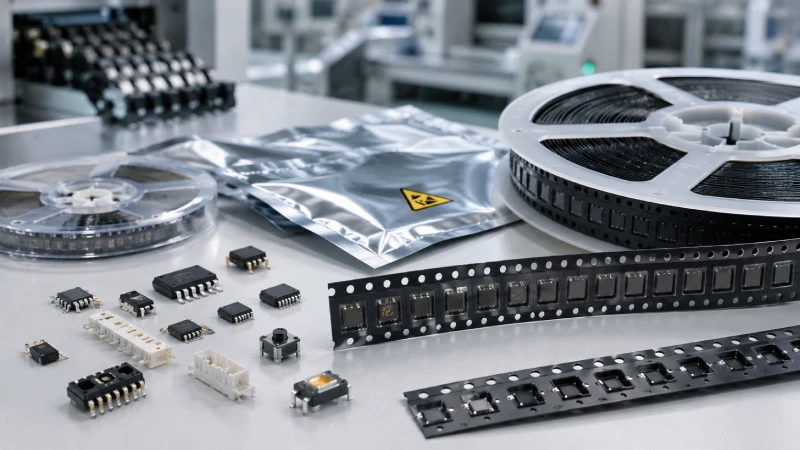
Medical electronic components often require careful packaging because they may be small, sensitive, high-value, or used in quality-critical electronic assemblies. During storage, transport, and automated SMT assembly, poor packaging can cause component movement, ESD risk, surface contact, bent terminals, contamination concerns, or unstable pick-and-place feeding.
For medical electronics suppliers, component manufacturers, OEM sourcing teams, and SMT packaging teams, carrier tape is not just a container. It is part of the packaging control process. A suitable carrier tape helps keep components in the correct position, reduces unnecessary handling, supports inspection, and helps improve consistency from sampling to bulk production.
Jiushuo provides custom carrier tape support for different types of medical electronic components, including sensors, ICs, connectors, switches, precision stamped parts, modules, and other small electronic parts used in medical-related equipment. For components that need shaped pocket protection, buyers can start with custom embossed carrier tape designed according to actual component size, height, shape, orientation, and packaging requirements.
Why Medical Electronic Components Need Careful Carrier Tape Packaging
Medical electronic components are often used in applications where stable performance and consistent assembly are important. The packaging itself may not determine the final performance of the device, but poor packaging can create avoidable risks before the component reaches the production line.
Common packaging problems include parts moving inside the pocket, incorrect orientation, ESD exposure, terminal contact, surface scratches, and unstable cover tape peeling. For small or sensitive parts, even slight movement during transport may affect feeding stability or increase inspection work before assembly.
This is why many buyers prefer carrier tape packaging for medical electronic components. Compared with loose bulk packaging, tape and reel format helps reduce repeated manual handling, keeps parts arranged in the same direction, and supports automated feeding for SMT or automated assembly lines.
The key is to select the right carrier tape structure. Standard tape may work for some regular components, but sensitive, irregular, tall, or high-value medical electronic parts often require custom pocket design. A properly designed embossed pocket can help hold the component more securely and reduce movement during storage, shipment, and feeding.
How Carrier Tape Protects Sensitive Medical Electronic Components
A good carrier tape solution should match the real component, not only the basic dimension range. Medical electronic components may have fragile leads, exposed terminals, small sensing areas, polished surfaces, or special orientation requirements. These details should be considered before confirming the tape design.
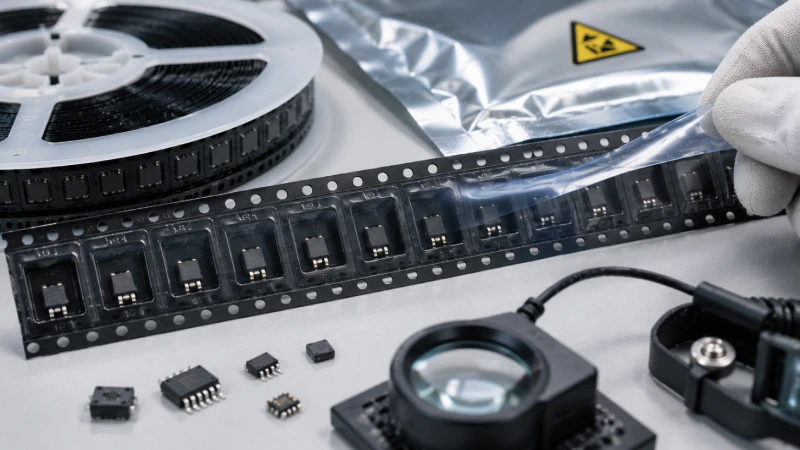
The first function of carrier tape is stable pocket fit. The pocket should not be too tight, because excessive pressure may make loading or unloading difficult. It should not be too loose either, because the part may shake, tilt, or rotate during transport. A balanced pocket design helps keep the component stable while still allowing smooth pickup during assembly.
The second function is ESD control. Some medical electronic components are static-sensitive, especially ICs, sensors, and precision electronic modules. In this case, Jiushuo can recommend anti-static carrier tape or conductive material options based on the component type and handling requirements. This helps reduce electrostatic risk during packaging, storage, transport, and production handling.
The third function is surface and terminal protection. Components with pins, contacts, solder pads, or sensitive surfaces may need a pocket structure that avoids unnecessary pressure on critical areas. For example, the pocket can be designed to support the body of the component while reducing contact with leads or delicate surfaces.
The fourth function is consistent orientation. Medical electronic components may need to be presented in a fixed direction for automated feeding. If the component rotates inside the pocket, the pick-and-place process may become unstable. A shaped pocket helps maintain direction and supports smoother assembly.
Finally, carrier tape also supports packaging cleanliness and inspection. Tape and reel packaging helps keep components arranged in a controlled format, making it easier for buyers to check packaging quality, quantity, orientation, and reel condition before production use.
Medical Electronics Packaging Concerns and Carrier Tape Response
| Medical Electronics Packaging Concern | Carrier Tape Response |
|---|---|
| Component movement during transport | Custom pocket dimensions help hold the component more securely |
| Static-sensitive electronic parts | Anti-static or conductive carrier tape materials can be selected |
| Surface scratches or terminal damage | Pocket design can reduce direct contact with sensitive areas |
| Incorrect orientation before assembly | Pocket shape and cavity layout help maintain consistent orientation |
| Dust or handling contamination concerns | Tape and reel packaging helps reduce repeated manual handling |
| Unstable pick-and-place feeding | Tape dimension control and cover tape matching support smoother feeding |
| Inconsistent packaging between batches | Sample confirmation and production checks help maintain packaging consistency |
Custom Embossed Carrier Tape for Medical Electronic Components
Medical electronic components may include small sensors, IC packages, connectors, micro switches, relays, fuses, precision terminals, and customized electronic modules. These parts do not always fit standard carrier tape well. Some components are taller than usual. Some have irregular shapes. Some require accurate orientation. Others have surfaces or terminals that should not be pressed during packaging.
For these cases, embossed carrier tape is often a better option. The pocket can be formed according to the component’s actual size, shape, and packaging requirements. This allows the tape to provide better support and reduce movement inside the reel.
Jiushuo can review component drawings, samples, photos, 3D files, or specification sheets before recommending a carrier tape design. Important design details include tape width, pitch, pocket depth, pocket clearance, material type, pocket shape, component orientation, reel size, and cover tape matching.
For medical electronic component buyers, the goal is not to make broad medical certification claims through the tape itself. The practical goal is packaging reliability. The tape should help protect the component during handling, support stable packaging, reduce unnecessary movement, and make the assembly process easier to control.
Custom embossed carrier tape is especially useful when the component is expensive, difficult to rework, sensitive to static, or not suitable for loose packaging. By confirming the pocket design during the sample stage, buyers can reduce packaging uncertainty before bulk production.
Anti-Static Material Options for Sensitive Components
ESD control is a common concern in medical electronic component packaging. Static-sensitive parts may be affected during production, transport, or storage if the packaging material is not suitable. This is especially important for ICs, sensors, modules, and other electronic components with sensitive circuits.
Jiushuo can help buyers choose suitable anti-static or conductive carrier tape materials based on the component’s sensitivity and packaging needs. The material selection should consider not only ESD performance, but also forming quality, pocket stability, transparency requirements, inspection needs, and compatibility with cover tape.
For some projects, clear or semi-transparent carrier tape may help with visual inspection. For other projects, black conductive material may be preferred. The best choice depends on the component, application, buyer’s inspection process, and assembly requirement.
When requesting samples, buyers should clearly state whether ESD protection is required. If there is an existing packaging specification or resistance requirement, it should be shared with the supplier during the early review stage. This helps Jiushuo recommend a more suitable carrier tape material and avoid unnecessary redesign later.
Cover Tape Matching and Tape and Reel Packaging Consistency
Carrier tape performance is not only about the bottom tape. Cover tape matching is also important. If the cover tape does not seal properly, components may move during shipment. If the peel strength is not stable, the assembly line may experience feeding interruptions or pickup problems.
Jiushuo can help match suitable cover tape according to carrier tape material, pocket depth, component type, sealing needs, and peeling requirements. The goal is to provide enough sealing stability during transport while allowing smooth peeling during automated feeding.
Complete tape and reel packaging also requires attention to reel size, tape width, pitch, quantity per reel, leader and trailer length, packaging direction, and outer packaging condition. These details may look simple, but they directly affect warehouse handling, production preparation, and assembly efficiency.
For medical electronic components, packaging consistency is especially important because buyers often need predictable handling from sample approval to repeated production batches. Once the sample is confirmed, the production process should follow the same packaging direction, tape material, cover tape matching, and reel packaging requirements as closely as possible.
What Buyers Should Confirm Before Sampling
Before requesting carrier tape samples, buyers should prepare as much practical information as possible. This helps reduce communication time and improves the accuracy of the first sample.
Important details include component dimensions, height, weight, tolerance range, and shape. If possible, buyers should provide drawings, 3D files, clear photos, or physical samples. These materials help Jiushuo understand the component structure and determine whether a standard tape or custom embossed tape is more suitable.
Buyers should also identify sensitive areas that should avoid pressure or contact. For example, exposed terminals, leads, sensing surfaces, solder pads, lenses, or fragile edges may need special pocket consideration. If ESD protection is required, this should be confirmed early.
Packaging requirements should also be shared. These may include tape width, pitch, pocket depth, reel size, cover tape type, quantity per reel, loading direction, and feeder requirement. If the buyer already has a packaging specification from an OEM or assembly plant, that document can help guide the design.
For sampling, buyers should check component fit, pocket stability, orientation, cover tape sealing, peeling performance, and feeding compatibility. If possible, sample confirmation should be done under conditions similar to real production use.
Jiushuo’s Support Process
Jiushuo’s support process starts with requirement review. The team reviews component drawings, samples, packaging concerns, and assembly requirements to understand the actual application.
Next, Jiushuo recommends the carrier tape structure, material type, tape width, pitch, pocket depth, and cover tape matching. If the component is static-sensitive, anti-static or conductive material options can be discussed.
After the design direction is confirmed, sample carrier tape can be prepared for buyer evaluation. The buyer can check whether the component fits properly, whether the orientation is stable, whether the pocket protects important areas, and whether the cover tape works as expected.
Once the sample is approved, Jiushuo can support bulk carrier tape production and related tape and reel packaging needs. This process helps buyers reduce packaging risk before mass production and improves communication between sourcing, quality, and assembly teams.
Need Carrier Tape for Medical Electronic Components?
If your medical electronic components require stable pocket fit, ESD control, clean handling, or reliable tape and reel packaging, Jiushuo can help evaluate your packaging requirements and recommend a suitable carrier tape solution.
Send us your component drawings, samples, photos, or packaging specifications. Jiushuo can support custom embossed carrier tape design, anti-static material selection, cover tape matching, sample confirmation, and bulk production preparation.
Whether you are packaging sensitive ICs, sensors, connectors, precision terminals, switches, or small electronic modules, Jiushuo can help you build a more reliable carrier tape packaging solution for storage, transport, and automated assembly.
FAQ
What type of carrier tape is suitable for medical electronic components?
It depends on the component size, shape, sensitivity, and assembly requirements. Many medical electronic components use custom embossed carrier tape because it can provide better pocket fit, stable orientation, and improved transport protection.
Can Jiushuo provide anti-static carrier tape for sensitive medical electronic parts?
Yes. Jiushuo can recommend anti-static or conductive carrier tape materials for components that may be affected by electrostatic discharge during packaging, storage, transport, or assembly handling.
Do medical electronic components always need custom embossed carrier tape?
Not always. Some standard components may fit existing carrier tape sizes. However, custom embossed carrier tape is often preferred when the component has an unusual shape, tall profile, fragile area, special orientation, or strict packaging requirement.
What information should we provide before requesting a sample?
Buyers can provide component drawings, dimensions, photos, samples, ESD requirements, tape width or pitch requirements, reel quantity, loading direction, and any known SMT feeding or inspection requirements.
Can Jiushuo match cover tape with the carrier tape?
Yes. Jiushuo can help match cover tape based on carrier tape material, sealing needs, peeling performance, and component packaging requirements.
Does Jiushuo make medical certification claims for carrier tape?
Carrier tape supports packaging protection and assembly handling, but medical certification requirements depend on the buyer’s product, application, and quality system. Jiushuo can support packaging evaluation and project documentation based on buyer requirements, without overclaiming medical compliance.