
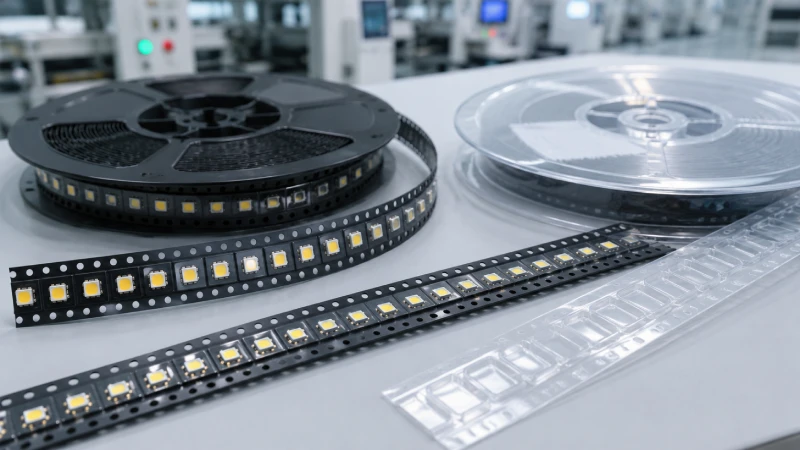
LED components may look simple from the outside, but they can create many packaging problems when they are not seated correctly in tape-and-reel format. For LED component buyers, LED packaging companies, and SMT assembly teams, the real concern is not only whether the component can be placed into a tape pocket. The more important question is whether the LED can stay in the right orientation, avoid lens damage, reduce movement during transportation, and feed smoothly into pick-and-place equipment.
This is why choosing the right carrier tape is an important part of LED packaging. A suitable LED carrier tape helps protect the component during storage, shipping, handling, and SMT production. It also supports more predictable feeding performance, especially when LED parts are small, lightweight, polarity-sensitive, or have raised lens structures.
Jiushuo provides embossed carrier tape, cover tape, plastic reels, and tape-and-reel packaging support for LED components and other electronic parts. For buyers who need reliable LED packaging, the goal is not to choose the most complicated material, but to choose a packaging solution that fits the component, the assembly process, and the expected production volume.
Why LED Components Need Special Attention in Tape-and-Reel Packaging
LED components are often packed in SMD format for automated SMT assembly. Compared with some flat passive components, many LEDs have more packaging-sensitive features. They may have a raised lens, a visible light-emitting surface, a polarity mark, or a body shape that does not tolerate excessive movement inside the pocket.
If the carrier tape pocket is too loose, LEDs may shift during winding or transportation. This can lead to inconsistent pickup position during SMT feeding. If the pocket is too tight, the component may not release smoothly when the nozzle picks it from the tape. If the pocket depth is not suitable, the lens or top surface may contact the cover tape or pocket wall.
For buyers, these issues can result in more than packaging inconvenience. They may cause feeder alarms, pickup errors, component rotation, production stops, or extra inspection work. A suitable LED carrier tape should help reduce these risks before the parts arrive at the SMT line.
Good packaging should keep the LED protected, aligned, and easy to pick. That is the main commercial value of using the right carrier tape for LED packaging.
Pocket Fit Should Match LED Shape, Lens Height, and Orientation
The pocket is the most important part of LED carrier tape. It should be designed or selected based on the actual LED size, shape, and placement direction.
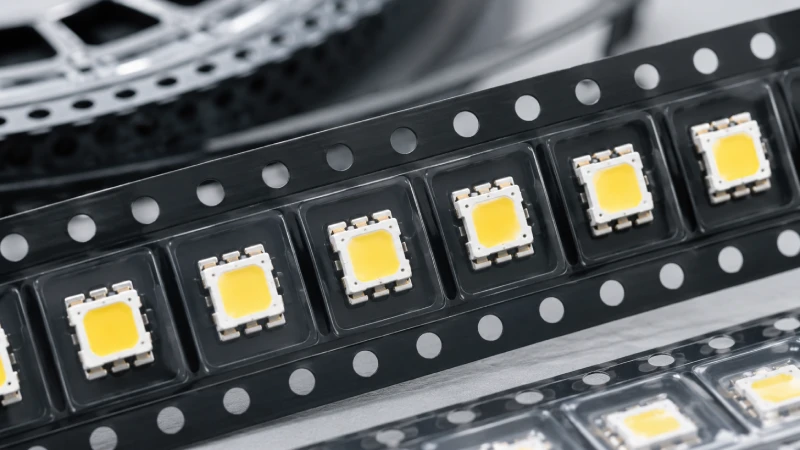
For common SMD LED sizes, a standard tape pocket may be enough. However, not all LEDs fit well into existing standard pockets. Some LED components have raised lenses, irregular body shapes, side-emitting structures, or special height requirements. In these cases, embossed carrier tape for LED components can provide better pocket fit and better component support.
A good LED pocket should control side movement without pressing the component too tightly. It should also give enough clearance for the lens or light-emitting area. For polarity-sensitive LEDs, the pocket should help maintain consistent orientation from packaging to SMT feeding.
Buyers should pay attention to three practical questions:
Can the LED sit flat inside the pocket?
Can the lens or top surface avoid unnecessary contact?
Can the component remain in the correct direction after winding, shipping, and feeding?
If the answer is uncertain, sample testing is recommended before bulk packaging.
Standard vs Custom LED Carrier Tape
Some LED projects can use standard carrier tape, especially when the component size is common and the packaging requirement is simple. But for special LED packages or higher feeding requirements, custom embossed carrier tape may be a safer choice.
| Comparison Point | Standard LED Carrier Tape | Custom LED Carrier Tape |
|---|---|---|
| Best for | Common SMD LED sizes with regular shapes | LEDs with special lens height, shape, or feeding requirements |
| Pocket fit | Based on existing pocket dimensions | Designed around actual LED samples or component drawings |
| Lens protection | Suitable when the LED has enough clearance | Better for raised lenses, domes, or fragile top surfaces |
| Orientation control | Acceptable for many standard LED packages | Better when polarity direction must stay highly consistent |
| Sampling need | Lower if the LED size is common | Recommended before mass tape-and-reel packaging |
| Buyer risk | Faster option, but may not fit every LED perfectly | Better fit and feeding confidence for sensitive LED parts |
The best choice depends on the LED package, production volume, shipping condition, and SMT feeding requirement. For a low-risk standard LED, existing tape options may be enough. For a custom LED or a part that has already caused pickup issues, custom embossed carrier tape is usually worth evaluating.
Cover Tape Matching Affects LED Packaging Stability
Carrier tape and cover tape should be considered together. Even if the carrier tape pocket fits the LED well, poor cover tape matching can still create packaging or feeding problems.
The cover tape needs to seal properly on the carrier tape while allowing smooth peeling during SMT feeding. If the sealing is too weak, the cover tape may lift during transportation or handling. If the peeling force is too high or inconsistent, the LED may move inside the pocket when the cover tape is peeled away.
This is especially important for lightweight SMD LEDs. Small LED components can be affected by vibration, sudden peeling, or unstable tape movement. A stable cover tape helps reduce the chance of component jumping, tilting, or shifting before pickup.
Buyers should not only ask for “carrier tape price.” They should also confirm whether the cover tape is suitable for the selected carrier tape material and the LED packaging process. Testing the carrier tape and cover tape as a complete packaging set is more reliable than checking each material separately.
ESD Control Should Be Confirmed Before Sampling
Many LED components require attention to electrostatic discharge control during packaging, storage, and SMT assembly. The exact requirement depends on the LED type, customer standard, and handling environment.
For LED packaging, buyers may need standard, anti-static, or conductive carrier tape. The plastic reel and cover tape should also match the overall ESD handling requirement. If only the carrier tape is considered, the full packaging system may still not meet the buyer’s production or delivery expectations.
This is why ESD requirements should be discussed before sampling. If the buyer waits until after the sample is made, material selection may need to be changed later. That can delay quotation, sample approval, and mass packaging.
When contacting Jiushuo, buyers can share whether the LED part requires anti-static or conductive packaging. Jiushuo can then help review suitable carrier tape, cover tape, and reel combinations for the project.
How LED Carrier Tape Supports SMT Pick-and-Place Feeding
For SMT assembly companies, packaging quality is closely connected with machine feeding performance. The LED must stay in a repeatable position so the pick-and-place nozzle can pick it correctly from the tape pocket.
If the LED moves too much inside the pocket, the nozzle may not pick from the center position. If the LED sits too deep, pickup may become unstable. If the LED sits too high, the cover tape or reel winding may affect the component. If the pocket shape does not match the LED body, the component may tilt or rotate.
A suitable LED carrier tape helps reduce these risks by supporting the component in a consistent position. This is especially useful for high-volume SMT production, where small packaging issues can become repeated production interruptions.
For buyers using SMD LED tape and reel packaging, the packaging should be evaluated from both protection and feeding perspectives. A tape that looks acceptable during manual inspection may still need sample feeding tests to confirm real SMT performance.
What Buyers Should Send for an LED Carrier Tape Quotation
To receive a more accurate quotation and reduce unnecessary back-and-forth communication, buyers should provide enough component and packaging information at the beginning.
For LED carrier tape quotation or sampling, it is helpful to send:
LED package type, such as 0603, 0805, 2835, 3528, 5050, or custom SMD LED.
Component drawing or datasheet with length, width, height, and polarity direction.
Actual LED samples, especially for raised lens, side-emitting, or non-standard structures.
Required tape width and pitch, if already known.
Preferred orientation inside the tape pocket.
ESD requirement, such as standard, anti-static, or conductive packaging.
Cover tape requirement, if specified by the customer or assembly line.
Plastic reel size and quantity requirement.
Estimated order quantity and sampling schedule.
Previous packaging or SMT feeding issues, if the project is replacing an existing solution.
This checklist helps Jiushuo understand whether a standard carrier tape is suitable or whether a custom embossed pocket should be considered. It also helps buyers avoid wrong tape selection based only on component length and width.
When Custom Embossed Carrier Tape Is Better for LED Components
Custom embossed carrier tape is not always necessary, but it is useful when standard tape cannot provide enough fit, protection, or feeding confidence.
Buyers should consider custom embossed carrier tape when the LED has a raised or fragile lens, when the component moves inside a standard pocket, or when orientation must be tightly controlled. It is also helpful when previous packaging caused pickup errors, component rotation, or unstable feeding during SMT production.
Custom tape can also support LED components that are not common standard sizes. For LED suppliers and packaging companies, this can be important when serving customers with special product designs or strict delivery requirements.
The main benefit is not simply customization itself. The real benefit is better packaging confidence. A pocket designed around the actual LED can reduce movement, protect sensitive surfaces, and support smoother automated assembly.
Jiushuo LED Packaging Support
Jiushuo supports LED component suppliers, LED packaging companies, SMT assembly companies, and electronics sourcing teams with practical tape-and-reel packaging materials and support.
For LED projects, Jiushuo can provide embossed carrier tape, cover tape, plastic reels, and packaging support based on component samples or drawings. The team can help buyers review pocket fit, orientation requirements, ESD needs, cover tape matching, and reel selection.
This is useful for buyers who do not want to manage multiple suppliers for different packaging materials. Instead of sourcing carrier tape, cover tape, and reels separately, buyers can discuss the full packaging requirement with one supplier.
Jiushuo’s role is to help buyers choose a packaging solution that is suitable for the LED component and practical for production. For standard LED parts, this may mean selecting an existing tape option. For special LED components, it may mean developing a custom embossed tape solution before mass packaging.
Request LED Carrier Tape Sampling or Quotation
If you need carrier tape for LED packaging, you can send Jiushuo your LED datasheet, component drawing, samples, orientation requirement, ESD requirement, and estimated order quantity.
Jiushuo can help review whether your LED part is suitable for standard carrier tape or whether a custom embossed carrier tape solution is recommended. The team can also support cover tape matching, plastic reel selection, and tape-and-reel packaging requirements for SMD LED components.
A clear quotation request helps reduce sampling delays and improves the chance of choosing the right packaging solution from the beginning.
FAQs About Carrier Tape for LED Packaging
What type of carrier tape is commonly used for SMD LED packaging?
Most SMD LEDs are packed in embossed carrier tape because the pocket can hold the component in a defined position during tape-and-reel packaging and SMT feeding. The exact tape type depends on the LED size, lens structure, orientation requirement, and ESD needs.
Do all LED components need custom carrier tape?
No. Many common LED sizes can use standard carrier tape if the pocket fit is suitable. Custom embossed carrier tape is more useful when the LED has a special shape, raised lens, strict orientation requirement, or previous feeding problems.
Why is LED orientation important in carrier tape?
LEDs are polarity-sensitive components. If the LED orientation changes inside the tape, it may cause placement mistakes or production delays during SMT assembly. Good pocket fit helps keep the LED direction consistent from packaging to feeding.
Can carrier tape help protect the LED lens?
Yes, if the pocket depth and shape are suitable. The pocket should reduce movement while avoiding pressure on the LED lens or light-emitting surface. For raised or fragile lenses, custom embossed carrier tape may provide better protection.
Should cover tape be tested together with LED carrier tape?
Yes. Cover tape affects sealing and peeling performance. If peeling is unstable, lightweight LED components may move inside the pocket before pickup. Testing carrier tape and cover tape together gives buyers a more realistic view of packaging performance.
What information should I provide for an LED carrier tape quotation?
You should provide the LED datasheet, drawing, samples, package type, orientation requirement, ESD requirement, tape or reel preference, expected quantity, and any known SMT feeding issues. This helps Jiushuo recommend a more suitable packaging solution.