
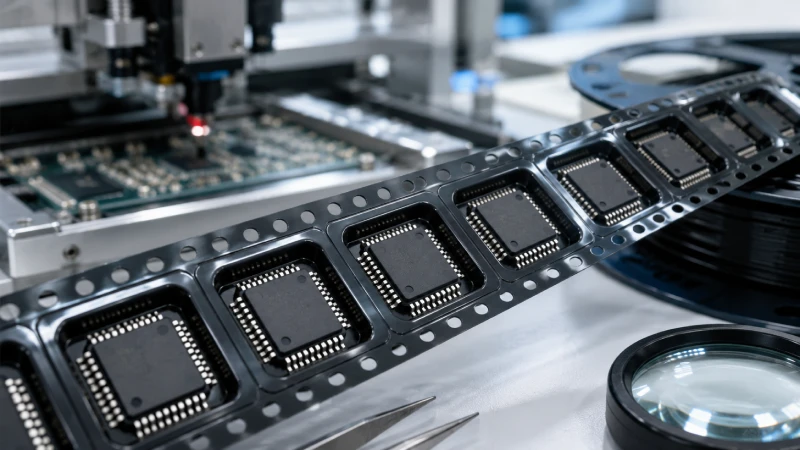
IC chips are small, sensitive, and often higher-value than many standard electronic components. For buyers, distributors, and SMT packaging teams, the main concern is not only whether the chips can be packed into tape and reel format. The real question is whether the packaging can keep each IC chip stable, protected, and ready for automated SMT feeding.
If the carrier tape pocket is not suitable, IC chips may rotate, tilt, move during transportation, or fail to present correctly during pick-and-place operation. This can lead to pickup errors, bent leads, production interruption, or even hidden component damage. For this reason, choosing the right carrier tape for IC chips is an important packaging decision before mass production.
Jiushuo supports IC chip packaging with custom carrier tape solutions, including pocket review, material selection, sampling, and tape and reel packaging support for semiconductor components.
Why IC Chips Need More Than Standard Component Packaging
IC chips are different from many simple passive components. They may have fine leads, flat bodies, sensitive surfaces, or package shapes that require better pocket control. Even a small amount of movement inside the pocket can create problems during storage, shipment, or SMT assembly.
For electronic component buyers, this means the cheapest available tape is not always the safest choice. A standard pocket may look acceptable at first, but if the IC chip can move too much inside the cavity, the component may not stay in the correct position. During SMT feeding, this can affect pickup accuracy and create unnecessary downtime.
For semiconductor distributors, packaging quality also affects customer trust. IC chips are often supplied to OEMs, EMS factories, and assembly plants that expect components to arrive in a clean, organized, and production-ready format. If the tape and reel packaging causes feeding problems, the buyer may question both the component and the packaging supplier.
A suitable IC chip carrier tape should hold the component securely while still allowing smooth cover tape sealing, clean peeling, and reliable pickup during automated assembly.
Common Packaging Risks for IC Chips in Tape and Reel
Poor carrier tape selection can create several practical risks for IC chip packaging.
The first risk is component movement. If the pocket is too large or too shallow, the chip may shift during transportation. This can cause rotation, tilt, or incorrect orientation when the reel reaches the SMT line.
The second risk is lead or edge damage. Some IC packages have delicate leads or contact areas. If the pocket does not support the component properly, pressure from movement, sealing, or handling may affect the chip.
The third risk is unstable pickup. SMT machines depend on repeatable component positioning. If the IC chip is not presented at the correct angle or height, the nozzle may miss the component, pick it incorrectly, or trigger machine stoppage.
The fourth risk is static-related damage. Many semiconductor components are sensitive to electrostatic discharge. Carrier tape material, cover tape, reel handling, and storage conditions should all be considered when planning IC chip packaging.
The fifth risk is inconsistent cover tape peeling. If sealing is too weak, components may be exposed during handling. If sealing is too strong, peeling may become unstable during SMT feeding. Both conditions can create production issues.
For buyers, these problems may not be obvious during quotation. They usually appear during sampling, incoming inspection, or SMT trial production. That is why packaging review should happen before bulk orders.
How IC Chip Carrier Tape Supports Safer SMT Feeding
In SMT production, carrier tape is not just a container. It is part of the feeding process. The tape must present each IC chip in a consistent position so the machine can pick and place components smoothly.
A well-designed carrier tape helps control the chip’s position inside the pocket. This reduces unnecessary movement during reel unwinding and improves repeatability during pickup. For IC chips, this is especially important because package orientation, surface flatness, and pickup position can directly affect assembly performance.
For OEM sourcing teams, reliable tape and reel packaging can also reduce the workload of repacking or handling components before production. Components that arrive in SMT-ready packaging are easier to schedule, store, and use.
For semiconductor distributors, stable IC chip carrier tape helps improve delivery quality. Customers can load reels into feeders with fewer packaging-related interruptions, which makes the overall supply experience more reliable.
The goal is simple: each chip should stay where it should be, move smoothly through the feeder, and be picked by the machine without unnecessary adjustment.
When IC Chips Require Custom Embossed Carrier Tape
Not every IC chip can be packaged safely with standard carrier tape. When the component size, shape, or sensitivity creates packaging risk, custom embossed carrier tape is often the better solution.
Custom embossed carrier tape for semiconductor components is designed around the actual component. Instead of forcing the IC chip into an available standard pocket, the pocket is reviewed according to the chip’s body size, package type, height, lead structure, and feeding requirement.
IC chips may require custom embossed carrier tape when the component moves too much in standard tape, when the chip body needs better support, or when the package shape requires controlled orientation. It may also be necessary when the component is high-value, sensitive to movement, or used in automated assembly lines where feeding stability is critical.
Custom pocket design is especially useful for IC chips that have irregular shapes, exposed leads, special terminals, or strict pickup requirements. The purpose is not to make the design more complicated. The purpose is to reduce avoidable risk before the components enter mass production.
For buyers, custom embossed carrier tape is worth considering when sample testing shows chip rotation, lifting, unstable peeling, poor pickup, or inconsistent feeding. These warning signs usually mean the packaging needs to be reviewed before placing a bulk order.
Pocket Fit Considerations for IC Chip Packaging
Pocket fit is one of the most important details in IC chip carrier tape packaging. The pocket must hold the component securely without creating unnecessary stress.
A good pocket fit starts with the chip’s package information. Buyers should provide the component drawing, datasheet, or actual sample if available. The supplier can then review the body size, height, lead position, and pickup area.
For IC chips, the pocket should help maintain orientation during transportation and reel feeding. If the component can rotate too easily, the SMT machine may not recognize or pick it correctly. If the pocket is too tight, the component may be difficult to release or may be exposed to unnecessary pressure.
Pocket depth is also important. The chip should sit low enough to remain stable, but not so deep that pickup becomes difficult. Cover tape clearance must also be considered, especially for components with sensitive top surfaces or raised features.
This section does not need to focus heavily on technical pocket formulas. For most buyers, the practical question is whether the pocket can hold the IC chip safely from packing to SMT feeding. Jiushuo can review drawings or samples and recommend a suitable carrier tape structure based on the actual IC package.
ESD and Material Selection for Semiconductor Components
Many IC chips require ESD-conscious packaging. Static damage may not always be visible, but it can affect component reliability. This makes material selection an important part of IC chip tape and reel packaging.
Depending on the component’s sensitivity, buyers may need anti-static or conductive carrier tape materials. The right choice should be based on the IC chip type, storage environment, handling process, and customer requirement. It is also important to consider how the carrier tape works together with the cover tape.
Cover tape affects sealing, peeling, and component protection. For IC chips, poor cover tape performance may expose components, create unstable peeling force, or disturb the chip during SMT feeding. A good packaging solution should balance component protection with smooth machine operation.
ESD protection should not be treated as one isolated feature. It should be considered across the full packaging set, including carrier tape, cover tape, reel, storage method, and shipping condition.
Carrier Tape, Cover Tape, and Reel: A Complete IC Packaging Set
Reliable tape and reel packaging for IC components depends on more than the carrier tape pocket. The complete packaging set includes carrier tape, cover tape, and reel.
The carrier tape holds the IC chip. The cover tape seals the component inside the pocket and protects it during transportation and storage. The reel keeps the tape organized and supports smooth unwinding during SMT production.
For IC chip packaging, reel quality also matters. A weak or deformed reel may affect tape winding, storage, and feeding. This is especially important for longer production runs or export shipments, where reels may go through multiple handling steps before reaching the SMT line. Jiushuo can support matching plastic reel options based on tape width, packaging quantity, and transportation needs.
For distributors and OEM buyers, sourcing the carrier tape, cover tape, and reel as a coordinated packaging set can reduce mismatch problems. It also makes sampling and quotation more efficient because the supplier can review the full packaging requirement instead of only one material.
Standard vs Custom Carrier Tape for IC Chips
The right choice depends on the IC chip’s size, package shape, sensitivity, and production requirement. Standard tape may be suitable for simple IC packages when the fit is already proven. Custom embossed carrier tape is better when the component needs controlled pocket design.
| Buyer Concern | Standard Carrier Tape | Custom Embossed Carrier Tape |
|---|---|---|
| Component fit | Suitable when IC size matches available pockets | Designed around actual IC dimensions and package shape |
| Orientation control | May be limited for sensitive or irregular chips | Better control of chip position and direction |
| SMT feeding | Works for simple, proven components | Better for high-value or feeding-sensitive IC chips |
| ESD requirement | Depends on available material options | Material can be selected based on IC sensitivity |
| Sampling | Faster if standard size matches | Recommended when packaging risk is uncertain |
| Best use case | Common IC packages with low movement risk | Custom ICs, sensitive chips, or components with pickup issues |
For buyers, this table can be used as a quick decision guide. If the IC chip already fits a standard pocket and has no feeding issue, standard carrier tape may be enough. If the chip moves, rotates, lifts, or has sensitive leads, custom embossed carrier tape should be reviewed before mass packaging.
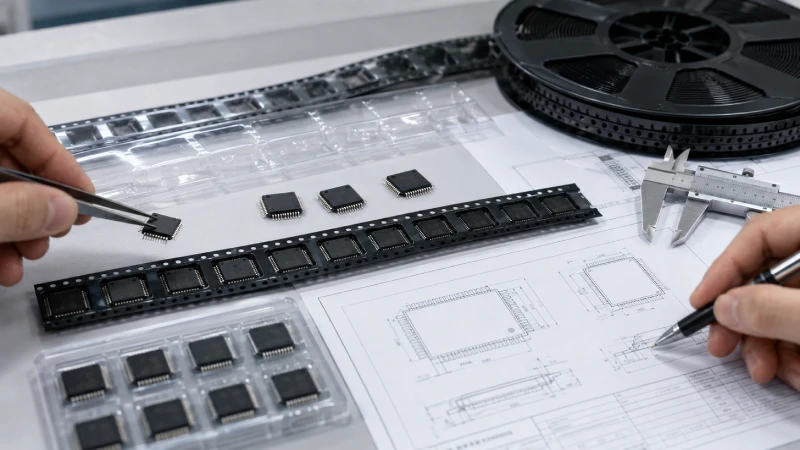
IC Chip Carrier Tape Sampling and Quotation Checklist
To receive an accurate quotation and reduce sampling delays, buyers should prepare the right information before contacting a carrier tape supplier.
For IC chip carrier tape projects, the most useful information includes:
- IC chip package type
- Component drawing or datasheet
- Actual component samples, if available
- Component quantity for sampling and mass production
- Tape width or SMT feeder requirement, if already known
- ESD or conductive material requirement
- Cover tape requirement
- Reel size requirement
- Target delivery schedule
- Existing packaging issue, such as chip rotation, movement, pickup failure, or cover tape peeling problem
This checklist helps the supplier understand the real packaging risk. For example, if a buyer reports that the chip rotates inside the pocket during feeding, the supplier can focus on pocket fit and orientation control. If the buyer reports ESD concerns, material selection becomes a higher priority.
Jiushuo can review IC chip drawings, samples, and packaging requirements before recommending a suitable carrier tape solution. This helps buyers confirm the packaging direction before bulk production and reduces the chance of costly repacking later.
Request a Carrier Tape Recommendation for Your IC Chips
If you are sourcing carrier tape for IC chips, it is best to confirm the packaging solution before placing a large order. IC chip packaging should be reviewed based on component fit, SMT feeding, ESD requirement, cover tape sealing, and reel compatibility.
Jiushuo can support custom carrier tape review, embossed pocket design, material selection, sample preparation, and complete tape and reel packaging recommendations for IC components.
Send your IC chip drawing, component sample, package type, estimated quantity, and any current packaging issue. Jiushuo will help you evaluate whether standard carrier tape is enough or whether custom embossed carrier tape is a safer option.
FAQ
What carrier tape is suitable for IC chips?
The suitable carrier tape depends on the IC chip’s package type, body size, height, sensitivity, and SMT feeding requirement. For simple and common IC packages, standard carrier tape may be enough if the pocket fit is stable. For chips with special shapes, sensitive leads, or movement risk, custom embossed carrier tape is usually a better choice.
When should I choose custom embossed carrier tape for IC components?
You should choose custom embossed carrier tape when the IC chip does not fit standard pockets well, moves inside the pocket, rotates during handling, or creates pickup problems during SMT feeding. It is also recommended for high-value semiconductor components where packaging failure can create higher production or replacement costs.
Can IC chip carrier tape help reduce SMT pickup problems?
Yes. A suitable pocket design can help keep each IC chip in a repeatable position. This supports smoother pickup and placement during SMT production. While carrier tape cannot solve every machine setting issue, poor pocket fit is a common reason for pickup instability.
Do IC chips need anti-static or conductive carrier tape?
Many semiconductor components require ESD-conscious packaging. Whether anti-static or conductive carrier tape is needed depends on the component’s sensitivity and handling requirements. Buyers should confirm ESD requirements before sampling so the correct material can be selected.
What information is needed for an IC chip carrier tape quotation?
Buyers should provide component drawings, datasheets, samples if available, package type, estimated quantity, ESD requirement, tape width if known, cover tape requirement, reel requirement, and any previous packaging or feeding issue. Clear information helps the supplier provide a faster and more accurate quotation.
Can Jiushuo provide carrier tape, cover tape, and reels together?
Yes. Jiushuo can support carrier tape, cover tape, and plastic reels for IC chip tape and reel packaging. This helps buyers build a complete packaging set and reduce mismatch problems between different packaging materials.