
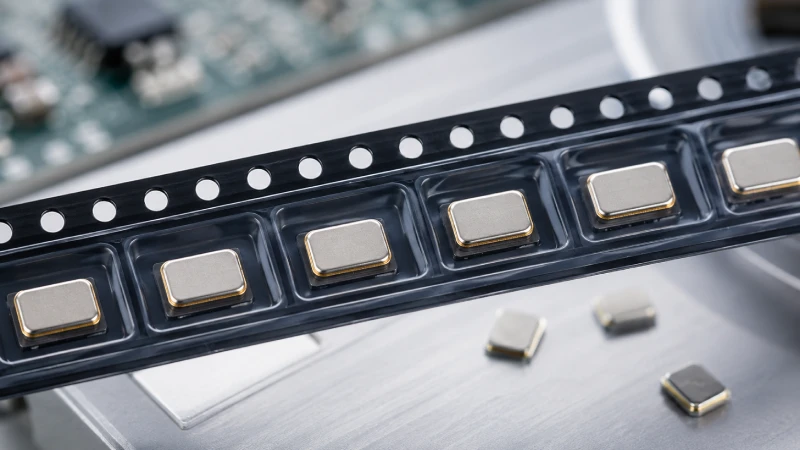
Crystal oscillators are small but important precision components used in many electronic products. For manufacturers, distributors, and SMT assembly suppliers, the challenge is not only producing or sourcing the right oscillator, but also making sure each component is protected, correctly oriented, and ready for smooth automated feeding.
This is why suitable carrier tape solutions are important for crystal oscillator packaging. A well-designed carrier tape can help reduce component movement, protect the surface, support anti-static handling, and improve feeding consistency during SMT production. For bulk supply, export shipments, and automated assembly, stable tape and reel packaging can make a clear difference in packaging quality and production reliability.
For crystal oscillator manufacturers and electronic component distributors, carrier tape should not be treated as a simple storage material. It is part of the complete packaging system. The pocket shape, tape material, cover tape matching, reel format, and anti-static requirement all affect how the component performs during packing, transport, and SMT feeding.
Why Crystal Oscillators Need Suitable Carrier Tape
Crystal oscillators are usually compact, precise, and sensitive to handling conditions. Many models have small rectangular bodies, metal lids, ceramic bases, or delicate surface areas. If the carrier tape pocket is too loose, the oscillator may shift inside the pocket during transport or reel handling. If the pocket is not suitable for the component shape, the part may tilt, rotate, or create feeding problems during pick-and-place.
For buyers, the main concern is simple: the component should stay in the correct position from the moment it is packed until it reaches the SMT line. A stable crystal oscillator carrier tape helps maintain orientation, reduce unnecessary movement, and support a cleaner transfer from packaging to assembly.
This is especially important when components are supplied in high volume. Even small packaging instability can create repeated problems across many reels, such as incorrect pickup, manual inspection, component jumping after peeling, or production line interruptions. A suitable tape and reel packaging solution helps reduce these avoidable risks.
Common Packaging Challenges for Crystal Oscillators
Crystal oscillators may look simple, but their packaging requirements are more specific than many buyers expect. The most common challenge is orientation. For SMT assembly, each oscillator should face the correct direction inside the pocket. If the pocket does not provide enough positioning support, the part may rotate during vibration, handling, or cover tape peeling.
Another issue is pocket fit. A pocket that is too large may allow the oscillator to move freely. A pocket that is too tight may create difficulty during pickup or may increase contact with the component surface. The right carrier tape design should hold the oscillator steadily without causing unnecessary stress or friction.
Surface protection is also important. Some crystal oscillators have metal surfaces that should remain clean and free from scratches. Poor pocket design may allow surface rubbing during transport. For export shipments or long storage periods, this risk becomes more serious because components may experience vibration, handling, and movement before reaching the final assembly line.
Electrostatic control is another buyer concern. Depending on the oscillator type and the customer’s packaging standard, anti-static packaging may be required. In this case, anti-static carrier tape can help support safer handling during packaging, storage, and SMT preparation.
Cover tape matching should also be considered. The cover tape must seal the pocket properly while allowing smooth and consistent peeling. If the sealing is too weak, components may become loose during transport. If peeling is unstable, components may jump, shift, or create feeding interruptions.
Packaging Requirement vs Carrier Tape Consideration
| Packaging Requirement | Carrier Tape Consideration |
|---|---|
| Stable orientation | Pocket structure should help keep the oscillator facing the correct direction inside the tape. |
| Proper pocket fit | The pocket should reduce unnecessary movement without making component pickup difficult. |
| Surface protection | Pocket contact areas should be designed to reduce rubbing, scratching, or pressure on sensitive surfaces. |
| Anti-static requirement | Anti-static or conductive packaging options should be considered when ESD control is required. |
| Transport vibration resistance | Pocket depth and support design should help limit shaking during shipping and reel handling. |
| Feeding consistency | Tape pitch, pocket layout, cover tape sealing, and reel format should support smooth SMT feeding. |
| Component visibility | The packaging should allow practical inspection when required by the buyer or production team. |
| Batch stability | The same design should support consistent packaging performance across repeated production runs. |
This table shows why carrier tape for crystal oscillators should be selected based on actual component and production needs. For precision parts, the goal is not only to place the component inside a pocket. The real goal is to keep it stable, protected, and ready for automated assembly.
Embossed Carrier Tape for Precision Components
For many crystal oscillators, embossed carrier tape is a practical choice because the pocket can be formed according to the component’s shape, size, and height. Compared with flat or unsuitable packaging, an embossed pocket provides more space and better structure for holding precision components.
Embossed carrier tape is especially useful when the oscillator has a defined height, a specific pickup surface, or a shape that requires directional positioning. The pocket can be designed to support the component body while reducing unnecessary movement during reeling and transport.
For distributors, embossed carrier tape also supports more professional product delivery. Components packed in stable tape and reel format are easier for downstream customers to use in SMT production. This can reduce repacking work, improve handling efficiency, and support better customer confidence.
For oscillator manufacturers, a suitable embossed carrier tape can also help standardize packaging across different product models. When packaging is consistent, production teams can improve packing efficiency and reduce the number of handling-related issues.
Custom Pocket Design for Crystal Oscillators
Custom pocket design is one of the most important parts of crystal oscillator packaging. Standard tape may work for some common components, but it may not provide the best fit for every oscillator type. When the component is small, sensitive, or has strict orientation needs, custom pocket design becomes more valuable.
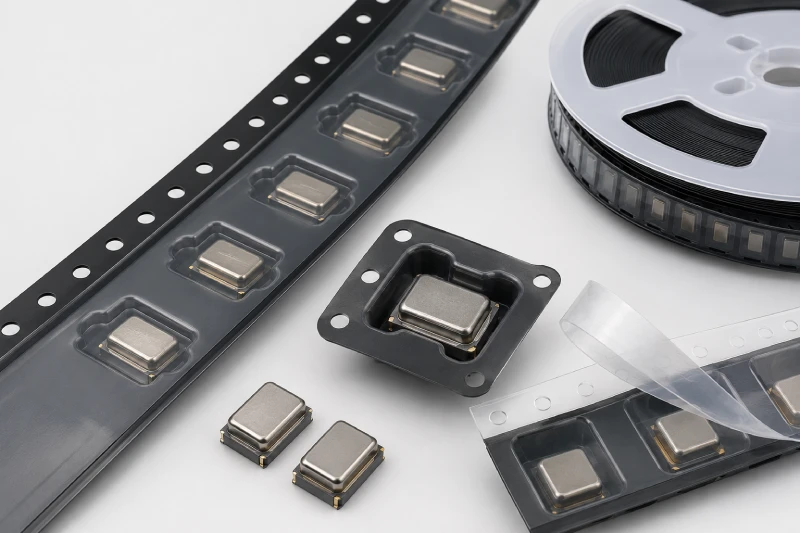
Jiushuo can design carrier tape pockets based on component drawings, samples, or datasheets. These materials help confirm the oscillator’s body size, height, shape, orientation direction, and pickup surface. With this information, Jiushuo can recommend a more suitable carrier tape structure for packaging and SMT feeding.
The custom design process usually starts with component review. If the customer can provide a drawing or datasheet, the basic dimensions and shape can be checked first. If physical samples are available, they can help confirm how the part sits inside the pocket and whether the proposed pocket design provides enough support.
After this, the pocket structure can be planned based on packaging goals. For crystal oscillators, the pocket should help prevent rotation, reduce shaking, protect the surface, and allow stable pickup. The cover tape also needs to match the carrier tape so the component remains secure during storage and transport but can still be opened smoothly during SMT feeding.
Sampling is also useful before mass production. A sample carrier tape allows the buyer to check pocket fit, orientation, cover tape sealing, and component pickup performance. This step can help avoid problems before large-volume packaging begins.
For precision components, a good custom pocket design should balance protection and usability. The pocket should not only hold the oscillator securely; it should also support efficient packing, inspection, shipping, and SMT assembly.
Anti-Static Packaging Considerations
Many electronic components require careful handling to reduce electrostatic risk. Crystal oscillators may need anti-static packaging depending on the product type, customer standard, storage condition, or SMT assembly environment.
When anti-static performance is required, the carrier tape material should be selected accordingly. Anti-static carrier tape can help reduce static-related packaging risks during handling, reeling, transport, and feeding preparation. For some projects, the buyer may also need to consider cover tape, reel, inner packing, and outer packaging together.
The important point is to confirm anti-static requirements early. If the customer, OEM, or EMS supplier has a specific packaging standard, this information should be shared before carrier tape design starts. This helps avoid delays, redesign, or repacking after production.
For procurement teams, anti-static packaging is also a quality control issue. It shows that the supplier understands the handling requirements of precision electronic components and can support more reliable delivery.
How Carrier Tape Supports Stable SMT Feeding
SMT feeding consistency is one of the main reasons buyers choose tape and reel packaging for crystal oscillators. During automated assembly, the pick-and-place machine depends on stable component position. If the oscillator is tilted, reversed, or loose inside the pocket, the production line may experience pickup errors or feeding interruptions.
A well-designed carrier tape helps keep each oscillator in a predictable position. Correct pocket shape, proper depth, and stable cover tape sealing all contribute to smoother feeding. When the cover tape is peeled, the oscillator should remain stable inside the pocket until pickup.
Feeding consistency also matters for EMS suppliers and OEM production teams. If packaging quality is inconsistent, operators may need to stop the line, check reels, or remove problematic components. This increases labor time and affects production efficiency.
For distributors, stable packaging can improve customer satisfaction. Buyers who receive components in reliable tape and reel format are more likely to use the parts directly in production without additional repacking or inspection. This is especially important for customers who manage fast production schedules or high-volume assembly.
When to Request Custom Carrier Tape
Custom carrier tape should be considered when standard packaging does not provide enough stability or protection. For crystal oscillators, this may happen when the component moves inside the pocket, the surface is easily scratched, or the orientation is difficult to control.
A buyer should also request custom carrier tape if the oscillator needs anti-static packaging, if the product will be shipped over long distances, or if the customer requires consistent SMT feeding performance. For export projects, proper packaging becomes even more important because reels may go through multiple handling stages before reaching the final user.
Custom carrier tape is also useful when a supplier manages multiple oscillator models. Different sizes and shapes may need different pocket designs. Using one unsuitable tape for several models may create hidden packaging problems. A custom solution helps match the packaging to the actual component.
Jiushuo’s carrier tape solutions can support crystal oscillators and other precision electronic components by considering component fit, protection, anti-static requirements, and tape and reel use conditions.
Information Needed for Carrier Tape Design
To design suitable carrier tape for crystal oscillators, buyers should prepare as much practical information as possible. The most helpful materials include component drawings, datasheets, or physical samples. These allow the packaging team to understand the component size, height, shape, and orientation requirements.
It is also helpful to provide the expected packaging quantity, reel size, tape width preference if available, and whether anti-static performance is needed. If the final customer or SMT factory has special requirements, these should be shared early as well.
For example, some customers may care more about orientation control, while others may focus on surface protection or feeding stability. Some projects may require sample confirmation before mass production. Clear communication helps reduce design changes and improves packaging efficiency.
For procurement teams, this preparation also makes quotation more accurate. Instead of only asking for a general carrier tape price, buyers can receive a more practical recommendation based on the actual oscillator and packaging condition.
Request a Carrier Tape Solution for Crystal Oscillators
If you need carrier tape for crystal oscillators or other precision electronic components, Jiushuo can help design suitable embossed carrier tape based on your drawings, datasheets, or physical samples.
Share your oscillator size, packaging quantity, anti-static requirements, and tape and reel needs. Jiushuo can review the component and recommend a practical packaging solution that supports protection, orientation stability, and SMT feeding consistency.
Suggested CTA buttons:
- Request Carrier Tape Design Support
- Send Drawings or Samples
- Get a Custom Packaging Quote
FAQ
What type of carrier tape is used for crystal oscillators?
Crystal oscillators commonly use embossed carrier tape because the pocket can be designed according to the component’s size, height, and orientation needs. This helps keep the component stable during packing, transport, and SMT feeding.
Why is pocket fit important for crystal oscillator packaging?
Pocket fit affects how securely the oscillator sits inside the tape. If the pocket is too loose, the component may move, tilt, or rotate. If the pocket is unsuitable, it may affect pickup or increase the risk of surface contact.
Do crystal oscillators need anti-static carrier tape?
Some crystal oscillators may require anti-static packaging depending on the product type, customer standard, or assembly environment. Buyers should confirm ESD requirements before carrier tape design and material selection.
Can Jiushuo design carrier tape based on datasheets?
Yes. Jiushuo can review drawings, datasheets, or physical samples to design a suitable carrier tape pocket. Physical samples are especially helpful for checking real pocket fit and packaging stability.
How does carrier tape improve SMT feeding?
Carrier tape helps keep each oscillator in a stable and consistent position. This supports smoother pick-and-place operation, reduces feeding interruptions, and helps production teams avoid unnecessary manual checking.
Is cover tape important for oscillator packaging?
Yes. Cover tape helps seal the component inside the pocket during storage and transport. It should also peel smoothly during SMT feeding to reduce the risk of component jumping or shifting.
When should I choose custom embossed carrier tape?
Custom embossed carrier tape is recommended when standard tape cannot provide stable orientation, proper pocket fit, surface protection, or anti-static performance. It is also useful for export packaging, high-volume supply, and automated SMT assembly.