
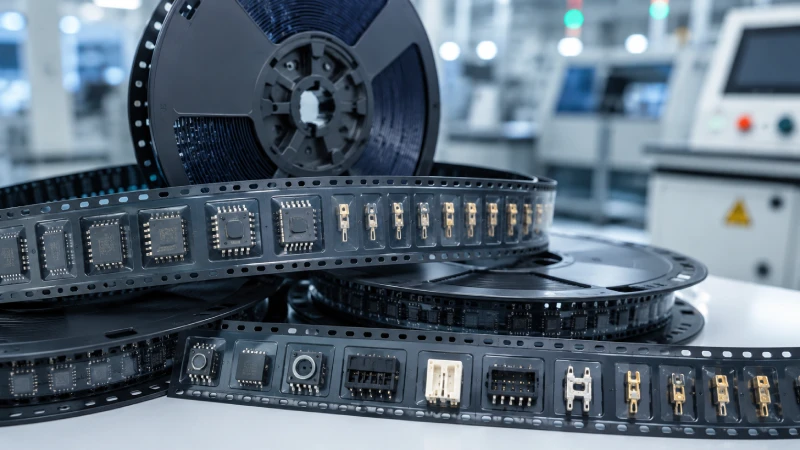
Automotive electronic components need packaging that can support stable handling from production to final assembly. For component suppliers, distributors, OEM buyers, and Tier 1 sourcing teams, packaging is not only about putting parts into tape. It also affects feeding stability, transport protection, ESD control, inspection efficiency, and overall supply chain reliability.
When components are packed loosely, positioned incorrectly, or exposed to static and vibration risks, the result can be bent pins, tilted parts, feeding interruptions, rejected lots, or extra inspection work. These problems may look small at the packaging stage, but they can create delays during SMT assembly or automated production.
Jiushuo provides reliable carrier tape solutions for automotive electronic components, including embossed carrier tape, anti-static carrier tape, matching cover tape, and plastic reels. The goal is to help buyers package different automotive components with better consistency, safer protection, and smoother automated feeding.
Why Automotive Electronic Components Need Reliable Carrier Tape
Automotive electronics often move through long and demanding supply chains. A component may be produced by one supplier, inspected by another facility, shipped to a distributor, stored in a warehouse, and finally delivered to an assembly line. During this process, the packaging must keep each part stable, separated, protected, and correctly oriented.
Reliable carrier tape helps reduce several common packaging risks. Components should not move freely inside the pocket. Leads, terminals, or contact points should not be pressed or bent. Sensitive parts should not be exposed to unnecessary ESD risk. The tape should also unwind smoothly from the reel and allow components to be picked accurately during automated feeding.
For automotive electronics suppliers, consistent packaging is especially important because customers often expect repeatable quality across batches. Even if the component itself is produced correctly, poor packaging may still create quality complaints. This is why many automotive component projects require customized tape and reel packaging instead of using a general-purpose tape structure.
Common Automotive Components Packed in Carrier Tape
Different automotive electronic components have different packaging requirements. Some are small and sensitive to static. Some have pins, leads, or sharp edges. Others are thicker, heavier, or irregularly shaped. A suitable carrier tape design should match the component’s size, shape, orientation needs, and handling risks.
| Automotive Component Type | Main Packaging Consideration |
|---|---|
| Automotive ICs and control chips | Stable pocket fit, ESD protection, surface protection, correct orientation |
| Connectors and terminals | Pin protection, orientation control, prevention of tilting and movement |
| Sensors and MEMS components | Anti-static material, clean pocket design, vibration control, stable positioning |
| Relays and fuses | Deeper pocket design, stronger support, stable winding, transport protection |
| LEDs and optoelectronic parts | Lens protection, orientation control, cover tape compatibility |
| Metal stamped parts and contacts | Sharp edge control, anti-deformation support, separation between parts |
| Passive components | Consistent pocket dimensions, smooth feeding, stable placement |
This is why automotive electronic component carrier tape is usually selected based on practical packaging performance instead of only tape width or pocket size. The supplier needs to consider how the component sits inside the pocket, how it moves during shipment, how it is sealed by cover tape, and how it performs when loaded onto automated equipment.
Stable Feeding for SMT and Automated Assembly
Stable feeding is one of the most important reasons buyers choose suitable carrier tape for automotive electronics. During automated assembly, the component must stay in the correct position until it is picked. If the pocket is too loose, the component may rotate or tilt. If the pocket is too tight, the component may be difficult to pick or may suffer surface pressure. If the tape is not formed consistently, feeding interruptions may happen during production.
For procurement teams and quality managers, stable feeding is not only an engineering issue. It affects production efficiency, delivery schedules, and customer satisfaction. A small packaging issue can slow down the assembly line, create extra manual checks, or lead to rejected material.
A well-designed embossed carrier tape helps control component position through suitable pocket depth, shape, clearance, and orientation. The tape should also work smoothly with the selected reel and cover tape. When the full tape and reel packaging system is matched correctly, components can move through storage, transport, and automated feeding with fewer risks.
For automotive suppliers handling repeat orders, feeding consistency across batches is especially important. Buyers do not only need one successful sample run. They need packaging that can remain stable during continuous supply.
ESD Protection for Sensitive Automotive Electronics
Many automotive electronic components are sensitive to electrostatic discharge. ICs, sensors, MEMS components, control chips, and some precision electronic parts may require anti-static packaging to reduce ESD-related risks during storage, shipment, and handling.
Jiushuo can provide anti-static carrier tape for ESD-sensitive automotive electronics. The material choice depends on the component type, packaging environment, customer requirements, and handling process. For buyers, the key point is to confirm ESD needs early instead of treating anti-static packaging as an afterthought.
ESD protection is not only about the carrier tape material. The complete packaging combination should also be considered, including carrier tape, cover tape, reel, sealing condition, and storage environment. If the component is sensitive, the packaging solution should help reduce static-related risk while still supporting stable feeding and good visual inspection.
For automotive electronic components, this balance matters. Packaging should protect the component, but it should also remain practical for production, inspection, and shipment.
Transport Protection Across the Supply Chain
Automotive electronic components often travel long distances before reaching the final assembly line. During shipping and warehousing, reels may face vibration, handling pressure, temperature changes, stacking, and repeated movement. If the component is not held securely inside the pocket, it may shift, scratch, collide with nearby parts, or become misaligned.
Carrier tape helps protect components by separating each part in an individual pocket. This reduces direct contact between components and helps maintain orientation. For parts with pins, leads, solder areas, lenses, or delicate surfaces, pocket design becomes even more important.
For example, connectors and terminals may need support that prevents pin deformation. Sensors may require a stable pocket that limits shaking. LEDs may need protection around the lens area. Relays and fuses may need deeper pockets and stronger support because of their size or weight.
Good packaging does not remove every transport risk, but it can greatly reduce unnecessary movement and handling damage. For buyers, this means fewer packaging-related complaints and better confidence when shipping automotive components to different assembly locations.
Custom Embossed Carrier Tape for Different Component Shapes
Automotive electronics are not all shaped the same. Some parts are flat and rectangular, while others are tall, irregular, heavy, or designed with leads, pins, clips, terminals, or contact points. Standard carrier tape may not provide enough support for these components.
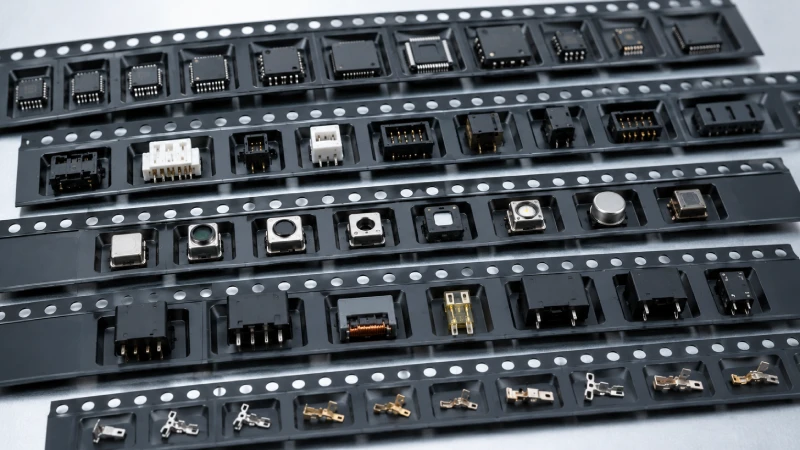
Custom embossed carrier tape can be designed according to the component’s actual size, shape, height, orientation, and handling requirements. The purpose is to create a pocket that holds the part securely without causing pressure damage or feeding problems.
For procurement teams, the custom process usually starts with component drawings, samples, or 3D data. These references help evaluate the proper pocket shape, tape width, material, pitch, and reel configuration. If the component has sensitive areas, such as leads, lenses, terminals, or exposed contact points, those details should be considered before production.
Custom embossed carrier tape is especially useful for automotive components that are not suitable for flat tape or standard pocket designs. It helps improve packaging fit, reduce movement, and support more predictable automated feeding.
Why Stable Carrier Tape Quality Matters for Automotive Supply Chains
Automotive supply chains value consistency. Component buyers and Tier 1 suppliers often need stable quality from one batch to the next. In this environment, carrier tape quality can directly affect packaging reliability, incoming inspection, production planning, and customer confidence.
If carrier tape dimensions vary too much, components may sit differently in each pocket. If forming quality is unstable, some pockets may not hold parts correctly. If sealing is inconsistent, the cover tape may peel poorly or fail to protect the components during transport. These problems can lead to production stoppages, extra inspection, rejected lots, or urgent replacement requests.
Stable carrier tape quality helps reduce these risks. It supports repeatable pocket fit, smoother unwinding, better component positioning, and more reliable sealing performance. For automotive electronics suppliers, this is important because packaging problems can affect not only one shipment but also the buyer’s trust in long-term supply.
Traceability is also part of packaging confidence. While this page does not go deep into automotive standards, buyers often care about clear production control, stable batch quality, and consistent packaging documentation. A reliable packaging supplier should understand that automotive projects require careful attention to detail, even when the product itself is “only” carrier tape.
Complete Tape and Reel Packaging Support from Jiushuo
Jiushuo supports automotive electronics packaging with a complete tape and reel packaging solution. Instead of only supplying one tape product, Jiushuo can help buyers match carrier tape, cover tape, and reels based on the component and application.
For shaped or precision parts, Jiushuo provides custom embossed carrier tape. For ESD-sensitive components, anti-static carrier tape can be selected. For sealing and peeling performance, matching cover tape is important because it helps keep components secure while still allowing smooth opening during automated feeding. For storage, shipment, and line-side use, suitable plastic reels help support stable winding and handling.
The full packaging system matters because one weak point can affect the whole process. A good pocket design may still perform poorly if the cover tape does not seal properly. A suitable tape may still create problems if the reel is not stable during transport or unwinding. This is why buyers should evaluate carrier tape, cover tape, and reel compatibility together.
Jiushuo can review component drawings, samples, packaging requirements, and production needs to recommend a practical packaging solution for automotive electronic components.
How to Choose Carrier Tape for Automotive Electronic Components
Choosing carrier tape for automotive electronics should begin with the component itself. Buyers should confirm the component size, height, shape, weight, and sensitive areas. Parts with pins, leads, terminals, lenses, or exposed contact points may need a more customized pocket design.
ESD requirements should also be confirmed early. If the component is sensitive to static, anti-static carrier tape may be needed. The buyer should also consider whether the tape will be used for short-distance transfer, long-distance export shipment, warehouse storage, or direct SMT feeding.
Cover tape performance is another important point. The cover tape should seal properly, protect the components, and peel smoothly during automated feeding. For a complete packaging solution, buyers can also review reel size, packaging quantity, winding direction, and labeling requirements.
A practical checklist may include:
- Component drawing or sample availability
- Component dimensions and height
- Pin, lead, lens, or terminal protection needs
- ESD or anti-static requirements
- Pocket fit and orientation requirements
- Cover tape sealing and peeling needs
- Reel size and packing quantity
- Sampling and batch consistency expectations
By confirming these points early, buyers can reduce the chance of redesign, sampling delays, and packaging problems during mass production.
Request a Custom Carrier Tape Solution for Automotive Electronics
For automotive electronic components, carrier tape should do more than hold parts in place. It should support stable feeding, protect components during transport, reduce ESD risk, and help maintain consistent packaging quality across batches.
Jiushuo provides carrier tape solutions for different automotive electronic components, including ICs, connectors, terminals, sensors, MEMS components, relays, fuses, LEDs, contacts, and precision metal parts. Whether you need embossed carrier tape, anti-static material, matching cover tape, or plastic reels, our team can help evaluate a suitable packaging structure based on your component and application.
Send us your component drawings, samples, or packaging requirements. Jiushuo can help you review the component shape, pocket design, material selection, cover tape matching, reel size, and quotation details for your automotive electronics packaging project.
CTA button suggestions:
- Request a Carrier Tape Quote
- Send Component Drawing
- Get Custom Packaging Support
FAQs
What type of carrier tape is used for automotive electronic components?
Automotive electronic components are commonly packed in embossed carrier tape because it can be customized for different component shapes, heights, and orientation needs. For sensitive components, anti-static carrier tape may also be used.
Do automotive electronic components need anti-static carrier tape?
Many automotive electronic components, such as ICs, sensors, MEMS parts, and control chips, may require anti-static carrier tape to reduce ESD-related packaging risks. The exact requirement depends on the component and handling environment.
Can Jiushuo customize carrier tape for connectors, terminals, and relays?
Yes. Jiushuo can design custom embossed carrier tape for connectors, terminals, relays, fuses, contacts, and other automotive electronic components. The design can be based on component drawings, samples, dimensions, and packaging needs.
Why is carrier tape consistency important for automotive suppliers?
Carrier tape consistency helps reduce feeding issues, component movement, inspection problems, and packaging-related quality complaints. For automotive supply chains, stable packaging quality supports smoother production and more reliable long-term supply.
What information is needed for a custom carrier tape quotation?
Useful information includes component drawings, samples, dimensions, material requirements, ESD needs, packaging quantity, reel size, cover tape requirements, and any special handling concerns.
Can Jiushuo provide reels and cover tape together with carrier tape?
Yes. Jiushuo can provide carrier tape, matching cover tape, and plastic reels to support a complete tape and reel packaging solution for automotive electronic components.