Step
Component Placement
Electronic components are loaded into pockets formed in carrier tape. The pocket design is matched to the component dimensions to ensure proper positioning and protection.


Reliable tape & reel packaging for electronic components used in automated SMT assembly.
Custom carrier tape, cover tape, and reel configurations are available based on your component specifications.
Tape & reel packaging is a standardized packaging format used throughout the electronics manufacturing industry, especially in SMT (Surface Mount Technology) production.
In this system, electronic components are placed into pockets formed in carrier tape. The pockets are sealed with cover tape, and the entire tape is wound onto plastic reels to create a continuous packaging format compatible with automated assembly equipment.
This packaging method allows SMT pick-and-place machines to automatically feed components during high-speed PCB assembly. Because of its efficiency and compatibility with automated production lines, tape & reel packaging has become the most widely used packaging format for surface-mount electronic components.
Common components packaged using tape & reel include integrated circuits, LEDs, resistors, capacitors, connectors, sensors, and various semiconductor devices.

The tape & reel packaging process is designed to support automated electronic manufacturing while ensuring stable component handling during transportation and assembly.
Electronic components are loaded into pockets formed in carrier tape. The pocket design is matched to the component dimensions to ensure proper positioning and protection.
After components are placed into the pockets, cover tape is applied to seal the carrier tape. This sealing process protects the components from contamination and mechanical damage.
The sealed carrier tape is wound onto plastic reels, creating a continuous strip that can be easily transported and stored.
During PCB assembly, SMT pick-and-place machines automatically peel the cover tape and pick components directly from the carrier tape pockets. This automated feeding system allows extremely high-speed production.
Tape & reel packaging consists of three primary components that work together to create a reliable packaging format.
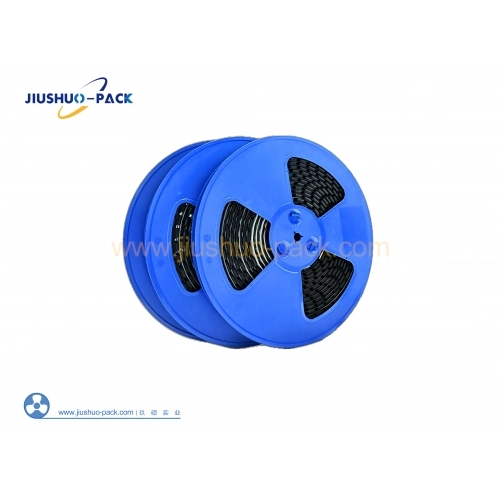
Carrier tape holds electronic components in formed pockets for safe transport and automated SMT feeding.
Carrier tapes are typically manufactured from materials such as PS, PC, PET, or ABS, depending on the application requirements.
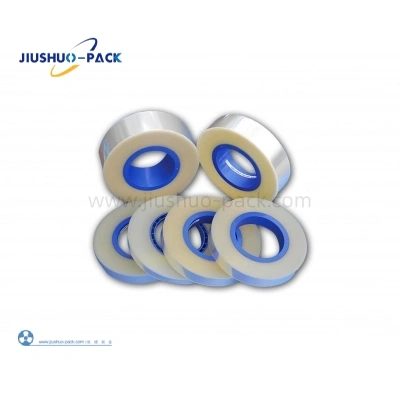
Cover tape seals the pockets and is peeled during SMT assembly for automated component picking.
Two common types of cover tape are pressure-sensitive cover tape and heat-seal cover tape.
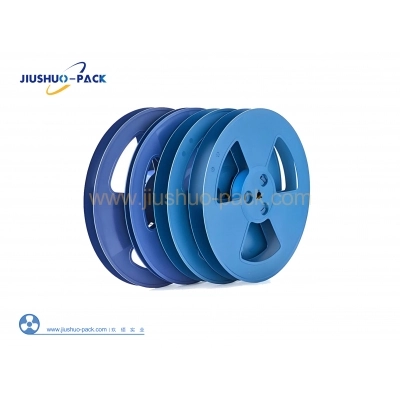
Plastic reels wind the carrier tape and ensure stable feeding in SMT machines.
Standard reel sizes commonly used in the electronics industry include 7-inch, 13-inch, and 15-inch reels.

Tape & reel packaging is widely used across various segments of the electronics industry.
Typical applications include packaging for:
Integrated Circuits (IC)
LED components
Resistors and capacitors
Connectors
Sensors
Semiconductor devices
Because the packaging format is standardized and compatible with SMT assembly equipment, it is commonly used in consumer electronics, industrial electronics, automotive electronics, and communication devices.
Tape & reel packaging provides several advantages for electronic component handling and automated manufacturing.
The packaging format is specifically designed for compatibility with automated pick-and-place machines, enabling efficient SMT assembly.
Components are arranged in pockets along the carrier tape, allowing for organized and consistent feeding into production equipment.
Sealed pockets protect electronic components from dust, contamination, and mechanical damage.
Standardized tape dimensions and sprocket hole spacing ensure stable and reliable feeding during high-speed SMT production.
In many cases, electronic components require customized packaging to match their dimensions and handling requirements.
Custom tape & reel packaging solutions may include:
Custom pocket design based on component dimensions
Carrier tape width selection
Material selection such as PS, PC, or PET
Antistatic or conductive packaging options
Reel size configuration
Packaging length and reel quantity adjustments
Custom packaging solutions help ensure that electronic components can be efficiently integrated into automated SMT assembly processes.

Typical tape & reel packaging specifications include:
| Item | Specification |
|---|---|
| Tape Width | 8 mm – 120 mm |
| Pocket Depth | 1 mm – 40 mm |
| Reel Sizes | 7″ / 13″ / 15″ |
| Materials | PS / PC / PET |
| ESD Range | 10⁶ – 10¹¹ Ω |
Specific configurations may vary depending on component size and packaging requirements.
Tape & reel packaging is a standardized packaging method used to package electronic components for automated SMT assembly. Components are placed in carrier tape pockets, sealed with cover tape, and wound onto reels so they can be automatically fed into pick-and-place machines.
Tape & reel packaging is commonly used for a wide range of electronic components, including integrated circuits (IC), LEDs, resistors, capacitors, connectors, sensors, and other semiconductor devices used in SMT production.
Carrier tape contains the formed pockets that hold the electronic components, while cover tape seals the pockets to protect the components during transportation. During SMT assembly, the cover tape is peeled off so that the components can be picked by automated machines.
Standard reel sizes used in electronic component packaging include 7-inch, 13-inch, and 15-inch reels. The reel size selected typically depends on the carrier tape width and the packaging quantity required.
Tape & reel packaging solutions are generally designed according to industry standards such as EIA-481 for carrier tape packaging and EIA-541 for ESD protection. These standards help ensure compatibility with SMT pick-and-place equipment.
Yes. Tape & reel packaging can be customized according to component dimensions and production requirements. Customization may include pocket design, carrier tape width, material selection, reel size, and ESD protection options.
To recommend a suitable packaging solution, it is helpful to provide the following information:
Component type
Component dimensions or drawings
Required carrier tape width
Packaging quantity
Reel size preference
Any special packaging or ESD requirements
Providing detailed specifications helps ensure the tape & reel packaging design matches your SMT production requirements.