Precision Carrier Tape Packaging Solutions from China

Anti-Static & Conductive Plastic Reels for ESD-Controlled Packaging

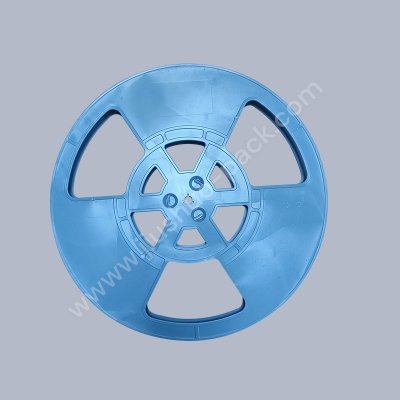
Anti-static and conductive plastic reels are designed for ESD-sensitive electronic components where electrostatic risk may occur during winding, handling, storage, or transportation.

Structurally, these reels follow standard EIA-481 dimensional specifications, allowing direct replacement of standard plastic reels without changes to carrier tape, cover tape, or SMT feeding equipment.

The difference lies in material behavior and application intent — supporting controlled handling environments where static accumulation needs to be reduced or dissipated as part of the overall packaging system.

These reels are typically selected when standard reels are dimensionally sufficient, but process risk or component sensitivity requires an added layer of ESD control.

  • Share:

ESD Protection Approach & Material Options

Anti-static and conductive reels use ESD-controlled polymer formulations to reduce electrostatic risk during winding, handling, and logistics.

They are selected based on application conditions, such as the sensitivity of your components, the level of ESD control on the shop floor, and how frequently reels are handled across the supply chain.

This is not a dimensional change—it is a risk-control upgrade. The reel remains compatible with standard tape-and-reel systems while supporting more stable packaging behavior in ESD-managed workflows.

Anti-static plastic reel used in an ESD-controlled SMT packaging workstation with embossed carrier tape and sealed cover tape.
  • Anti-Static (Dissipative) — When it fits

    • Used when you need to reduce static accumulation during routine handling

    • Typical for controlled production lines where basic ESD practices are in place

    • Prioritizes process stability without requiring the highest conductivity level

  • Conductive — When it fits

    • Used when you need faster charge dissipation and stronger ESD control

    • Suitable for stricter ESD programs and sensitive component handling paths

    • Often selected for higher-risk logistics or multi-stage handling environments

  • Material Base Options

    • Standard production materials may include:
      • HIPS-based formulations
      • ABS / PC options for higher rigidity needs (project-dependent)
    • Material choice influenced by:
      • Required mechanical strength
      • Deformation resistance during stacking/transport
      • Process temperature and storage conditions
  • Color Options & Identification

    • Common colors: black, white, blue (and custom matching if required)

    • Color selection can support:

      • Line-side identification (ESD vs. standard)

      • Warehouse sorting and traceability workflows

    • Color is treated as an operational attribute, not performance proof

Selection tip: If your reel dimensions already match EIA-481 requirements, the decision between anti-static and conductive should be made based on component sensitivity + handling intensity + your ESD control level, not by reel size.

Dimensional Compatibility with Standard EIA-481 Reels

Anti-static and conductive plastic reels follow the same EIA-481 dimensional interface used by standard plastic reels. This means they can be introduced into existing tape-and-reel operations as a direct replacement, without changing carrier tape formats, cover tape sealing, or feeder setup.

Compatibility is defined by standard reel interfaces—such as outer diameter class, hub/core interface, and tape width accommodation—not by ESD performance level. In practice, the ESD variant preserves the same mechanical fit while adding ESD-oriented material behavior for controlled handling environments.

To minimize change risk in production, ESD reels are typically selected to match the same diameter class and tape width range already validated on your packaging line.

Interface category What must match Typical coverage Why it matters
Reel diameter class Outer diameter already used in your packaging and feeder workflow Common: 7" / 13" Extended: 15" / 19" / 22"
Select the same class already validated on your line.
Determines tape capacity, handling convenience, and feeder compatibility.
Tape width accommodation Carrier tape width range supported by reel flange geometry Typical: 8–104 mm
Covers narrow-to-wide tape formats commonly used in SMT packaging.
Protects tape edges and ensures stable winding under tension.
Hub / core interface Inner core interface required by your winding or feeder equipment 80 mm 100 mm 150 mm 180 mm
Match the mandrel or reel holder specification on your machine.
Prevents slippage, misalignment, and torque instability.
Construction type Reel structure compatible with handling and packing workflow Snap-on Rotary Integrated
Structure choice does not affect EIA-481 interface compatibility.
Affects assembly speed, stacking behavior, and repeat handling durability.

Suitable Component Categories & Sensitivity Levels

Anti-static and conductive reels are selected based on component ESD sensitivity and the level of handling exposure during packaging, storage, and transport.

This section helps determine when ESD-controlled reels are recommended, optional, or unnecessary within standard tape-and-reel workflows.

  • Low Sensitivity Components

    ESD Reel: Usually not required

    • Low ESD risk during handling

    • Stable performance with standard reels

    • ESD upgrade optional for process consistency

  • Medium Sensitivity Components

    ESD Reel: Recommended depending on process

    • Moderate sensitivity to static exposure

    • Risk influenced by handling frequency

    • Anti-static reels commonly selected

  • High Sensitivity Components

    ESD Reel: Strongly recommended

    • Highly ESD-sensitive devices

    • Higher risk during storage and transport

    • Conductive or enhanced ESD reels preferred

Handling & Storage Considerations

  • Controlled Handling

    • Use within ESD-controlled work areas
    • Avoid unnecessary manual handling
    • Follow existing ESD floor practices
  • Stacking & Load

    • Stack reels within recommended limits
    • Avoid flange deformation during storage
    • Use flat, stable surfaces or racks
  • Storage Conditions

    • Store in clean, dry environments
    • Avoid extreme temperature or humidity
    • Maintain consistent warehouse conditions
  • Reuse & Circulation

    • Inspect reels before reuse
    • Remove damaged or warped reels
    • Keep ESD reels separated from non-ESD stock

Integration with ESD Carrier Tape & Cover Tape

Anti-static and conductive plastic reels are designed to work as part of a complete ESD-aware tape-and-reel system, integrating seamlessly with ESD carrier tape and compatible cover tape solutions.

While the reel provides mechanical support and controlled handling, ESD performance is achieved at the system level—through coordinated material selection, stable winding behavior, and controlled peel conditions across carrier tape, cover tape, and reel interfaces.

When matched correctly, the reel does not alter sealing or feeding behavior, but supports consistent performance throughout packaging, storage, and SMT feeding.

ESD-aware tape-and-reel packaging system showing anti-static plastic reel, embossed carrier tape with electronic components, and sealed cover tape in SMT production.
  • Compatible with anti-static and conductive carrier tape formats

  • Supports pressure-sensitive and heat-activated cover tape systems

  • Maintains stable winding tension and controlled peel behavior

  • No change required to standard tape-and-reel packaging equipment

Sampling, Verification & Lead Time Expectations

  • Sampling

    • Sampling available for interface and application confirmation
    • Typical sampling timeline: 2–3 working days
    • Samples used to verify reel fit and handling behavior in your setup
  • Verification

    • Verification focused on practical use, not laboratory testing
    • Supports internal evaluation before order release
    • Confirms compatibility with existing carrier tape, cover tape, and packaging or feeding equipment.
  • Delivery

    • Production and delivery based on standard reel configurations
    • Typical delivery cycle: 3–5 working days, depending on order quantity
    • Suitable for pilot builds and repeat production programs

Request A Quote

Header Form