

Introduction
In modern electronics manufacturing, carrier tape is more than just a packaging material. It plays a critical role in protecting components and ensuring stable feeding during SMT assembly. While pocket design and dimensional accuracy are important, environmental conditions inside manufacturing and storage facilities can also influence carrier tape performance.
Two factors are particularly important: humidity and electrostatic discharge (ESD). High humidity can affect material stability and cover tape adhesion, while uncontrolled static electricity can damage sensitive electronic components during packaging, transport, or feeder operation.
For SMT engineers and packaging specialists, selecting the right carrier tape often requires evaluating how these environmental conditions interact with component sensitivity and production requirements. In practice, this means determining whether moisture-resistant materials, anti-static protection, or a combination of both is necessary.
This article explains how engineers typically evaluate environmental conditions and determine when moisture-resistant or anti-static carrier tape should be used.
Why Do SMT Packaging Environments Affect Carrier Tape Performance?
Carrier tape is designed to maintain precise pocket geometry and consistent mechanical behavior throughout the tape-and-reel process. However, environmental conditions inside manufacturing facilities can influence how packaging materials behave during storage, transportation, and SMT feeding.
Humidity and temperature fluctuations can affect the physical stability of certain plastic materials. In high-humidity environments, some carrier tape materials may experience slight softening or dimensional variation, especially during long storage cycles. Even small changes in pocket geometry can influence component positioning and feeding reliability.
Electrostatic conditions are another important factor. When carrier tape moves through reels, feeders, or automated handling equipment, friction between materials can generate static electricity. If static charges accumulate on the tape surface, they can attract dust particles or interact with sensitive semiconductor components.
In high-speed SMT lines, packaging stability becomes even more critical. Minor inconsistencies in tape stiffness, pocket integrity, or peel force can cause feeding interruptions, mis-picks, or component flipping. For this reason, many electronics manufacturers evaluate environmental conditions alongside component specifications when selecting carrier tape materials.
When Do You Need Moisture-Resistant Carrier Tape?
Moisture-resistant carrier tape is typically considered when packaging or storage environments involve elevated humidity levels. This situation is common in several manufacturing and logistics scenarios.
Factories located in tropical or coastal regions often experience high ambient humidity throughout the year. In these environments, packaging materials may be exposed to moisture during component storage, tape-and-reel processes, or warehouse handling.
Long-distance transportation can also introduce moisture exposure. Electronic components packaged in carrier tape may remain in sealed reels or cartons for extended periods while being transported internationally. During shipping, temperature variations can cause condensation inside packaging environments.
High humidity may influence several aspects of carrier tape behavior. Certain materials may become slightly more flexible when exposed to moisture, which can affect pocket dimensional stability. Changes in material stiffness can also influence the interaction between carrier tape and cover tape during peeling.
In addition, moisture exposure can affect peel force consistency. If the sealing interface between carrier tape and cover tape changes due to humidity, the peel force required during SMT feeding may become unstable.
For these reasons, packaging engineers often evaluate moisture-resistant materials when carrier tape will be used in humid production environments or stored for extended periods before assembly.
How Does Static Electricity Affect Electronic Components in Tape-and-Reel Packaging?
Static electricity is a well-known concern in semiconductor manufacturing and electronic component handling. During the tape-and-reel process, multiple mechanical movements can generate electrostatic charges.
Examples include:
- Rotation of plastic reels
- Friction between cover tape and carrier tape
- Movement through feeder mechanisms
- Automated packaging equipment
When static charges accumulate on the surface of carrier tape, they can interact with electronic components in several ways. Some components may attract static charges directly, while others may be exposed to electrostatic discharge events during handling or feeding.
Many semiconductor devices are sensitive to ESD. Components such as integrated circuits, MOSFET devices, MEMS sensors, and certain LED packages can be damaged by static discharge events. In some cases, the damage may not cause immediate failure but instead reduce long-term reliability.
Static electricity can also influence component stability inside pockets. Charged surfaces may attract lightweight components or cause subtle movement during transportation. This can increase the risk of component misalignment or orientation changes before SMT placement.
Because of these risks, many electronics manufacturers use anti-static carrier tape materials when packaging ESD-sensitive components.
What Types of Anti-Static Protection Are Used in Carrier Tape Materials?
Carrier tape manufacturers use several approaches to reduce static electricity and improve ESD safety during packaging and feeding.
One common approach is conductive carrier tape. These materials contain conductive additives that allow electrical charges to dissipate quickly. Conductive carrier tape typically has a surface resistance in the range of 10³ to 10⁵ ohms, allowing static charges to move through the material rather than accumulating on the surface.
Another widely used option is static-dissipative carrier tape. These materials do not conduct electricity directly but allow static charges to dissipate gradually across the surface. Static-dissipative materials typically have surface resistance values between 10⁶ and 10⁹ ohms, which provides controlled charge dissipation while maintaining stable material properties.
Some carrier tapes also use anti-static additives incorporated into the plastic material. These additives reduce surface charge accumulation by modifying the electrical behavior of the material. However, in some cases the anti-static effect may gradually diminish over time depending on environmental conditions.
Each approach has advantages depending on the application. Conductive materials provide strong static protection but may not be necessary for all components. Static-dissipative materials are widely used for semiconductor packaging because they offer balanced ESD protection and mechanical stability.
How to Evaluate Moisture and ESD Requirements Before Ordering Carrier Tape?
Before selecting a carrier tape material, packaging engineers typically evaluate several environmental and production factors.
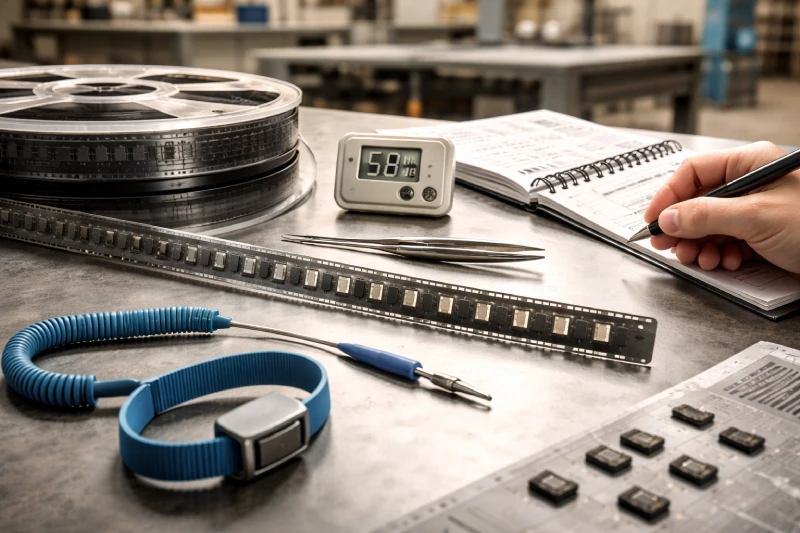
One of the first considerations is the humidity level inside the manufacturing environment. Facilities located in humid climates or factories without strict environmental control may require materials with improved moisture stability.
Another important factor is the ESD sensitivity of the components being packaged. Semiconductor devices, sensors, and certain optoelectronic components often require packaging materials that provide controlled electrostatic protection.
Production speed is also relevant. High-speed SMT assembly lines require stable feeding behavior. If packaging materials are affected by humidity or static electricity, the resulting variations in pocket stability or peel force may interrupt automated feeding.
Engineers also consider storage and transportation conditions. Components may remain in carrier tape reels for extended periods before assembly. Long storage cycles increase the importance of stable material properties.
Finally, cover tape compatibility must be evaluated. The interaction between carrier tape material and cover tape adhesive influences peel force behavior. Environmental factors such as humidity and temperature can influence this interface, so compatibility testing is often performed before mass production.
What Problems Occur When the Carrier Tape Does Not Match the Environment?
When carrier tape materials are not suitable for the production environment, several problems may appear during tape-and-reel packaging or SMT feeding.
One common issue is component instability inside pockets. If the tape material becomes too flexible due to humidity exposure, pocket geometry may change slightly, allowing components to move or rotate during transportation.
Another problem is inconsistent peel force between carrier tape and cover tape. If humidity alters the sealing interface, the cover tape may peel too easily or require excessive force during SMT feeding. Both situations can lead to feeding interruptions.
Static electricity can also cause operational problems. Accumulated charges may attract lightweight components or create small discharge events that affect sensitive devices.
In many cases, these issues are initially interpreted as feeder or machine problems. However, the root cause may actually be a mismatch between the carrier tape material and the environmental conditions in which it is used.
How Engineers Typically Select Carrier Tape for Controlled Production Environments
In practice, engineers often select carrier tape materials based on the combination of environmental conditions and component characteristics.
For standard SMT assembly environments with stable humidity and minimal ESD risk, standard carrier tape materials are usually sufficient.
When packaging ESD-sensitive semiconductor devices, static-dissipative or conductive carrier tape materials are commonly used to reduce electrostatic risks.
In environments where humidity is consistently high or where long storage cycles are expected, engineers may prefer moisture-stable materials that maintain pocket geometry and peel performance under humid conditions.
In some cases, both factors must be considered simultaneously. Packaging for sensitive semiconductor devices in humid manufacturing regions may require carrier tape materials that provide both electrostatic protection and moisture stability.
Conclusion
Carrier tape selection is not only determined by component size or pocket design. Environmental conditions such as humidity and electrostatic behavior also influence how packaging materials perform during storage, transportation, and SMT feeding.
High humidity can affect material stability and peel force behavior, while static electricity can introduce risks for sensitive semiconductor devices. When these environmental factors are properly evaluated, engineers can select carrier tape materials that maintain consistent packaging performance.
In electronics manufacturing, packaging solutions are typically developed by balancing component characteristics, production environment conditions, and carrier tape material properties to ensure reliable feeding and long-term component protection.