
Introduction
In modern SMT and semiconductor packaging, temperature exposure is no longer optional—it is part of the process. From pre-bake moisture removal to high-reliability automotive electronics, components often undergo elevated temperature conditions before or during assembly.
However, standard carrier tape materials—especially PS-based tapes—can deform, warp, or lose dimensional stability under heat. This leads to feeding issues, component misalignment, and even costly production failures.
High temperature resistant carrier tape is specifically engineered to solve these problems. By using advanced materials and optimized structural design, it ensures stable component handling even under demanding thermal conditions.
In this guide, we will break down how high temperature carrier tape works, what materials are used, how to select the right type, and how to avoid common engineering mistakes.
What Is High Temperature Resistant Carrier Tape?
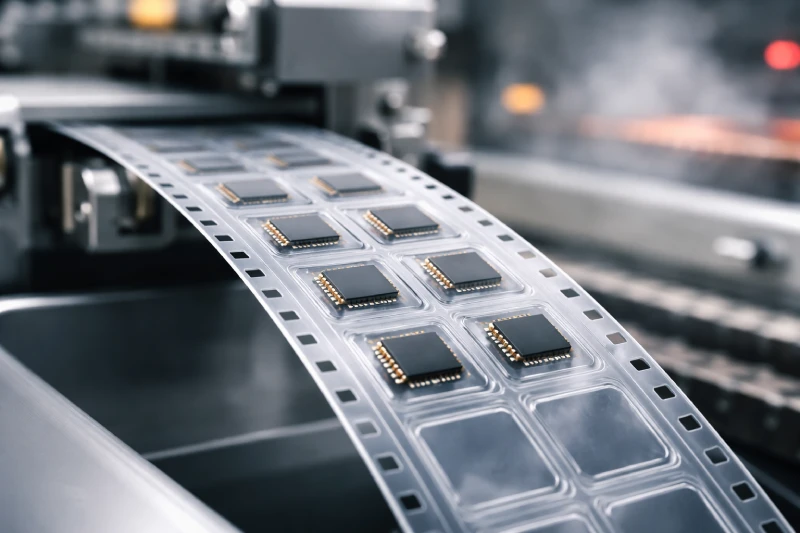
High temperature resistant carrier tape is a specialized embossed carrier tape designed to maintain structural integrity and dimensional stability under elevated temperatures, typically ranging from 100°C to 150°C or higher.
Unlike standard carrier tape, which is primarily optimized for room-temperature handling, high temperature versions are engineered to:
- Prevent pocket deformation during heating
- Maintain precise component positioning
- Ensure smooth feeding after thermal exposure
- Preserve compatibility with cover tape sealing
This type of tape is widely used in applications where components must undergo pre-baking, drying, or high-reliability assembly processes.
In essence, it is not just a packaging medium—it is a critical part of process stability.
Why Standard Carrier Tape Fails Under High Temperature
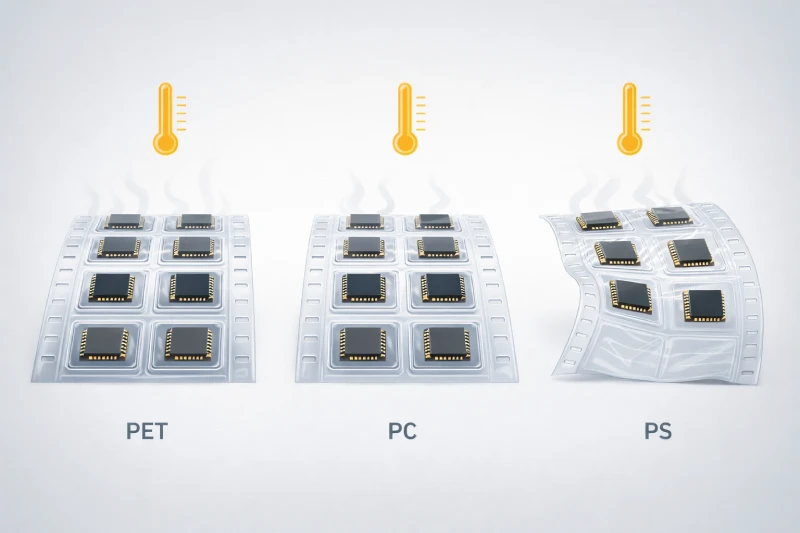
Standard carrier tape—especially polystyrene (PS)—is not designed for elevated temperature environments. Once exposed to heat beyond its material limits, several failure modes can occur.
Common Failure Modes
| Failure Type | Cause | Impact |
|---|---|---|
| Warping | Low glass transition temperature | Feeding instability |
| Pocket deformation | Thermal softening | Component misplacement |
| Dimensional shrinkage | Heat aging | Pitch inconsistency |
| Peel force variation | Heat affects adhesive | Pick-and-place errors |
One of the key reasons for these failures is the glass transition temperature (Tg) of the material. When the operating temperature approaches or exceeds Tg, the material begins to soften and lose rigidity.
For example:
- PS tape may begin to deform around 80–90°C
- Standard PET performs better but still has limits
- Only engineered materials can maintain stability above 120°C
This is why high temperature applications require specifically designed carrier tape—not just “better quality” standard tape.
Key Materials Used in High Temperature Carrier Tape
Material selection is the most critical factor in determining temperature resistance and performance.
Common High-Temperature Materials
| Material | Max Temp | Key Properties | Typical Use |
|---|---|---|---|
| PET | ~120°C | Good stability, cost-effective | General SMT |
| PC (Polycarbonate) | ~130–150°C | High strength, excellent rigidity | Automotive IC |
| Modified PS | ~100°C | Improved PS, limited resistance | Low-end use |
| Anti-static PET/PC | varies | ESD protection + stability | Semiconductor |
Engineering Considerations
- Glass Transition Temperature (Tg): Determines when material softens
- Dimensional Stability: Critical for pocket accuracy and pitch control
- Heat Aging Resistance: Ability to maintain properties over time
- ESD Performance: Required for sensitive components
For example, polycarbonate (PC) is widely used in high-end applications because it maintains structural rigidity even under prolonged exposure to high temperatures.
If your application also involves electrostatic-sensitive devices, combining high temperature materials with anti-static carrier tape is essential to prevent ESD damage.
Typical Temperature Resistance Range & Industry Requirements
Different applications require different levels of temperature resistance.
Temperature Classification
- 80–100°C: Standard SMT processes
- 100–130°C: Pre-bake and drying processes
- 130–150°C+: Automotive and high-reliability electronics
Application Mapping
| Application | Required Temperature Resistance |
|---|---|
| LED packaging | 100–120°C |
| Consumer IC | 100–130°C |
| Automotive IC | 130–150°C |
| Semiconductor devices | 120–140°C |
In many semiconductor workflows, components must undergo moisture removal baking before assembly. During this stage, carrier tape must maintain both mechanical stability and dimensional accuracy.
This is also where cover tape compatibility becomes critical. After heating, the peel force must remain consistent to ensure reliable pick-and-place performance. (See our detailed guide on cover tape compatibility for more.)
How High Temperature Carrier Tape Is Tested
From an engineering perspective, high temperature carrier tape must be validated through controlled testing before use in production.
Key Tests
1. Heat Aging Test
- Example: 125°C for 24 hours
- Evaluates deformation and structural stability
2. Dimensional Stability Test
- Measures pitch accuracy after heating
- Ensures compliance with EIA-481 standards
3. Peel Strength Retention Test
- Tests cover tape peel force after heating
- Critical for pick-and-place consistency
4. ESD Stability Test
- Ensures anti-static properties remain effective after heat exposure
These tests are often part of a broader carrier tape design guide and quality validation process. Without proper testing, even high-grade materials may fail in real production conditions.
High Temperature Carrier Tape vs Standard Carrier Tape
Understanding the differences helps in making better sourcing decisions.
| Feature | Standard Carrier Tape | High Temperature Carrier Tape |
|---|---|---|
| Temperature Resistance | <80°C | Up to 150°C+ |
| Material | PS | PET / PC |
| Dimensional Stability | Low | High |
| Cost | Lower | Higher |
| Application | General SMT | Automotive / Semiconductor |
The key difference lies not just in temperature tolerance, but in process reliability. High temperature tape reduces the risk of downtime, misfeeds, and component loss.
How to Choose the Right High Temperature Carrier Tape
Selecting the right tape requires a balance between performance and cost.
Key Selection Factors
1. Maximum Process Temperature
Always consider peak temperature, not average temperature.
2. Component Sensitivity
Delicate or high-value components require higher stability.
3. ESD Requirements
Use conductive carrier tape or anti-static variants for sensitive devices.
4. Pocket Design Precision
Tight tolerances require materials with minimal deformation.
5. Cover Tape Compatibility
Ensure peel force consistency after thermal exposure.
Quick Decision Guide
| Scenario | Recommended Material |
|---|---|
| General SMT | PET |
| Automotive IC | PC |
| High-precision chip | Anti-static PC |
| Cost-sensitive, low temp | Modified PS |
If you’re unsure, working with a supplier that offers engineering support and custom design is highly recommended.
Common Applications of High Temperature Carrier Tape
High temperature carrier tape is widely used across multiple industries:
- Semiconductor packaging
- Automotive electronics
- LED components
- High-reliability PCB assembly
In automotive electronics especially, failure is not an option. Components must remain perfectly aligned even after exposure to extreme conditions, making high temperature carrier tape a standard requirement.
Common Mistakes When Selecting High Temperature Carrier Tape
Even experienced buyers can make costly mistakes.
1. Ignoring Tg vs Actual Process Temperature
Choosing material based on nominal rating instead of real conditions.
2. Not Testing After Baking
Performance must be validated post-heat exposure.
3. Mismatched Cover Tape
Using standard cover tape with high temperature base tape can cause peel issues.
4. Over-Specifying Material
Using PC when PET is sufficient increases cost unnecessarily.
Avoiding these mistakes can significantly improve yield and reduce production risks.
Conclusion: When Should You Use High Temperature Carrier Tape?
You should consider high temperature resistant carrier tape when:
- Your process exceeds 100°C
- Dimensional stability is critical
- Component value or failure cost is high
- You require consistent performance after baking
In high-reliability manufacturing environments, the cost of failure far outweighs the cost of better materials.
Get the Right Carrier Tape for Your Application
Choosing the wrong carrier tape can lead to feeding issues, component damage, and production downtime.
If you’re working with high-temperature processes or sensitive components, it’s essential to use the right material and design.
👉 Need help selecting or customizing high temperature carrier tape?
Our engineering team can provide tailored solutions based on your component dimensions, temperature requirements, and production process.
Contact us today to get a customized carrier tape solution that ensures stability, reliability, and efficiency in your SMT line.