Precision Carrier Tape Packaging Solutions from China

Anti-Static (ESD) Embossed Carrier Tape for SMT Packaging

Anti-static (ESD) embossed carrier tape is a functional variant of standard embossed carrier tape, developed for electronic components that require controlled electrostatic discharge protection during SMT packaging and handling.

It maintains the same pocket geometry, feeding accuracy, and EIA-481 dimensional compatibility as standard embossed carrier tape, while using ESD-controlled materials to reduce static charge risks throughout automated pick-and-place processes.

  • Based on standard embossed carrier tape geometry and structure
  • Anti-static material for controlled electrostatic discharge performance
  • Suitable for ESD-sensitive SMT / SMD components
  • Compatible with standard EIA-481 automated pick-and-place systems
  • Designed as a drop-in alternative to standard embossed carrier tape when ESD control is required
  • Share:

ESD Control Strategy

Explain how ESD risk is practically managed during real packaging, feeding, and handling stages.
  • This anti-static carrier tape is designed to reduce electrostatic charge accumulation during critical stages of SMT packaging and automated handling, rather than relying on post-process protection.

    ESD control is integrated into the tape material itself, helping minimize static-related risks during component loading, tape feeding, cover tape peeling, transportation, and storage within ESD-controlled production environments.

    • Anti-static material formulation for controlled surface resistivity
    • Reduced static charge buildup during component loading and handling
    • Stable performance during automated pick-and-place feeding and cover tape peeling
    • Suitable for use in standard ESD-controlled SMT production lines
    • No impact on pocket geometry, feeding accuracy, or tape stability
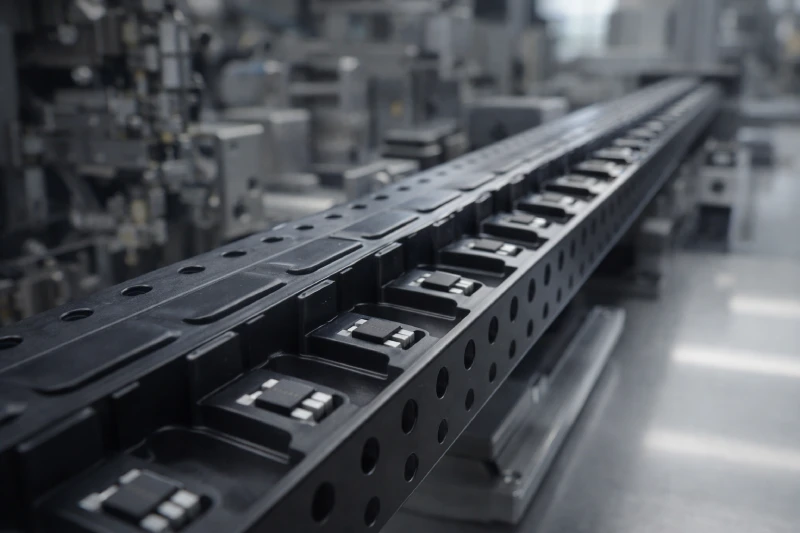
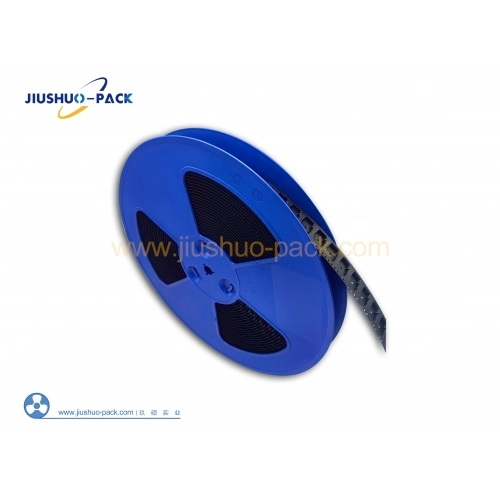
  • Anti-static embossed carrier tape used in ESD-controlled SMT pick-and-place feeding process

Typical Components & Applications

  1. Top-down view of embossed carrier tape holding dense semiconductor and passive SMD components in uniform pockets

    Semiconductor & Passive Components

    ICs, resistors, inductors, capacitors, diodes, transistors, oscillators

  2. Angled close-up of interconnection and protection components packaged in embossed carrier tape pockets for SMT feeding

    Interconnection & Protection Components

    Connectors, terminals, fuses, relays

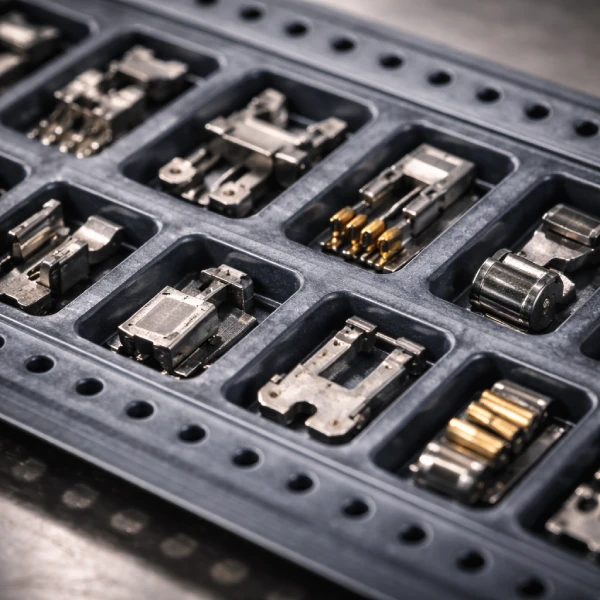
  3. Macro close-up of precision stamped metal parts and spring contacts placed in custom embossed carrier tape pockets

    Precision Mechanical & Metal Parts

    Stamped metal parts, precision spring contacts, mechanical components

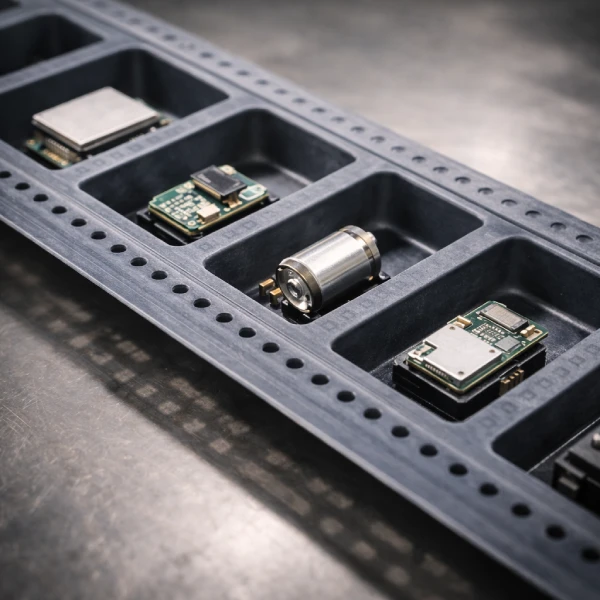
  4. Functional electronic modules and special SMD parts secured in deep embossed carrier tape pockets for stable SMT feeding

    Functional Modules & Special SMD Parts

    Communication modules, SMD motors

Material Options and Performance Parameters

Anti-static embossed carrier tape is manufactured using ESD-controlled plastic materials selected to balance electrostatic performance, mechanical stability, and feeding reliability for SMT automated packaging.

  • Material Options

    • Anti-static grade polystyrene (PS)
    • Anti-static PET for enhanced dimensional stability
    • Other ESD-controlled plastic materials based on application needs
    • Material selection aligned with pocket depth, wall thickness, and component weight
  • ESD Performance Parameters

    • Surface resistivity controlled within standard ESD-safe ranges

    • Designed to minimize static charge accumulation during handling and feeding

    • Stable ESD performance under typical SMT production conditions

    • Suitable for integration into existing ESD-controlled manufacturing environments

  • Mechanical & Process Stability

    • Maintains pocket geometry and dimensional accuracy during feeding

    • No negative impact on pick-and-place accuracy or tape tracking

    • Compatible with standard cover tapes and reel systems

    • Performance consistency across sampling and mass production

Design & Customization Scope

  • Custom Pocket Geometry

    Pocket designs are developed from component drawings or samples to ensure correct fit, orientation stability, and reliable pickup during SMT automated feeding.

  • EIA-481 Tape Format Control

    Tape width, pitch, and indexing features follow EIA-481 dimensional requirements for compatibility with standard pick-and-place feeders and reel systems.

  • Anti-Static Material Options

    ESD-controlled material grades are selected based on component sensitivity, pocket structure, and the customer’s SMT production environment.

  • Cover Tape Compatibility

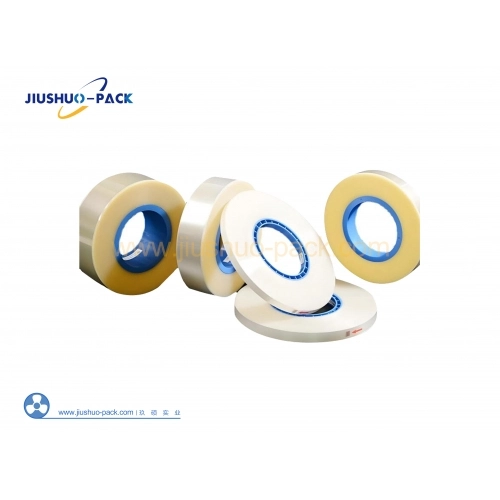
    Carrier tape designs are matched with suitable cover tapes to ensure stable sealing, controlled peel force, and consistent feeding performance.

  • Design Validation & Sampling

    Pocket drawings and prototype samples are provided for fit verification, feeding trials, and process validation before mass production approval.

  • Production Consistency Control

    Approved designs are transferred into controlled production processes to ensure dimensional consistency and performance stability across volume orders.

Manufacturing, Quality Control, and Lead Time

Anti-static embossed carrier tape production is managed through controlled forming, inspection, and approval processes to ensure dimensional consistency, ESD performance stability, and predictable delivery timelines.

  • In-House Embossing Production

    Carrier tape forming is handled through controlled embossing processes to maintain pocket geometry accuracy and repeatability across samples and volume production.
  • ESD Material Process Control

    Anti-static materials are processed under defined conditions to ensure consistent ESD performance and mechanical stability throughout production.
  • Dimensional & Visual Inspection

    Key dimensional features and pocket quality are inspected to confirm feeding compatibility, component fit, and forming consistency.
  • Sampling & Approval Workflow

    Prototype samples are produced for customer evaluation, feeding trials, and confirmation before mass production release.
  • Production Consistency Management

    Approved designs are locked into controlled production parameters to ensure stable quality across repeat orders and long-term supply.
  • Lead Time & Delivery Planning

    Tooling, sampling, and production lead times are defined during project confirmation to support predictable scheduling and supply planning.
Lead times may vary based on tooling status, material selection, and order volume. Project schedules are confirmed during technical review.

When Anti-Static Carrier Tape Is the Right Choice

Decision Guidelines

Anti-static carrier tape should be considered when one or more of the following conditions apply:

  • Components have documented ESD sensitivity or manufacturer handling guidelines

  • Component value, precision level, or failure cost justifies additional risk control

  • Customer specifications or downstream assembly processes require ESD-safe packaging

  • Automated SMT feeding involves frequent tape movement and cover tape peeling

  • Previous yield loss or unexplained failures may be linked to static-related handling issues

  • Components are subject to extended storage, international transportation, or repeated handling

If these conditions apply, anti-static carrier tape provides an added layer of process protection without changing standard embossed tape geometry or feeding compatibility.

How to Start an ESD Carrier Tape Project

  • Submit Component & Packaging Inputs

    • Component drawing (preferred) or physical samples
    • Part dimensions and critical surfaces (pickup area / fragile edges)
    • Required orientation in pocket (polarity, lead direction, top/bottom)
    • Target packaging quantity (prototype / pilot / mass production)
  • Engineering Review & Pocket Proposal

    • Pocket design feasibility review based on component geometry
    • Tape format confirmation (width, pitch, pocket position) aligned with EIA-481 feeding
    • Anti-static material recommendation based on sensitivity and process environment
    • Initial proposal for pocket drawing and sampling scope
  • Sampling, Trial, and Mass Production Release

    • Prototype sample tape production for fit and orientation verification
    • Feeding trial support to confirm stable tracking and peel performance
    • Approval confirmation before locking mass production parameters
    • Production scheduling and lead time alignment for repeat orders

What to Provide for Quick Quotation (Checklist)

  • Drawing file (PDF / STEP) or samples + photos

  • Component quantity per reel and preferred reel size

  • Any ESD requirement from customer or internal quality standard

  • Current packaging issues (if any): mis-pick, flipping, insufficient retention, peel instability

If you are currently using standard embossed carrier tape, share the existing tape spec or a short tape sample. We can evaluate whether an anti-static variant can be applied without changing feeder setup.

Request A Quote

Header Form